
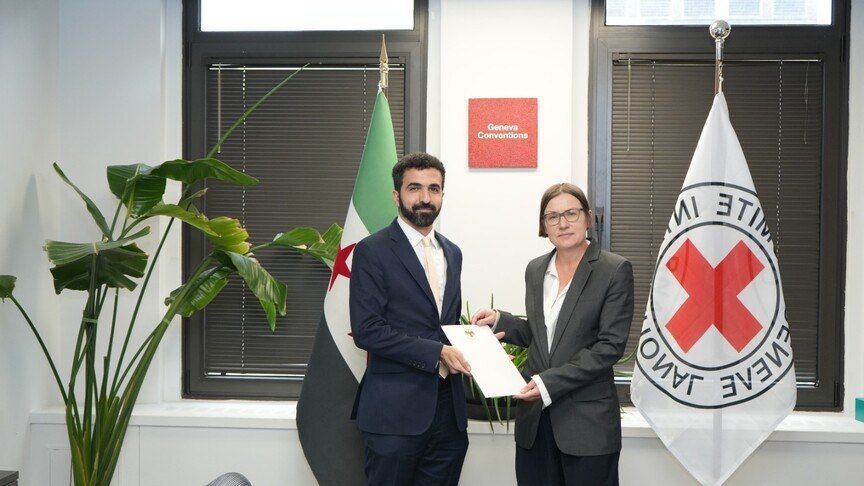
 After decades of human rights violations under the Assad regime, Syria’s transitional authorities are seeking to reshape the country’s relationship with international humanitarian institutions and legal frameworks. Under the Assads Syria faced international accusations of arbitrary detention, systematic torture, enforced disappearances, and the use of chemical weapons against civilians.
The legacy of those allegations has left the human rights file among the most sensitive issues facing the transitional phase. In a move signaling a shift in political direction, Syria joined the global initiative to renew political commitment to international humanitarian law. The platform was launched by Jordan, Brazil, China, France, Kazakhstan, and South Africa in partnership with the International Committee of the Red Cross.
According to a statement from the Syrian Ministry of Foreign Affairs, the move reflects Syria’s new commitment to strengthening its engagement within the international system. Syria’s permanent representative to the UN, Ibrahim Olabi, delivered the accession document to the president of the ICRC, underscoring Damascus’ efforts to reestablish international ties through legal and humanitarian commitments as well as diplomatic outreach.
Rebuilding International Trust
Legal experts and human rights advocates said the accession carries political and legal significance for Syria’s transitional period. Dr. Muhammad al-Shaker, a fellow in international law and governance systems at universities in California, told the Syrian newspaper that the move reflects growing international openness toward Syria which could help the country secure support on sensitive issues such as transitional justice and missing persons cases.
Meanwhile, Dr. Faten Ramadan, head of No Limits (Sans Menottes) human rights organization, described the step as important for rebuilding international confidence and improving Syria’s image abroad.
Analysts said the accession also signals recognition of the need to protect civilians and prevent serious violations during future conflicts. They noted the initiative could encourage the development of national legislation and accountability mechanisms, marking a departure from policies contributing to Syria’s international isolation over previous decades.
From Commitments to Implementation
Despite the political symbolism of the accession, observers said the greater challenge lies in translating international commitments into concrete policies and institutional reforms. The initiative emphasizes practical measures aimed at protecting civilians and ensuring humanitarian access during armed conflicts.
Ramadan stressed the importance of updating national legislation, incorporating international humanitarian law into military and security training, and supporting transitional justice efforts through national oversight bodies.
Shaker also highlighted broader transitional priorities, including strengthening state institutions with qualified personnel, encouraging national dialogue, and drafting a permanent constitution capable of reflecting a broad social consensus.
The ICRC welcomed Syria’s accession pointing to expanding cooperation on issues including detention visits and efforts to locate missing persons. The development marks an early step in Syria’s attempt to restore international engagement while addressing longstanding humanitarian and legal concerns tied to the country’s recent history.