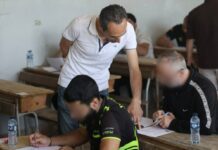
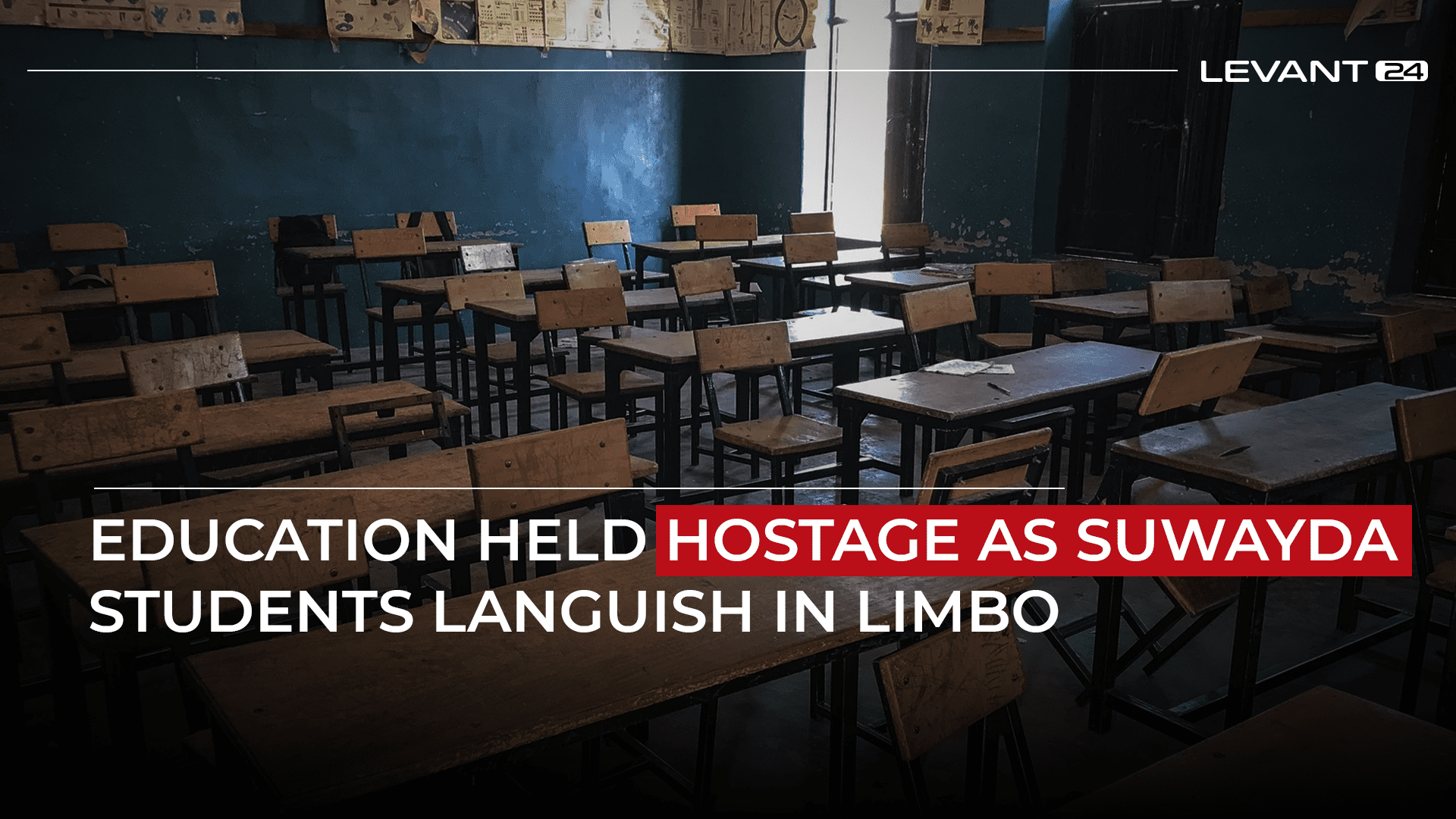
For many students in Syria’s southern province of Suwayda, the path to education has become increasingly uncertain as travel restrictions and ongoing instability continue to disrupt access to national examinations and higher education opportunities.
While students in Damascus, Jaramana and other parts of the country sit for their exams and prepare for university, many of Suwayda’s students remain unable to reach testing centers, leaving their academic futures on hold for a second consecutive year.
Rayan, an 18-year-old Druze high school student from a village south of Suwayda city, said the crisis has fundamentally altered his educational plans. “What happened in Suwayda changed our education process and plans,” he told Levant24. “Today, my colleagues in other Syrian cities and towns sit for their exams while I am stuck in my house.”
Rayan said he already lost one academic year after armed clashes erupted in 2025. This year, he said, road closures once again prevented him from reaching Damascus to sit for national examinations. “For two years, I cannot submit my exam,” he said. “I lost another year.”
Unequal Access Deepens Educational Divide
The current dispute centers on the Ministry of Education’s May 14 decision to transfer examination centers for Suwayda students to Damascus and its countryside. According to official figures cited by BBC Arabic, approximately 13,600 students are registered to take public examinations this year, including 7,462 ninth-grade students, 5,330 secondary students and 808 vocational secondary students.
Syrian authorities maintain armed groups affiliated with Hijri and the National Guard prevent students from leaving Suwayda. Local sources report checkpoints blocked students and educational staff from traveling north. Officials and residents claim some students resorted to unofficial routes through Daraa, while others relied on personal connections or paid bribes to pass checkpoints.
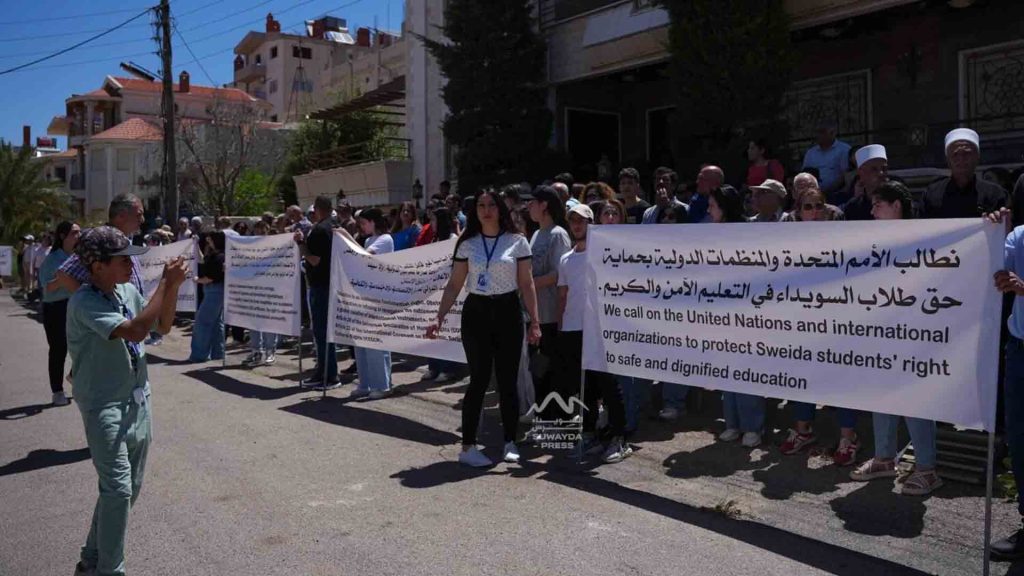
Some dispute the ministry’s decision, claiming many expected a Ministry of Education delegation to enter Suwayda and oversee examinations locally. They have framed the decision to transfer exams outside the province as “political blackmail.” Meanwhile, the government alleges ministry personnel were previously prevented from entering and remain at continued risk of violence or abduction given the increasing instability in the province.
Rayan said some families with relatives or property in Damascus and its suburbs were able to relocate temporarily, allowing them to register in schools and access testing centers. His family, however, lacked the financial means and housing connections to do the same.
The result, he said, is a widening gap between students able to leave and those remaining behind. Disruptions extend beyond examinations. Rayan described widespread closures of government schools, shortages of teachers and administrators, and a lack of educational materials. “Suwayda’s schools have nothing,” he said. “No teachers, no administrators and no printed books.”
Families Confront Growing Pressure
Parents say the educational crisis has created significant financial and emotional strain. Abu Zaid, a 48-year-old Druze father from Suwayda city whose daughter is preparing for 12th grade exams and whose son is preparing for 9th grade exams, described repeated attempts to secure access to testing centers outside the province.
“I am a father and want my children to present their exams and get legal certificates proving they’ve passed the exams,” he told Levant24. Abu Zaid said he had hoped to stay with relatives in Sahnaya during the examination period but was stopped by militias along the road and sent back.
As a government employee, he said relocating permanently to Damascus remains financially impossible. “I don’t have enough money to move and rent an apartment in Damascus for a few months to get good education for my children,” he said.
Like Rayan, he expressed concerns the loss of another academic year could have lasting consequences for students across the province. “Today, all parents see their children losing their school and university education for the second year in a row without any hope or a clear vision for the future!”
Teachers Warn of Long-Term Consequences
Educators say the disruptions threaten to leave lasting scars on an entire generation of students. Mazid, a 40-year-old Druze teacher from southern Suwayda, said shortages of funding, staff and educational materials severely weakened the education sector since mid-2025.
“The local community and families collect donations and raise funds to pay salaries and provide financial support for teachers and administrators,” he said. “But this isn’t enough to keep the education sector running.”
According to Mazid, many experienced teachers left Suwayda for Damascus and surrounding suburbs in search of more stable working conditions. Meanwhile, remaining educators face difficulties obtaining textbooks, classroom materials and other resources. The Ministry of Education said it continued operating 591 schools in Suwayda during the academic year and covered the salaries of 12,689 teachers, educators and school employees.
Challenges transcend fiscal and logistical barriers with armed groups directly interfering with educational institutions and staff. Suwayda24 documented complaints from teachers claiming they faced threats and pressure to return to work after strikes over educational administration, salaries and certification issues.
Last year’s strikes followed armed men storming Suwayda’s Directorate of Education and physically removing its director. Teachers also alleged interference by armed actors in school affairs and grading practices, claims that could not be independently verified by Levant24.
A Generation Waiting for Answers
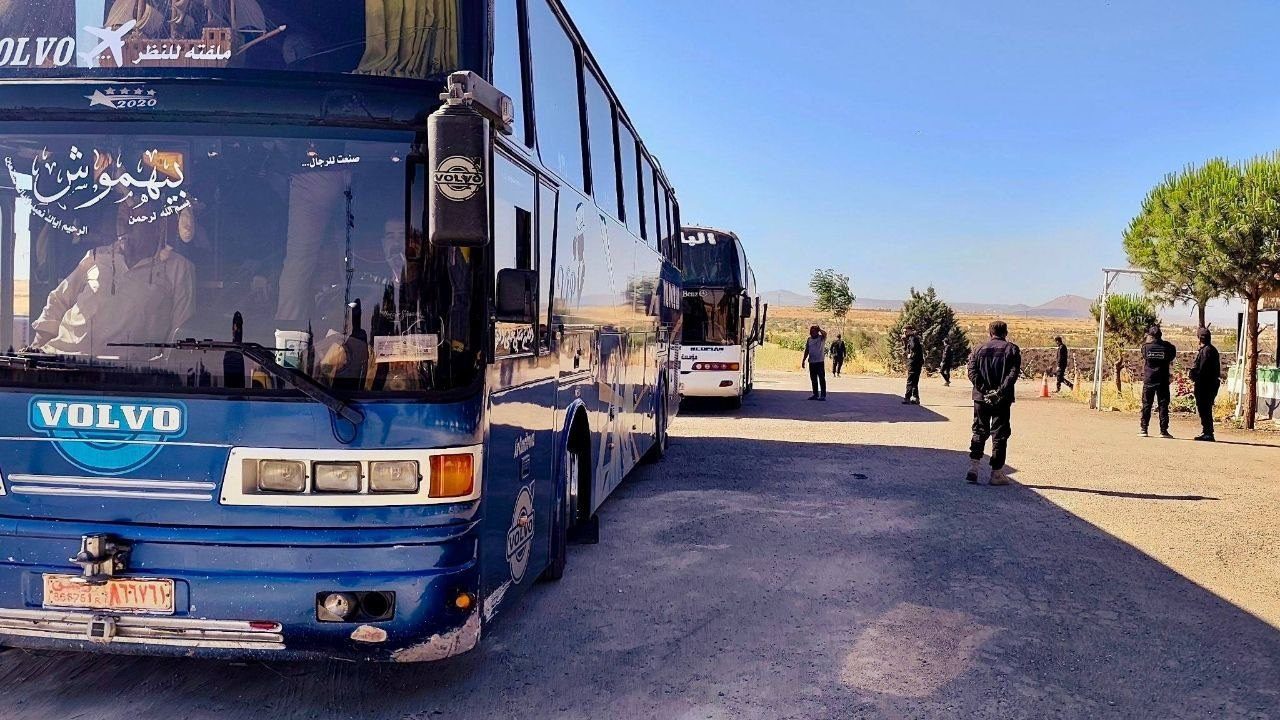
Government officials maintain they have taken steps to facilitate student travel. Suwayda Governor Mustafa al-Bakour told SANA authorities coordinated with the Ministry of Interior to provide free transportation, security escorts, food and accommodations for students staying in Damascus during the examination period. He also condemned efforts preventing students from reaching exams, calling such actions contrary to “law and societal norms.”
While views on the causes of the crisis and possible political solutions may be disputed, the students, parents and teachers interviewed by Levant24 shared a common concern: education has become one of the most immediate casualties of Suwayda’s ongoing instability.
Families say they want students to be able to attend school, sit for nationally recognized examinations and pursue university education without political or security obstacles. As another examination season passes, thousands of young people in Suwayda remain uncertain about when, or if, they will be able to resume their academic paths. “Our children live in limbo,” Mazid lamented, “with no vision or idea about their future.”