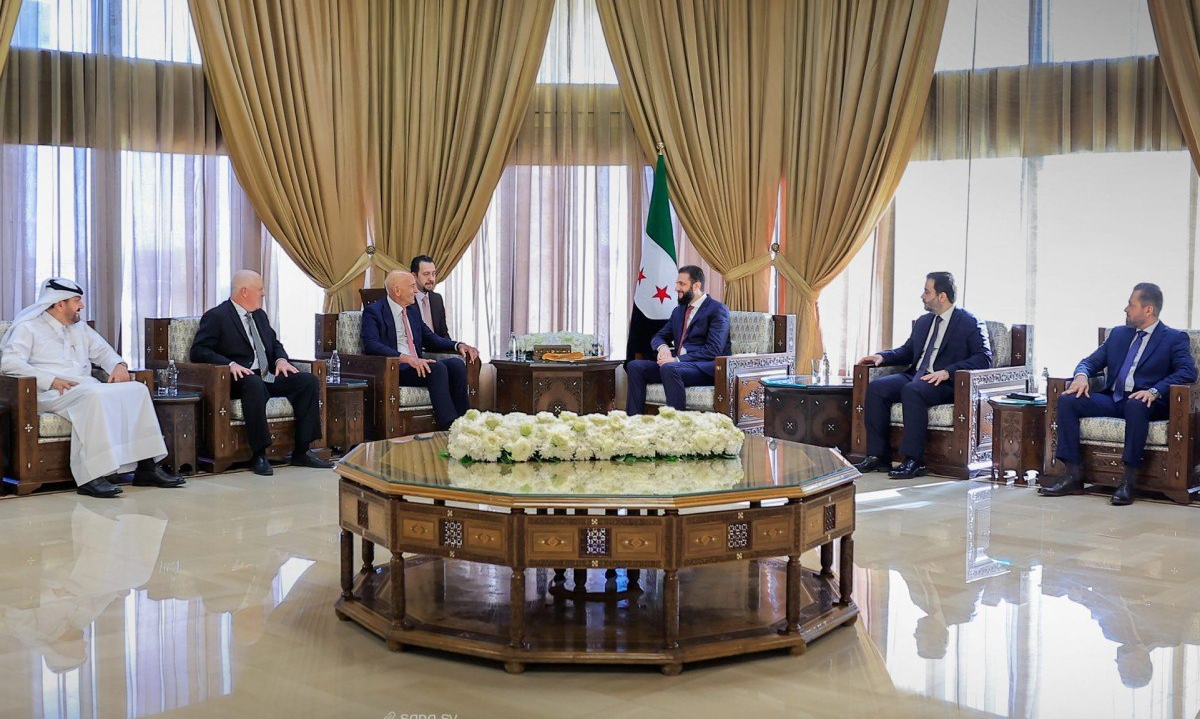
 Syrian President Ahmad al-Sharaa held a high-level meeting in Damascus with representatives of the American energy corporation Chevron examining prospects for cooperation in offshore oil and gas exploration. The talks form part of the government’s broader efforts to revive the country’s struggling energy sector and attract advanced technology and international investment after years of conflict.
The meeting brought together senior figures from both sides. The American delegation included US Special Envoy to Syria Tom Barrack, Chevron’s executive vice president for development Rank Mount, and regional development director Joe Kosh.
Foreign Minister Asaad al-Shaibani and the CEO of the Syrian Petroleum Company (SPC), Yusuf Qaballawi, attended the talks. The presence of such prominent officials evidenced the importance both parties place on potential energy cooperation in the Eastern Mediterranean and reflected a growing interest in exploring Syria’s offshore reserves along its Mediterranean coastline.
Rebuilding a Decimated Energy Sector
The discussions take place against the backdrop of a devastated Syrian oil and gas industry. Before the war, in 2010, oil constituted nearly one fifth of Syria’s GDP, half of its exports, and over half of state revenues, with production reaching 390,000 barrels per day.
By 2023, output had fallen to roughly 40,000 barrels per day. Since taking office after the fall of the Assad regime, President Sharaa placed the rehabilitation of the energy sector at the center of his economic priorities, viewing foreign expertise and investment as essential for restoring essential services, stabilizing the economy, and improving living standards.
Geopolitical Context and Regional Implications
The engagement with Chevron represents a significant development in Damascus’s diplomatic and economic outreach to international partners. The potential participation of a major American energy company may indicate evolving geopolitical calculations regarding Syria’s reconstruction phase.
Even so, substantial investment will face major obstacles, including the legacy of sanctions, the continued need for political stabilization, and unresolved maritime boundaries in the Eastern Mediterranean.
It is noteworthy that SPC recently signed a memorandum of understanding on November 18 with the US firms ConocoPhillips and Novaterra to expand cooperation in the natural gas sector, a move aimed at increasing national production capacity and strengthening energy security. Chevron, one of the largest energy companies in the US, is active worldwide in hydrocarbon exploration, production, and development.