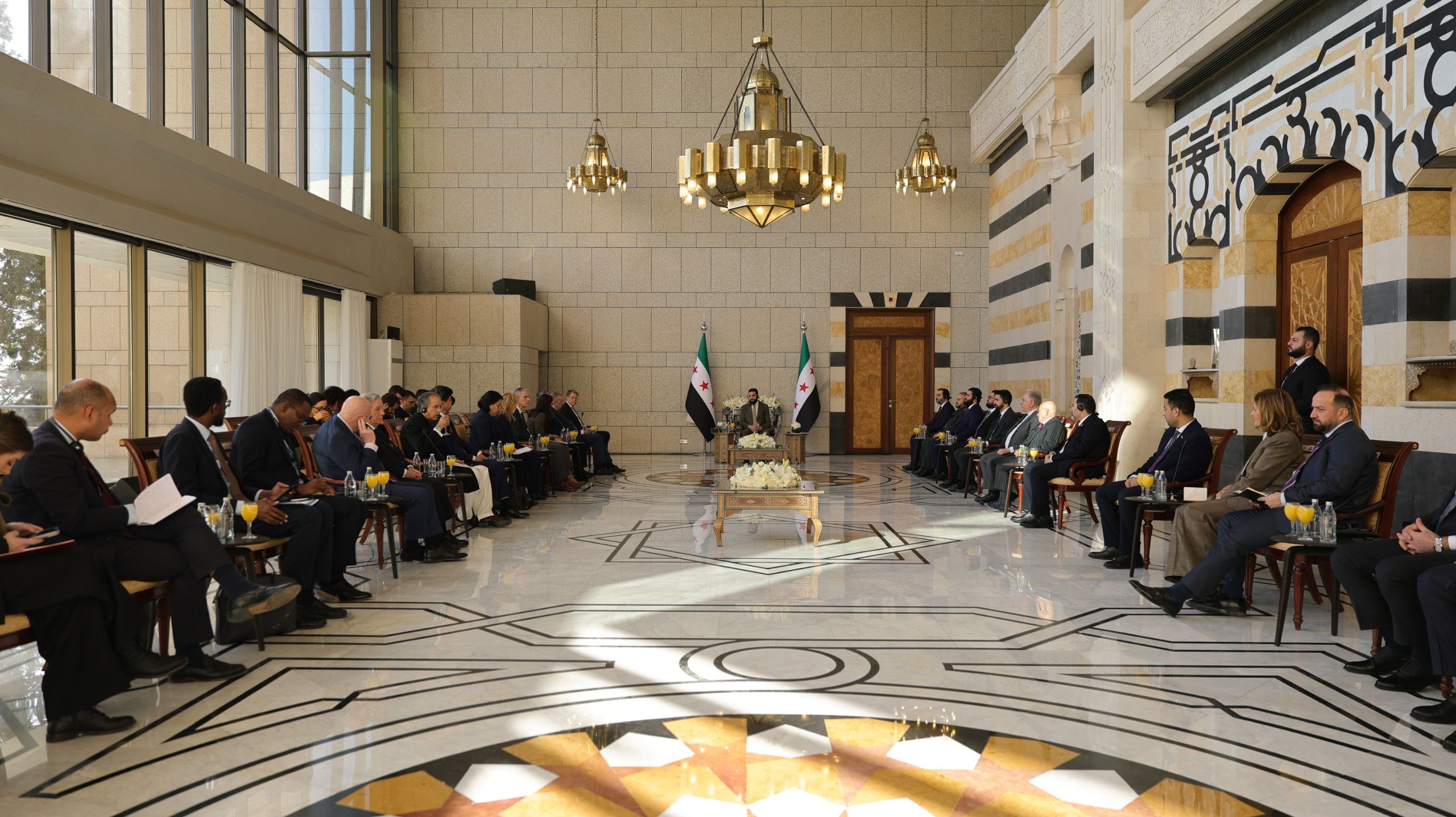
The UN Security Council arrived in Damascus Thursday, December 4, for its first official visit to Syria in over fourteen years, a trip that members described as a rare moment of consensus and a sign of changing dynamics in the region. The visit coincides with the first anniversary of what Syrian officials call the country’s liberation and its entry into a new post-Assad phase.
Slovenian Ambassador Samuel Žbogar, who heads the delegation under his country’s rotating presidency, said in a briefing earlier this week that the trip comes at “a sensitive period for the region and an important time for these two countries,” referring to both Syria and Lebanon. He said the delegation seeks to show “support and solidarity” and to understand the challenges ahead, according to statements earlier in the week.
A Unified Delegation and a Symbolic Moment
All fifteen Security Council members agreed on the visit, a consensus that Syrian officials and observers consider significant. The Syrian Foreign Ministry said the delegation’s arrival “carries a message of support from the international community for the new Syria,” adding that it is the first time in fourteen years that Council members reached full agreement on a Syria-related mission.
The delegation includes ambassadors and senior officials from permanent members China, France, Russia, the UK and the US, as well as representatives from Algeria, Denmark, Greece, Guyana, Pakistan, Panamá, Sierra Leone, Slovenia, Somalia and South Korea. The visit consists of meetings with President Ahmad al-Sharaa, multiple cabinet ministers and UN officials, along with civil society groups and communities affected by recent unrest in both Suwayda and the coast in Spring of this year.
The timing follows an increase in Israeli strikes and incursions on Syrian territory over the last few days. UN spokesman Stephane Dujarric said the organization remains “deeply concerned” about repeated Israeli raids in the Golan Heights, which he described as attacks on Syria’s unity and sovereignty.
UN Cooperation and Political Expectations
UN Secretary-General Antonio Guterres said the UN “is actively cooperating with the Syrian government,” emphasizing the need for all groups in the country to feel represented. He told Reuters that the government should “make more efforts to involve some segments of the population.” Guterres also reiterated the importance of respecting Syria’s sovereignty and avoiding external interference.
The visit comes as UN agencies reassess their presence in Syria. The UN High Commissioner for Human Rights said this month that Syria is preparing to mark International Human Rights Day on December 10 for the first time, describing the event as “a new chapter” in the relationship between the UN and Syrian authorities.
Muhammad al-Nassour, who heads the Middle East and North Africa section, said the situation shows “tangible improvement” and noted that a permanent team now operates in Damascus after years of working from abroad.
Looking Ahead to Regional Stability
Council members will continue their trip in Lebanon, where they plan to visit UN peacekeepers and meet top political officials. Maya Ungar, an analyst with the International Crisis Group, said the visit may help clarify the Council’s approach to expected changes in the UN’s role in Syria and Lebanon.
As Syria enters what officials describe as a new stage, both the government and UN representatives say long-term stability will depend on political participation, economic recovery and continued cooperation with international institutions.