The final repeal of the Caesar Syria Civilian Protection Act, commonly called the Caesar Act, moved closer to becoming law after congressional negotiators inserted the measure into the National Defense Authorization Act for Fiscal Year 2026. The draft text states that “The Caesar Syria Civilian Protection Act of 2019 is hereby repealed,” marking a significant shift in Washington’s approach to Damascus. The bill still requires approval by the House of Representatives.
The Caesar Act, enacted in 2019, created sweeping secondary sanctions meant to punish the regime of Bashar al-Assad for war crimes, chemical weapons use and human rights abuses. It restricted both American and foreign entities from engaging with Syrian state institutions or reconstruction projects. While the Trump administration removed many sanctions, full repeal requires congressional action.
Conditions Tie Future Sanctions to Government Conduct
Although the repeal provision removes the law itself, the draft legislation outlines a new oversight system. It requires the president to report to several congressional committees within 90 days of enactment and every 180 days for four years.
According to the document, the president must certify that Syria is making measurable progress in several areas, including eliminating ISIS and other extremist groups, protecting minority rights, avoiding military action against neighbors, countering money laundering, and prosecuting crimes against humanity committed by the Assad regime. The report must also assess Syria’s efforts to curb drug production.
If the president finds over two consecutive reporting periods that Syria has failed to meet these benchmarks, sanctions can be reimposed. The mechanism allows for targeted penalties without restoring the full Caesar framework.
The bill also directs the Defense Department to report on ISIS detention facilities inside Syria. In addition, the Pentagon and US Central Command must submit a separate report on conditions based consolidation of the American military presence, including basing and activities inside the country.
Supporters Cite Diplomatic Momentum
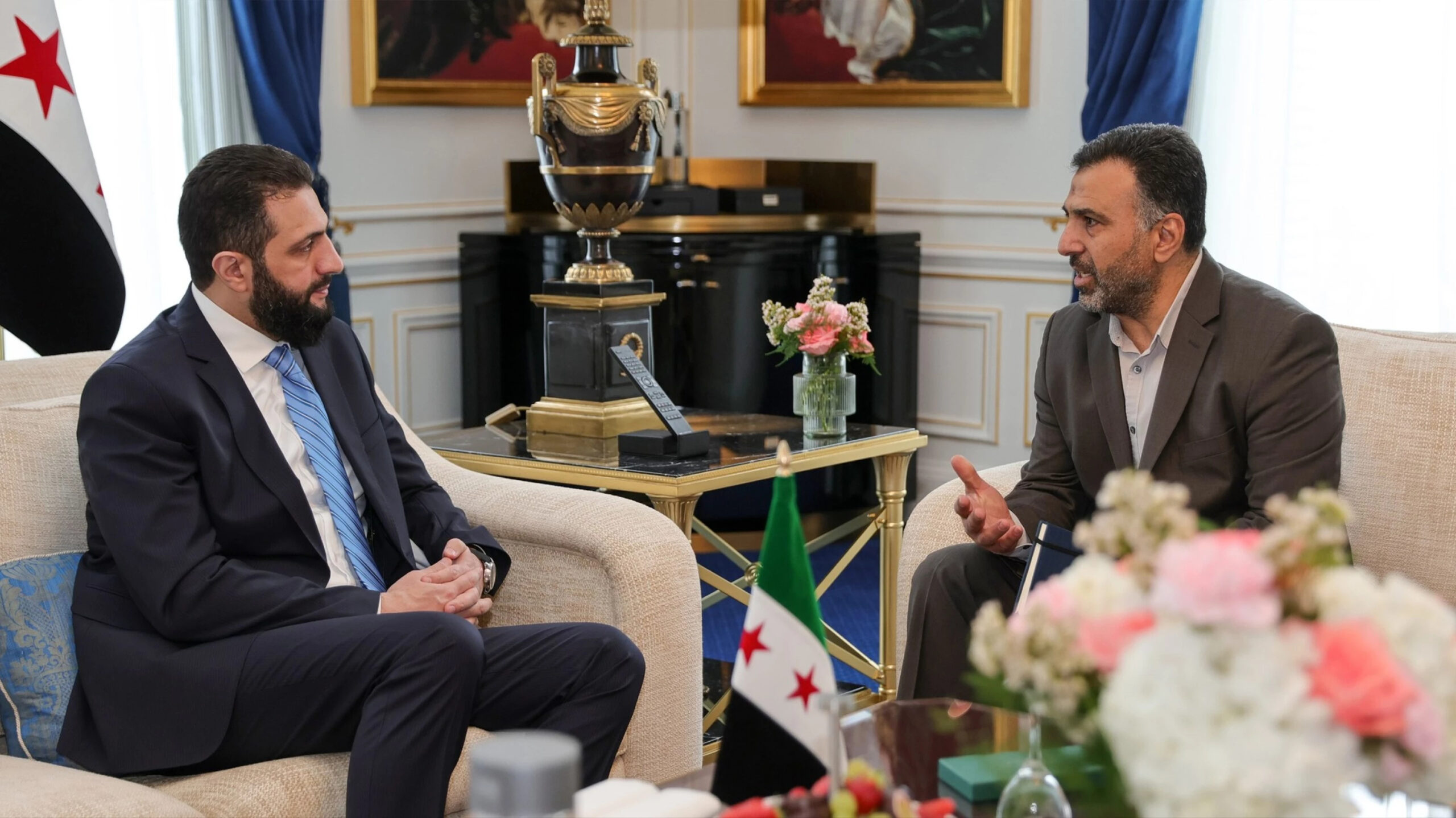
Trump began the broader rollback after meeting Syrian leader Ahmad al-Sharaa in Saudi Arabia in May. He announced the decision to lift sanctions shortly after the meeting and formalized it with an executive order in June. The State Department followed by revoking the Foreign Terrorist Organization designation of the Al Nusra Front, also known as Hayat Tahrir al Sham, in July. Sharaa was removed from the Specially Designated Global Terrorist list on November 7.
Muhammad Ghanem, head of political affairs at the Syrian American Council (SAC), said the repeal text had been finalized. In a Facebook post on December 8, he wrote that “after today there is no room to make any amendment to this article” and that the measure ensures the Caesar Act “will be repealed before the end of this year.” He said the final version removes automatic reinstatement language, replacing earlier conditions with a certification process.
A joint statement from the Departments of State and Commerce and the Treasury’s Office of Foreign Assets Control on November 10 suspended the remaining implementation of the Caesar Act. The statement said Trump sought to give Syria “a chance for greatness.” Senator Joe Wilson echoed that view the same day by urging a full repeal to help the country “move toward peace and stability.”