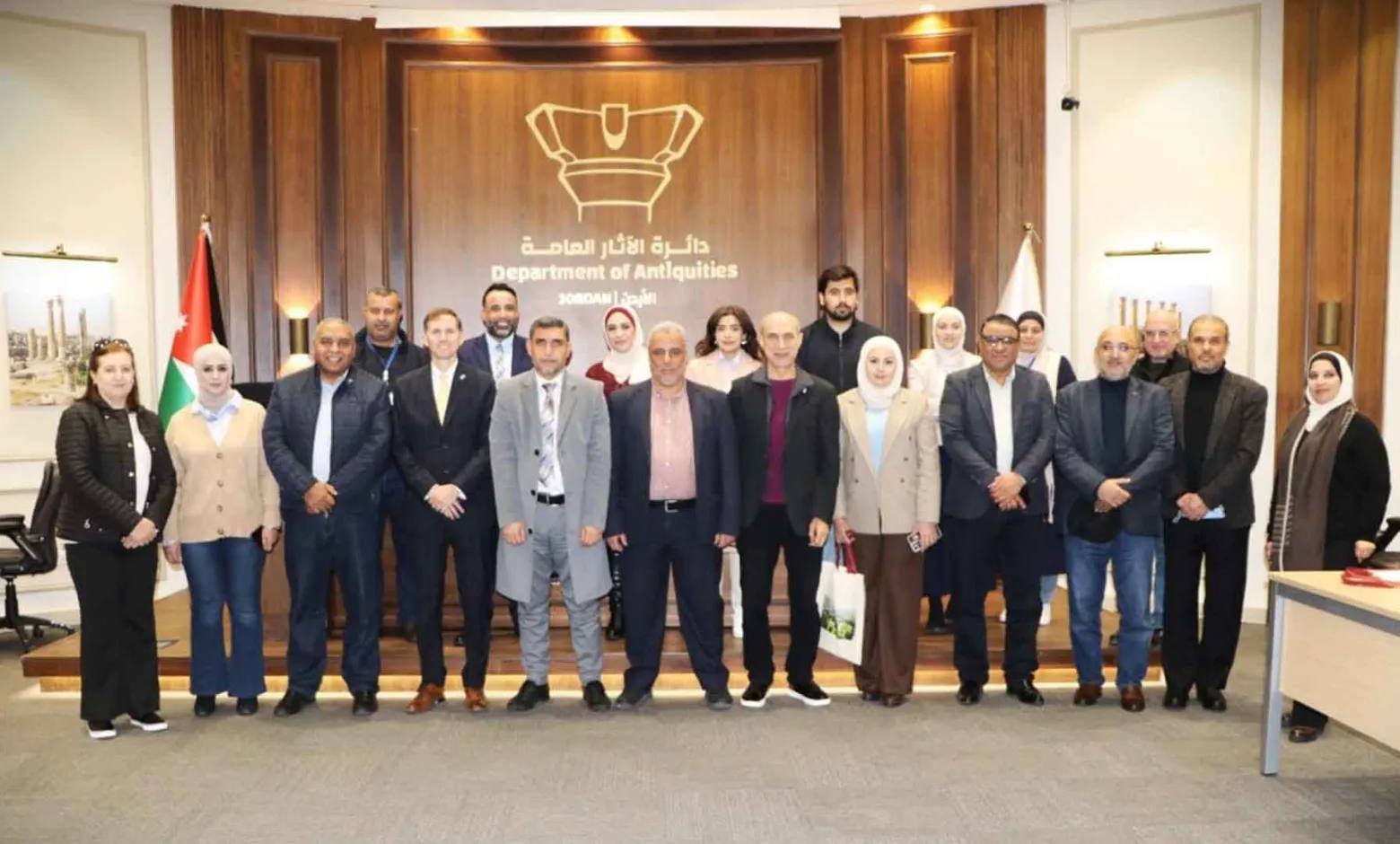
 In a significant step toward strengthening regional and international cooperation in cultural heritage protection, Syria and Jordan advanced joint efforts to preserve and safeguard shared archaeological assets. The initiative reflects a growing commitment by both countries to protect cultural heritage transcending modern borders and representing a shared historical legacy.
Strengthening Institutional Collaboration
Discussions between the Syrian Directorate-General of Antiquities and Museums and Jordan’s Department of Antiquities focused on institutional frameworks, operational mechanisms, and best practices for managing archaeological sites and museums. The talks explored prospects for cooperation in conservation and restoration, as well as the possibility of drafting a formal bilateral agreement to support long-term collaboration.
The Jordanian side showcased the Nuwaijis Center for the Conservation of Archaeological Collections, highlighting its advanced laboratories and internationally recognized standards for artifact preservation. The center was presented as a potential platform for joint technical cooperation and capacity building.
Combating Illicit Trafficking of Antiquities
Both sides emphasized the urgency of confronting the smuggling and illicit trade of antiquities, identifying it as a shared challenge requiring coordinated action. The discussions stressed cooperation with customs authorities and relevant agencies, alongside enhanced coordination between Syrian and Jordanian antiquities institutions, to protect archaeological materials from illegal trafficking.
The meeting also addressed frameworks for implementing joint international projects and expanding cooperation with research institutions and supporting organizations, aiming to strengthen technical expertise and facilitate knowledge exchange.
Shared Heritage and Mutual Appreciation
The Syrian delegation expressed appreciation for Jordan’s role in repatriating and restoring Syrian archaeological artifacts and for its continued commitment to protecting shared cultural heritage. An overview was presented of Syria’s archaeological administration, noting that seven Syrian sites are currently inscribed on the Islamic World Heritage List (ISESCO), underscoring the global significance of Syria’s cultural assets.
At the conclusion of talks, both sides agreed on the importance of arranging reciprocal visits in the coming period to translate discussions into concrete action plans. These steps aim to enhance bilateral cooperation and ensure the long-term protection of the region’s invaluable archaeological heritage for future generations, reinforcing a shared responsibility rooted in history and cultural continuity.