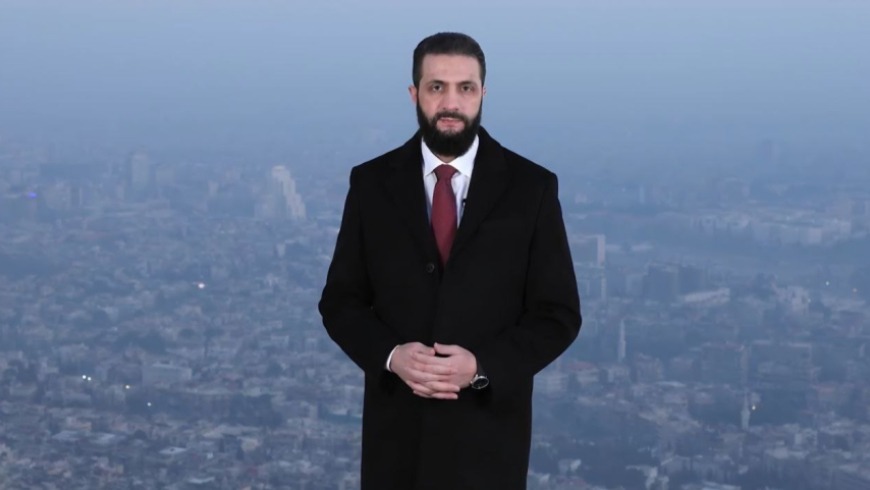
Syria entered a new political and economic chapter this week after the US formally repealed the Caesar Act, the last remaining sanctions regime imposed on the country. Syrian President Ahmad al-Sharaa marked the moment with a televised address from Mount Qasioun overlooking Damascus, calling the repeal “the beginning of the era of building” after what he described as years of pain.
In the video message posted on his X account, Sharaa congratulated Syrians and thanked US President Donald Trump and members of Congress for responding to calls to lift the sanctions. He also expressed gratitude to Turkish President Recep Tayyip Erdogan, Saudi Crown Prince Muhammad bin Salman and Qatari Emir Sheikh Tamim bin Hamad Al Thani, along with Arab, Islamic and European countries that supported Syria during the war and the past year of sanctions relief. “Today is your day, O great Syrian people,” Sharaa said, adding that Syrians would rebuild the country together.
Washington Sees an Opening
US Special Envoy to Syria Tom Barrack welcomed the repeal, calling it “an opportunity for Syria’s recovery” in a post on X. Quoting Trump’s phrase “Give Syria a chance,” Barrack said the decision reflected a willingness to test a new phase in US-Syrian relations.
Barrack likened Syria’s future to a woven Damask carpet, describing Syrian society as the fabric’s strong horizontal threads and neighboring countries as vertical threads that could work together despite differences. He said he hoped this cooperation would lead to “a decade of tolerance, prosperity and trust” in the region.
Public Expectations and Political Pressure
In Damascus, the repeal has raised expectations that the government will now move faster on internal reforms. Mahmoud al-Asaad, a schoolteacher in the capital, told the New Arab that the end of sanctions removes a long-used justification for delays. “The government must now focus more on internal affairs and adopt entirely different approaches, especially political ones,” he said.
Syria remains without a fully formed legislative body, and key laws, including legislation regulating political parties, remain pending. Critics have also pointed to slow progress on national dialogue and limited inclusion of political, ethnic and religious groups in decision-making during the transitional period. This issue is complicated by the obstructionist and secessionist practices of groups like the Syrian Democratic Forces (SDF) and Hikmat al-Hijri’s militias which prevent large parts of Suwayda and north eastern Syria from government control.
Unfinished Files in the Northeast and South
The repeal has renewed attention on unresolved security and governance issues. In northeastern Syria, the March 10 agreement between Sharaa and SDF commander Mazloum Abdi has yet to be implemented, leaving the region under SDF control despite public outcry for Damascus’ rule and US and Turkish pressure for integration.
In the southern province of Suwayda issues of unrest and foreign-backed militias remain. Adham Masoud al-Qaq, a political activist from the province, told the New Arab that national unity and impartial governance are essential components to attract investment and prevent renewed unrest driven by poverty and weak services.
Opportunity Paired With Oversight
While the Caesar Act cannot be reinstated, Washington retains oversight tools. Under US law, the president must report to Congress on Syria’s counterterrorism efforts, treatment of minorities, implementation of agreements such as the March 10 accord and steps to combat corruption, drugs and human rights abuses.
Failure to provide positive assessments over two reporting periods could lead to targeted sanctions on individuals. For Syria, the repeal has removed a major external barrier. Whether it leads to lasting recovery now depends largely on governance, security and public confidence at home.