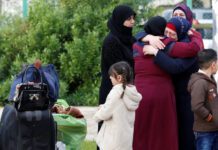
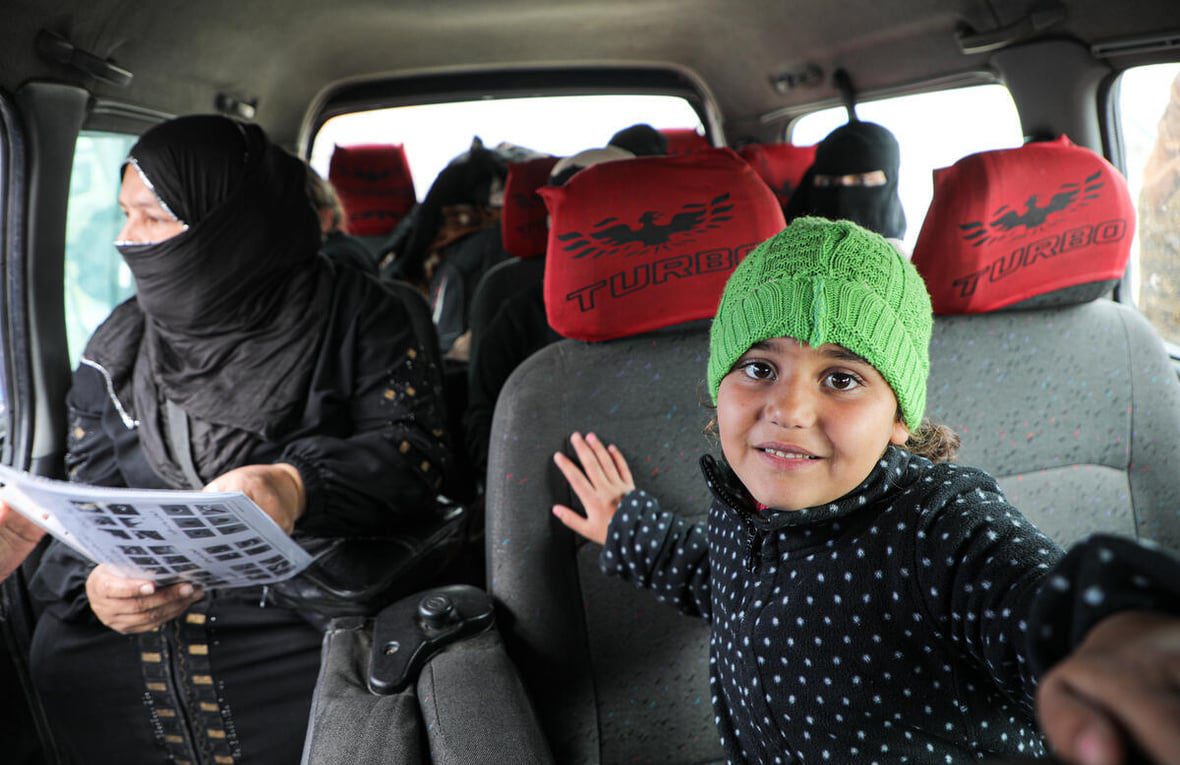
In December 2025, the United Nations High Commissioner for Refugees (UNHCR) facilitated the voluntary return of 155 displaced families from Abu Khashab camp to Deir Ezzor, marking one of the most visible organized return movements to eastern Syria last year.
UNHCR said on its X account on Dec. 20 that its teams provided transportation and information on available services to ensure what it described as “a safe and dignified return.” Deir Ezzor Governorate confirmed that the families arrived in three batches and were transferred to their home areas in the eastern countryside, bringing the total to about 860 people, according to official statements.
Local authorities said the Directorate of Social Affairs and Labor coordinated with the Office of International Cooperation to support the returnees. Coverage by DeirEzzor24 reported similar figures, noting that approximately 150 families arrived over three days after years of displacement from areas previously under Syrian Democratic Forces (SDF) control.
War Strained Infrastructure
However, despite the symbolism of return, daily life in Deir Ezzor reflects the limits of what repatriation alone can achieve. Large sections of infrastructure remain damaged after over a decade of conflict, while public services struggle to keep pace with demand. Electricity shortages, weakened water networks and limited health care continue to affect both longtime residents and returnees, according to local reporting.
UNHCR Deputy Head of Mission in Syria Asir al-Madaeen warned in October that while a regional framework exists for refugee returns, “the return will be difficult in some affected areas,” adding that international support “is not enough.” Her remarks came as nearly one million refugees and about 1.8 million internally displaced people returned to Syria, figures cited by UNHCR.
Unemployment Stifles Returnees
Despite continued efforts, economic pressures have emerged as a central challenge. In Deir Ezzor, unemployment dominates public conversation, especially among returning youth. Omar al-Hammadi told Syria TV that his early calls during the uprising focused on fair access to jobs, a demand he said remains unmet.
Anas al-Mustafa, also unemployed, said dozens of young men in his street hold university degrees yet remain without stable work, relying on irregular daily labor. Economist Khalid al-Abdullah said the city needs a comprehensive recovery plan centered on reviving productive sectors, noting that reliance on public employment no longer matches economic realities.
A Mirror of Wider Trends
Housing presents another obstacle. While Deir Ezzor has not seen rent spikes on the scale reported in other eastern cities like Ras al-Ayn and Tal Abyad, where sharp increases in rates has been tied to returning families, residents face limited supply and damaged housing stock. The experience elsewhere demonstrates how return movements can strain local markets when reconstruction lags behind demand.
UNHCR and Syrian authorities frame returns as voluntary and coordinated, yet the Deir Ezzor experience highlights a broader reality. Returning to places of origin addresses only a small part of displacement hardships without parallel progress regarding employment, housing and economic recovery. As Hammadi put it, “We just want a fair chance to rebuild our city,” a sentiment reflecting hopes of thousands whose joy is tempered by the challenges of a post-Assad reconstruction.