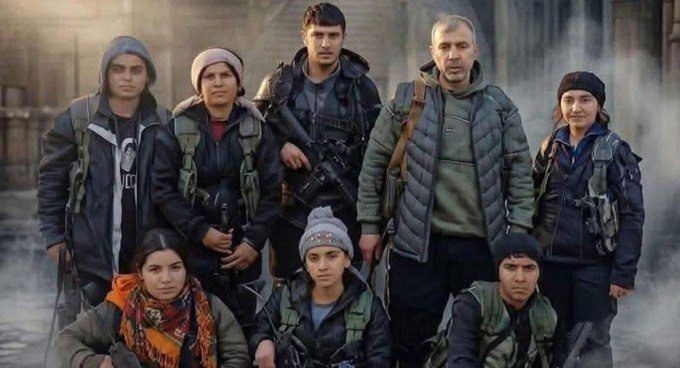
A recent German-language investigative report by the outlet CRISIS focuses attention on the persistent recruitment of children in Syria by Kurdish-led armed groups, including the Kurdistan Workers’ Party (PKK) and its Syrian affiliates within the Syrian Democratic Forces (SDF). Filmed in February 2025, the report documents an underground base used by the Women’s Protection Units (YPJ) near the contested Tishreen Dam on the Euphrates River.
Many of the women shown appear to be teenagers. One fighter is confirmed to be 17. In private conversations, some told reporters they had been part of the unit for six to 10 years, raising the likelihood of recruitment while still minors. When questioned on ages, the group’s leadership declined to respond as an SDF press officer monitored the interviews.
A Pattern Backed by Rights Reporting
The scenes mirror extensive findings by Human Rights Watch (HRW), the UN and other monitors. In an October 2024 report, HRW said the Revolutionary Youth Movement (RYM) of Syria recruited girls and boys as young as 12, removed them from their families and subjected them to ideological indoctrination before transferring many, primarily girls, to armed groups affiliated with the SDF.
Adam Coogle, deputy Middle East director at HRW, said the practice exposes children to severe harm. “The blatant involvement of groups like RYM and the persistent number of child recruitment cases year on year underscores a critical failure.”
According to a January UK government report UN data supports those concerns. The UN secretary-general verified 231 cases of child recruitment by the SDF and affiliated groups in 2023. The Syrian Network for Human Rights recorded at least 672 cases of minors recruited by the YPG and SDF between July 2012 and June 2024, noting the systemic practice expanded as the SDF consolidated control over northeastern Syria.
Claims of Rights Versus Lived Reality
The SDF and PKK have long promoted themselves as defenders of women’s rights and Kurdish self-rule. Female fighters are frequently highlighted as symbols of empowerment. However, multiple international assessments challenge that narrative.
A December 2025 report by the EU Agency for Asylum found Kurds were the primary targets of forced recruitment, while Christians faced significantly lower risk. The report concluded that forced and child recruitment by the SDF and YPG amounts to persecution under international law. Most affected families are Kurdish Sunni Muslims, raising questions about selective enforcement and possible religious bias.
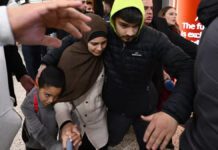
Families interviewed by HRW described children disappearing after school or cultural activities linked to youth centers. Many said SDF or autonomous administration offices refused to register complaints or intervene.
Aleppo Casualty Highlights Ongoing Impact
The issue is not confined to past reports. Researcher Gregory Waters drew attention to a recent case tied to clashes in Aleppo’s Kurdish-majority neighborhoods of Sheikh Maqsoud and Ashrafieh. Waters said a 14-year-old girl, Amara Mahmoud, had been recruited or abducted less than a year earlier and was later killed in fighting.
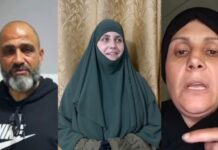
According to Waters, Mahmoud was initially taken into the SDF’s Internal Security Forces (ISF) also known as “Asayish”, from her home in Kobani before being sent to Sheikh Maqsoud. Kurdish outlet Rudaw published a video celebrating her death, including footage of Mahmoud telling her family not to look for her. Waters said the video and surrounding circumstances point to the involvement of ISF leadership in child recruitment.
Law, Responsibility and External Support
Recruiting children under 15 violates international humanitarian law and constitutes a war crime under the Rome Statute of the International Criminal Court. The Optional Protocol to the Convention on the Rights of the Child prohibits nonstate armed groups from recruiting anyone under 18.
The SDF signed a UN action plan in 2019 to end child recruitment and created child protection offices. While hundreds of children were demobilized in subsequent years, UN reports show recruitment persisted and spiked sharply in 2022 as corrective action declined. As the German investigation and recent Aleppo casualty show, the gap between stated democratic ideals and the realities faced by Kurdish children on the ground remains unresolved.