
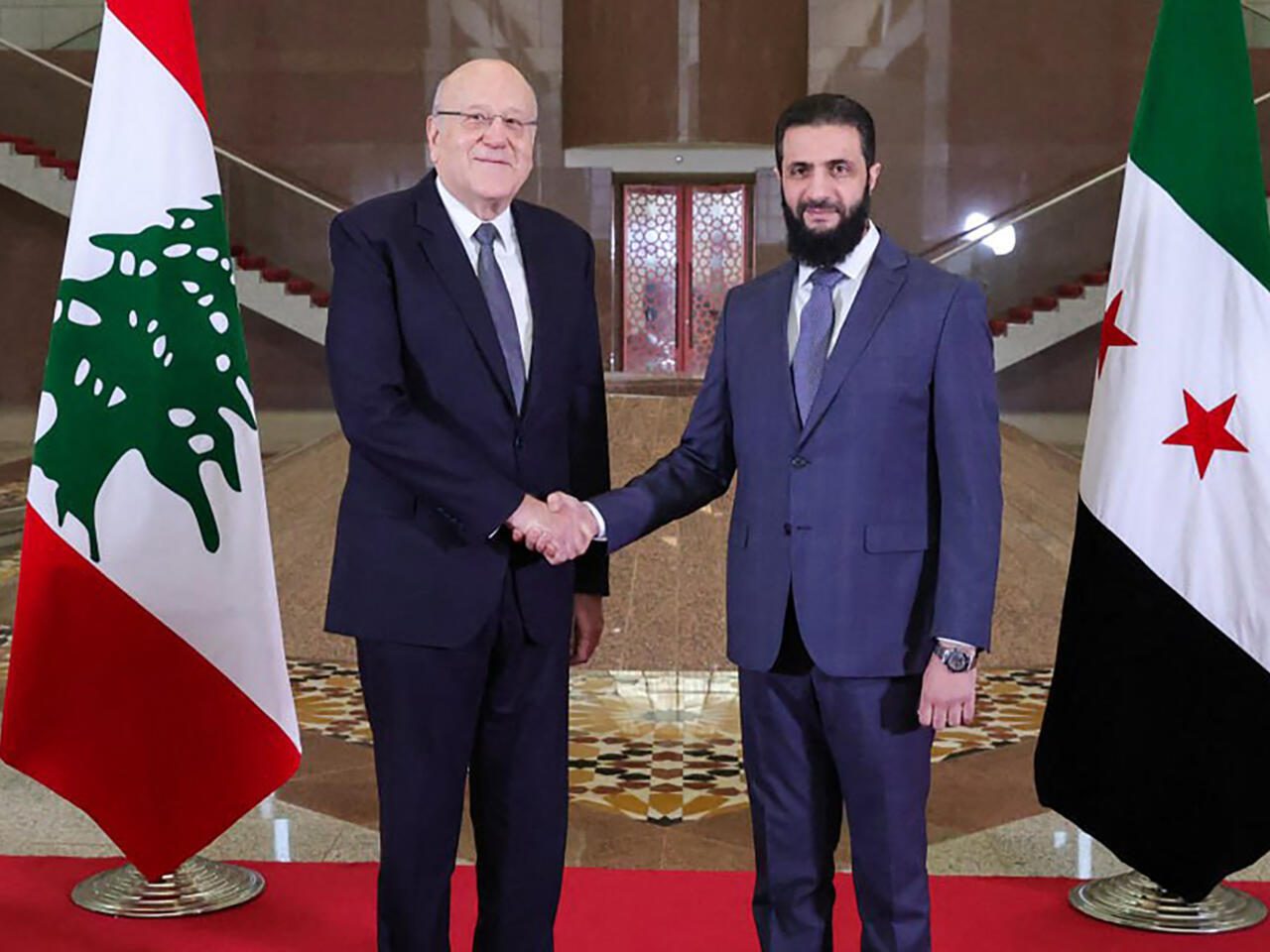
Syria and Lebanon are navigating a rare moment of parallel transition a year after the fall of Bashar Assad, each facing the challenge of rebuilding weakened state institutions while curbing the influence of armed groups backed by foreign powers. Damascus is contending with Syria’s PKK affiliate the Syrian Democratic Forces (SDF) in the northeast and Hijri’s Israeli-backed National Guard in the south, while Beirut confronts the entrenched power of Iranian proxy Hezbollah as it seeks to reassert state authority.
The two neighbors carry decades of mistrust shaped by Syria’s former tutelage over Lebanon and by Hezbollah’s military intervention in Syria during the nearly 14 years long revolution. Yet officials on both sides say recent months have brought cautious progress toward repairing relations and managing cross-border threats, including drug trafficking, criminal networks and the activities of Assad-era remnants operating from Lebanese territory.
Security Files and Assad Regime Remnants
Lebanese Deputy Prime Minister Tarek Mitri has publicly warned that reports of supporters of the former Syrian regime moving inside Lebanon are “cause for concern.” In a post on X, Mitri said Lebanese security services must verify the reports and take measures to ensure that “acts that harm Syria and its security in or from Lebanon must be averted.”
Lebanese government sources told Syria TV that security agencies have opened a comprehensive investigation into leaked reports and recordings detailing attempts by former Assad officers to reorganize.
Al Jazeera and The New York Times reported on documents and intercepted calls showing figures such as former Fourth Division commander Ghiath Dallah and Assad cousin Rami Makhlouf coordinating from Lebanon.
Lebanese military intelligence has since carried out raids in Tripoli, Akkar and Hermel, according to a private security source cited by Syria TV. President Joseph Aoun said the raids did not confirm the rumors but stressed continued coordination with Damascus and Lebanon’s refusal to become a platform for threatening any neighboring state.
Prisoners and the Weight of the Past
One of the most sensitive files remains Syrian detainees in Lebanese prisons. Lebanese and Syrian officials estimate there are about 2,500 Syrians incarcerated in Lebanon, with roughly 200 held on charges linked to the Syrian revolution. Human Rights Watch and Amnesty International have long criticized Lebanon’s use of military courts and prolonged pretrial detention.
Mitri acknowledged deficiencies, saying, “We must criticize ourselves and acknowledge the deficiencies and that this situation is abnormal.” He said 109 Syrian detainees, including 22 political prisoners, have been released since September.
A Syrian judicial delegation visited Beirut last week to revive stalled talks. Lebanese judicial sources told Syria TV that the meetings produced a draft framework to gradually transfer convicted prisoners after serving a set term and to address detainees without trial through legal mechanisms. Officials said progress on this file could unlock cooperation on borders, refugees and economic ties.
Diplomacy Amid Fragile Balance
Despite tensions, both governments describe relations as moving forward, albeit unevenly. Aoun said he and Syrian President Ahmad al-Sharaa agreed to update bilateral agreements and advance border demarcation through judicial and security channels. Lebanese officials also emphasize the need to curb drug smuggling and criminal networks that flourished during years of conflict.
The broader test lies in sovereignty. Lebanon faces pressure to disarm Hezbollah, while Syria seeks to limit autonomous armed actors in its territory. For now, diplomacy reflects pragmatism rather than reconciliation. After half a century of entanglement, both states appear to accept that stabilizing their relationship begins with restraining forces that operate beyond the reach of their institutions.