Political efforts to address the ongoing crisis in Suwayda have expanded in recent weeks, combining international outreach with local civil initiatives aimed at restoring stability and preventing further deterioration. One of the most prominent developments was a visit to Washington by Suleiman Abdulbaqi, head of internal security in Suwayda, as part of a delegation including social and civil figures from the governorate.
Results to ‘Shock Outlaw Groups’
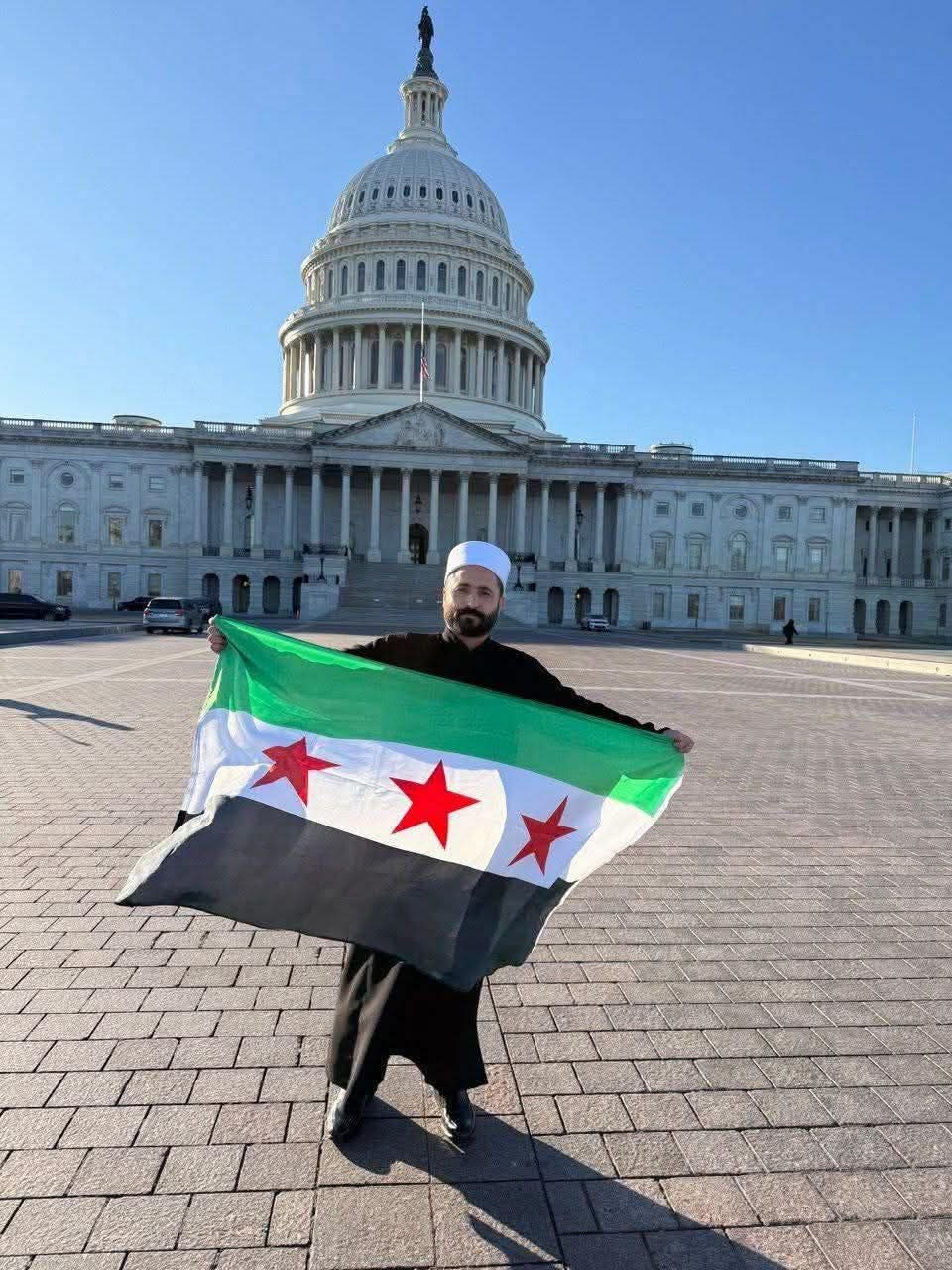
Abdulbaqi said his visit came at the invitation of the Syrian-American community and the organization Citizens for a Safe America and took place in official coordination with the Syrian state. In an interview with Al-Ikhbariyah, he said the delegation held meetings with US decision-makers, including members of the Senate Foreign Relations Committee and six congressional offices.
According to Abdulbaqi, discussions focused on the security situation in Suwayda and what he described as parties “monopolizing local decision-making.” He said he presented documented reports detailing violations by armed groups and methods of torture allegedly used by militias affiliated with Sheikh Hikmat al-Hijri against their opponents.
Abdulbaqi also told Al-Ikhbariyah that US officials were briefed on what he described as the spread of drug traffickers within the so-called National Guard militia linked to Hijri and its escalation against state institutions. “The visit was fruitful and will be a starting point for future visits,” Abdulbaqi said, predicting results that would be “shocking to the outlaw gangs in Suwayda.”
Messages of Unity and Rejection of Separatism
In separate statements published on his social media accounts following earlier meetings on Jan. 21, Abdulbaqi said the delegation aimed to convey a direct picture of Suwayda’s political and security reality, free of what he called misleading narratives. He stressed the message delivered to American officials was that Suwayda’s residents see themselves as part of Syria and do not seek projects outside a unified Syrian state.
Abdulbaqi added that, based on the meetings, the US administration’s position appeared focused on supporting Syria’s unity and stability, rejecting separatist projects and limiting its role to humanitarian assistance and support for security and stability.
He also accused Hijri of misleading followers by claiming constant contact with the US president and Congress. Abdulbaqi said that during his meetings with officials in Washington, no one recognized those claims or treated them as credible.
A Civil Roadmap Emerges Locally
Alongside diplomatic outreach, academics and intellectuals from Suwayda launched a civil initiative known as “The Third Current,” presenting what they described as a practical roadmap to protect society and prevent a slide into chaos. The initiative was announced in a statement published Sunday, Feb. 1, and addressed to the people of Suwayda inside and outside Syria.
The organizers said the initiative emerged in response to what they called a deadlock marked by massacres, displacement, marginalization and political paralysis. They emphasized they do not claim representation or absolute truth, describing the document as open to discussion and development.
Central to the initiative is the creation of a “Civil Rescue Authority in Suwayda,” defined as a nonpartisan, unarmed civil framework arising from the community. According to the statement, the authority would focus on protecting civilians, documenting violations, establishing compensation mechanisms and cooperating with state institutions to manage local affairs.
The initiative affirmed that Suwayda is an integral part of a unified Syria and called for consensual administrative decentralization as a basis for resolving the crisis. It demanded accountability for violations against civilians without politicization or revenge, stressed the safe and dignified return of displaced residents, and called for the immediate release of abducted civilians.
Broader Roadmap Frames Current Moves
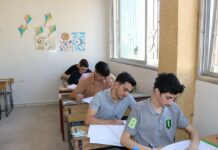
The Third Current also placed strong emphasis on protecting students and guaranteeing access to education, including recognition of the 2025 high school diploma without reduction. It called for neutralizing Suwayda from regional axes and rejecting the use of weapons in internal disputes, describing that issue as a red line. In outlining its principles, the initiative stressed that accountability serves stability rather than revenge, and that dialogue and civic cooperation are essential to rebuilding trust within the community.
These initiatives revive elements of a broader “roadmap for resolving the crisis in Suwayda” launched in a Syrian-American-Jordanian statement on Sept. 16, 2025, according to the Syrian Ministry of Foreign Affairs. That roadmap affirmed Suwayda’s place within Syria and called for gradual steps to rebuild trust, restore services, investigate violations and reintegrate the governorate into state institutions.
Taken together, the Washington outreach and the emergence of local civil proposals reflect parallel tracks seeking to address Suwayda’s crisis through political engagement, accountability and community-based solutions, as debates continue over the most viable path toward lasting stability.