 In what is considered one of the most concrete steps so far toward Syria’s reconstruction, the Chinese GCI Group, a consortium of 25 companies operating across multiple sectors, announced the inauguration of a major logistics, administrative, and regional center in the Lebanese town of Chtaura in the Bekaa Governorate. The move paves the way for the group’s active participation in large-scale reconstruction projects in Syria, positioning Lebanon as a key gateway for Chinese investments targeting the Syrian market.
A Development Vision Beyond Traditional Construction
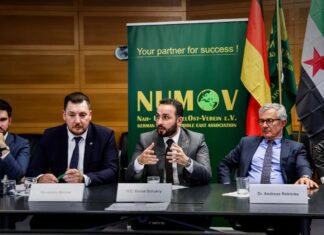
During a press conference reported by the Lebanese National News Agency, the group explained that Chtaura was chosen for its unique geostrategic advantages. Located less than 50 kilometers from the Syrian capital, the town offers an ideal operational base for managing complex projects while maintaining a relatively stable logistical environment. According to the group, this location allows greater flexibility and control over supply chains, personnel movement, and project management for future reconstruction efforts.
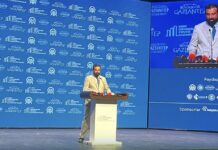
GCI Group CEO Wael Yassin, who is also president of the Middle East Center for Studies and Development, said Lebanon’s selection reflects confidence in its historical and regional role and its ability to regain its position as an economic hub when appropriate conditions are in place.
Yasin outlined a development model transcending conventional reconstruction. “We reject the logic of aid and rentier economies. Our goal is empowering communities by transforming them from consumers into producers,” he said. He added the group’s sustainable development projects aim to address the root causes of unemployment and poverty and lay the foundations for a productive economy capable of self-driven growth.
From Infrastructure to Artificial Intelligence
What sets GCI Group apart, Yassin said, is its comprehensive scope. The consortium is not limited to construction but operates as an integrated economic system. Through its specialized infrastructure companies, it undertakes projects such as roads, bridges, and other vital facilities.
The group is also involved in designing and implementing industrial production lines, advancing agricultural development by introducing modern technologies to enhance productivity and food security, and driving digital transformation through artificial intelligence and advanced software to manage markets and business operations. This diversity, he noted, reflects a vision of comprehensive economic reconstruction rather than the mere repair of damaged structures.
Expanding Damascus–Beijing Cooperation
Yasin linked the initiative to the broader diplomatic opening between Damascus and Beijing, noting that China’s approach to Syria has become increasingly strategic and clearly defined. He pointed to the recent visit by the Syrian foreign minister to Beijing, which resulted in several bilateral agreements aimed at encouraging and protecting Chinese investments.
He said the current step builds on earlier initiatives, including the signing of a memorandum of understanding between the Syrian-Chinese Business Council and China’s Suzhou Land Group, which specializes in developing smart industrial cities and transferring advanced technological expertise.
The launch of GCI’s regional center signals the beginning of a new phase of Chinese investment directed toward Syria via a Lebanese gateway. Rather than a traditional reconstruction effort, the project reflects an integrated economic and social development approach, supported by a strategic logistics platform designed to sustain long-term growth.