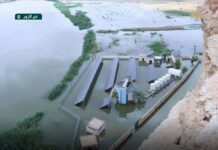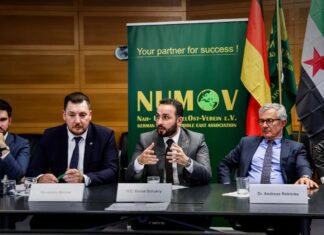
Following devastating floods, senior government officials convened in the Idlib countryside to coordinate relief and recovery efforts. Minister of Emergency and Disaster Management Raed al-Saleh, along with Health Minister Dr. Musab al-Ali, met with the governors of Idlib and Latakia and representatives of humanitarian organizations. The meeting focused on launching a comprehensive emergency plan to reactivate health centers and deploy mobile clinics in the hardest-hit areas, including Kharbat al-Jouz in western Idlib.
Immediate Health Response and Coordination
Ali outlined immediate health measures, confirming that several fully equipped mobile medical units are ready to provide emergency services. The ministry is working to restore and activate health centers across affected villages to ensure adequate medical coverage.
In areas where health centers are undergoing rehabilitation, temporary medical clinics will be established to provide uninterrupted care until renovations are completed. He emphasized that the standard of health services provided in displacement camps would be extended to all flood-affected areas.
Highlighting the integrated government approach, Ali pointed to close cooperation with the ministries of Emergency and Disaster Management and Social Affairs and Labor, as well as with local governorates. This coordination aims to unify efforts toward a long-term goal: ending the protracted camp situation and fundamentally addressing the needs of displaced residents.
Addressing the Root Causes of Displacement
Building on this, Minister Saleh detailed the findings of a recent assessment of camp populations, which identified three distinct categories requiring tailored solutions. The first category includes individuals unable to return home due to destroyed property, damaged infrastructure, or landmines. For these families, the ministry is coordinating the distribution of 1,500 caravans while infrastructure repairs, including the rehabilitation of 500 schools in the Idlib countryside, are carried out.
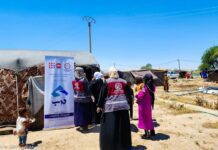
The second category comprises people with no homes in their areas of origin, for whom the camps have become a permanent residence. The government is exploring solutions for this group, including job opportunities in new areas or alternative housing. The third category consists of shepherding communities who live in clustered tents as part of their livelihood and are often mistakenly classified as displacement camps.
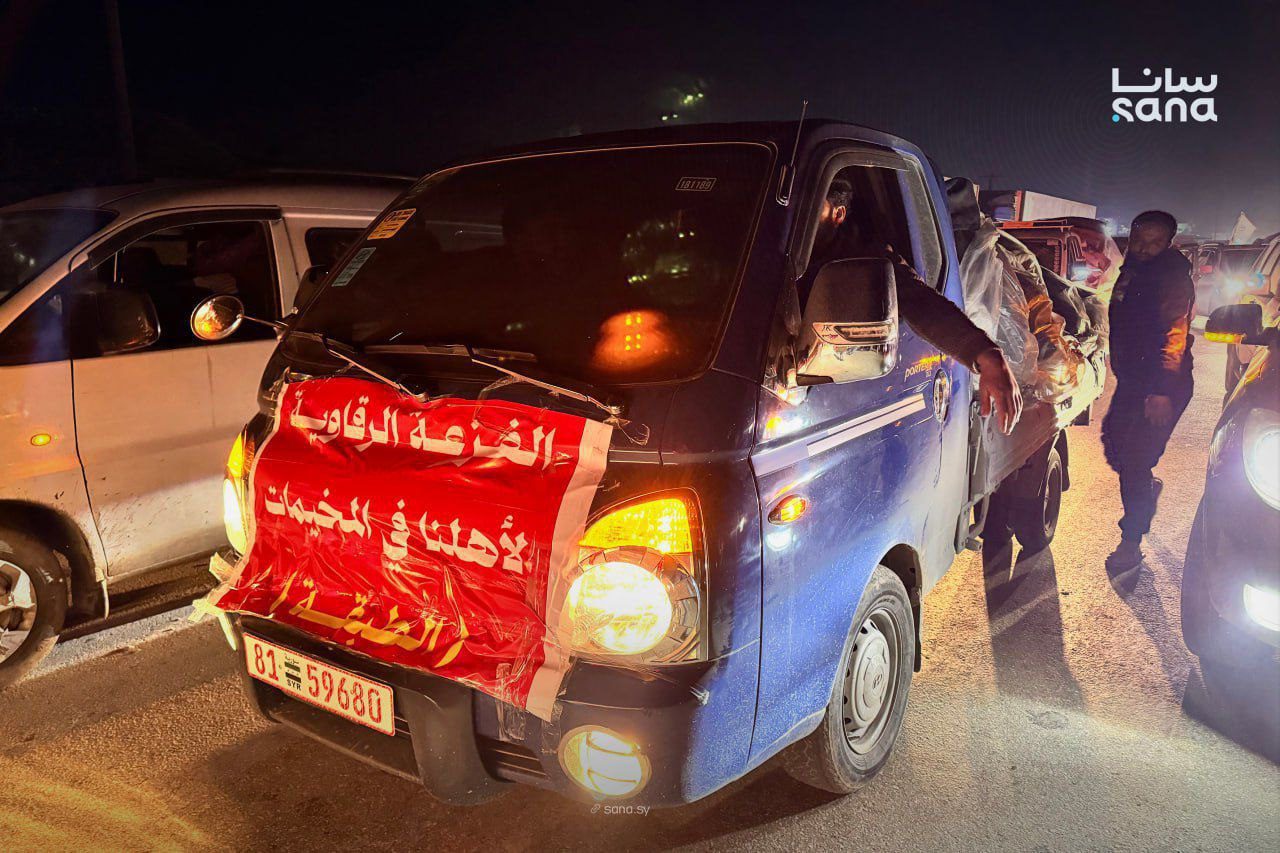
Saleh reiterated the government’s commitment to finding lasting solutions for all those affected by the displacement crisis. Concurrently with these strategic meetings, a humanitarian aid convoy of 130 vehicles from Raqqa Governorate was dispatched to assist those affected by recent floods in the Kharbat al-Jouz camps, providing essential relief and support to impacted residents.
Tragic Setbacks
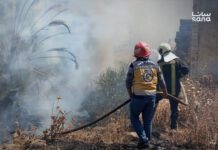
In the Asaliyah and Ain Isa areas of Jabal al-Turkman in Latakia, flash floods claimed the lives of two children. One child and a young man were rescued by Syrian Civil Defense teams. In a separate incident, a Syrian Arab Red Crescent (SARC) team en route to assist flood-affected residents in the same region was involved in a traffic accident.
The crash resulted in the death of one volunteer and injuries to six others, most of them volunteers. Syrian Civil Defense teams responded to the accident, rescuing the injured, recovering the volunteer’s body, and transporting all casualties to Latakia University Hospital.