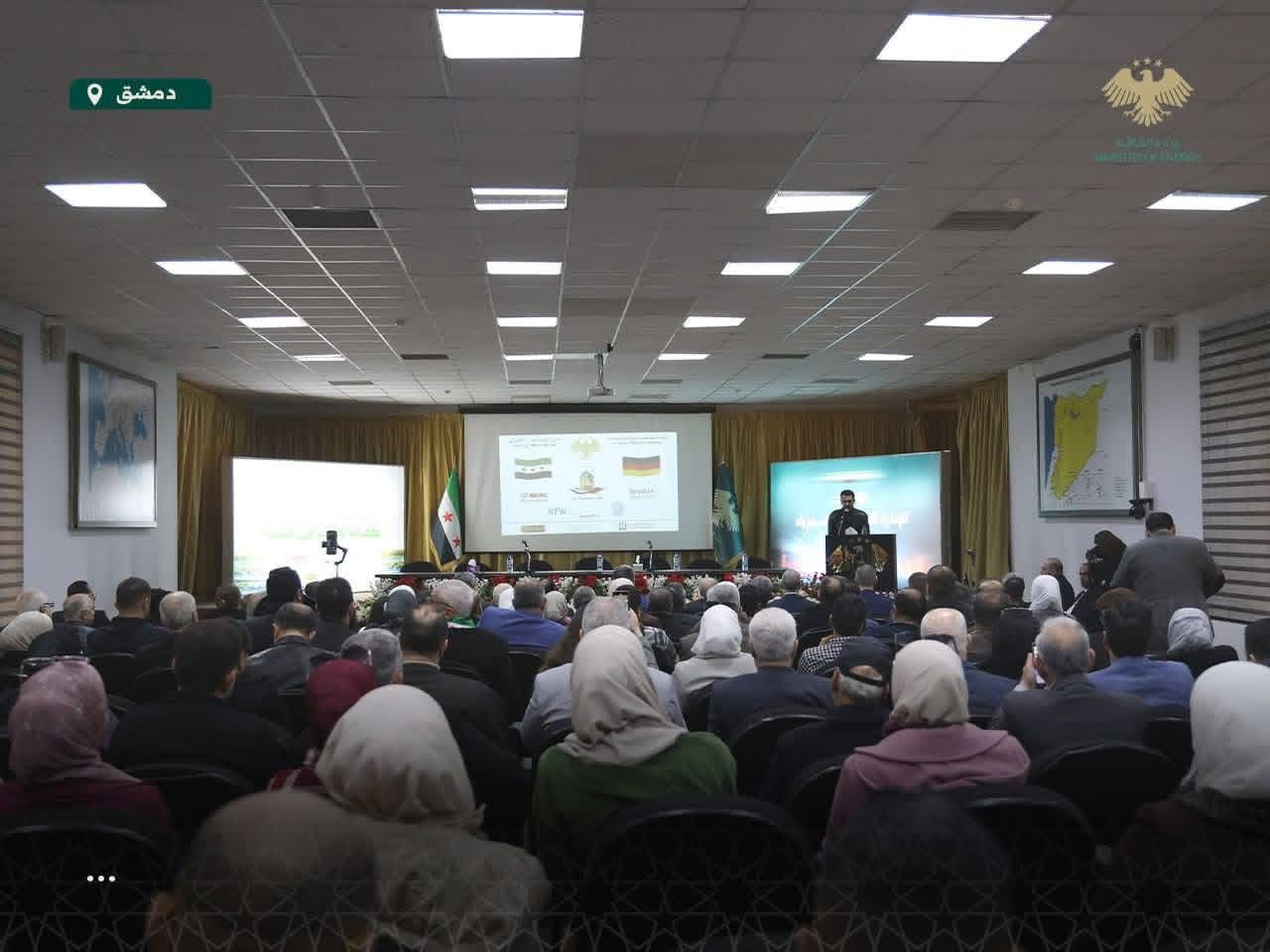
 The National Center for Energy Research (NCER) officially launched a Syrian-German project on energy efficiency in structures at the conference hall of the General Establishment for Electricity in Damascus.
The initiative is being implemented in partnership with the German engineering firm Iproplan and University of Rostock. It aims to transfer technical expertise, provide specialized consultancy and rehabilitate engineering cadres. A central objective of the project is to update Syria’s Thermal Insulation Code (TIC) for buildings.
New Code to Enhance Energy Savings
Dr. Yusuf Hassoun, director of NCER, described the initiative as a “quantum leap” for the country’s energy efficiency sector. He said the project is expected to deliver measurable energy savings by modernizing the TIC, which has been in force since 2007, in line with the latest scientific and technical standards.
Hassoun noted that the updated code will improve the performance of both new and existing buildings. The project also includes training engineers and specialists, inside and outside Syria, on the application of the revised code and its mechanisms.
He added that NCER is working with its German partners to establish and develop a national laboratory dedicated to thermal insulation testing and evaluation, aimed at ensuring quality implementation and accurate measurement standards.
Adapting German Expertise to Local Needs
Dr. Saad Baradei, regional director of Iproplan in Syria, said the two-year project seeks to transfer German expertise in building energy efficiency and apply it within the Syrian context. This includes revising and upgrading building energy codes, ultimately moving toward what he described as an “economic code” capable of delivering substantial energy savings. Baradei stated that applying the updated Arab-Syrian TIC could reduce energy consumption in buildings by 30% to 40%, a significant step given the country’s urgent need to ration energy ussage.
Dr. Abdullah Nassour, representative of the University of Rostock, said the university’s participation is focused on strengthening national expertise and building institutional capacity in energy efficiency. He emphasized that cooperation with Iproplan aims to align Syria’s TIC with global energy-saving standards and prepare qualified personnel from relevant institutions to implement future projects.
Engineer Malik Haj Ali, president of the Syrian Engineers Syndicate, highlighted the importance of engaging in both local and international engineering initiatives. He stressed the value of familiarizing Syrian engineers with the latest German techniques and research in the energy sector to support reconstruction efforts.
Last October, NCER signed a memorandum of understanding with Iproplan and the University of Rostock to train engineering cadres and update the national TIC. The agreement forms part of broader reconstruction efforts to modernize technical standards and enhance energy efficiency in Syria’s construction sector following years of infrastructure damage.