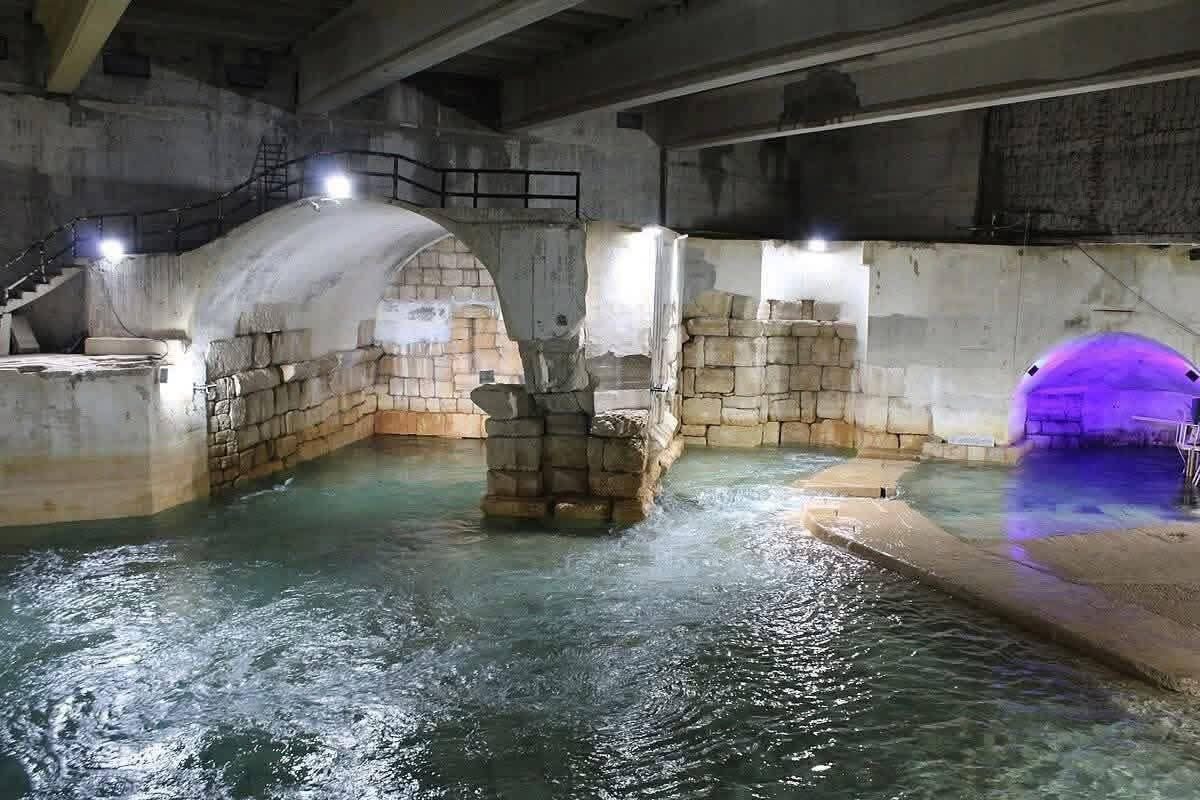
After weeks of some of the heaviest rainfall in recent years, much of Syria experienced significant precipitation, renewing hopes of easing the country’s prolonged water crisis. The rains raised water levels in basins and dams, positively affecting the overall water supply situation. In Damascus, increased rainfall and snowfall significantly boosted the flow of the Ain al-Fijeh Spring, the capital’s primary water source.
Rainfall Rates This Season
Engineer Ahmad Darwish, Director General of the Public Establishment for Drinking Water in Damascus, stated that the average rainfall recorded so far in the basin feeding Ain al-Fijeh and other springs supplying the capital has reached 289.44 mm, representing 58% of the annual average.
After approximately six weeks of rainfall, the total discharge of the spring rose to about 621,000 cubic meters, equivalent to roughly 7.2 cubic meters per second. Officials say this marks a notable improvement compared to previous dry periods.
Measures Taken by the Establishment
Darwish explained authorities begun artificially recharging wells at pumping stations across Damascus using surplus water from the spring. Part of the excess is also being diverted into the Barada River to support the natural replenishment of the groundwater basin, which extends approximately 40 kilometers from the Fijeh Spring to Otaybah Lake.
To maximize the benefit of the recent rainfall and enhance underground storage capacity, authorities are prioritizing both artificial well recharge and natural infiltration through the riverbed. As of Jan. 27, 2026, all main pumps at the spring have been halted, and water is now conveyed to Damascus entirely by gravity flow.
Positive Results and Addressing Long-Term Deficit
According to Darwish, the increased flow has had a positive impact on water availability for residents. The distribution cycle shifted from a schedule of two days off and one day on to daily supply, with most areas of Damascus now receiving water for an average of 10 to 12 hours per day. He added that, as of Feb. 1, 2026, reliance on emergency wells has been suspended. The city’s water supply currently depends entirely on Ain al-Fijeh.
Despite the recent improvements, Darwish cautioned that compensating for the accumulated groundwater deficit will require sustained rainfall over a longer period. Last year was particularly dry, with approximately 219.5 million cubic meters withdrawn from the basin.
While the outlook remains cautiously optimistic, officials say continued rainfall and snowfall will be essential to fully restore groundwater reserves. Authorities are closely monitoring flows as the rainy season progresses, anticipating further improvement in the coming weeks.