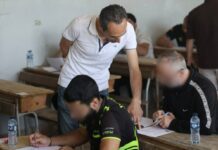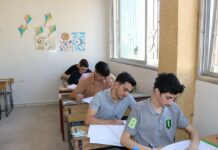
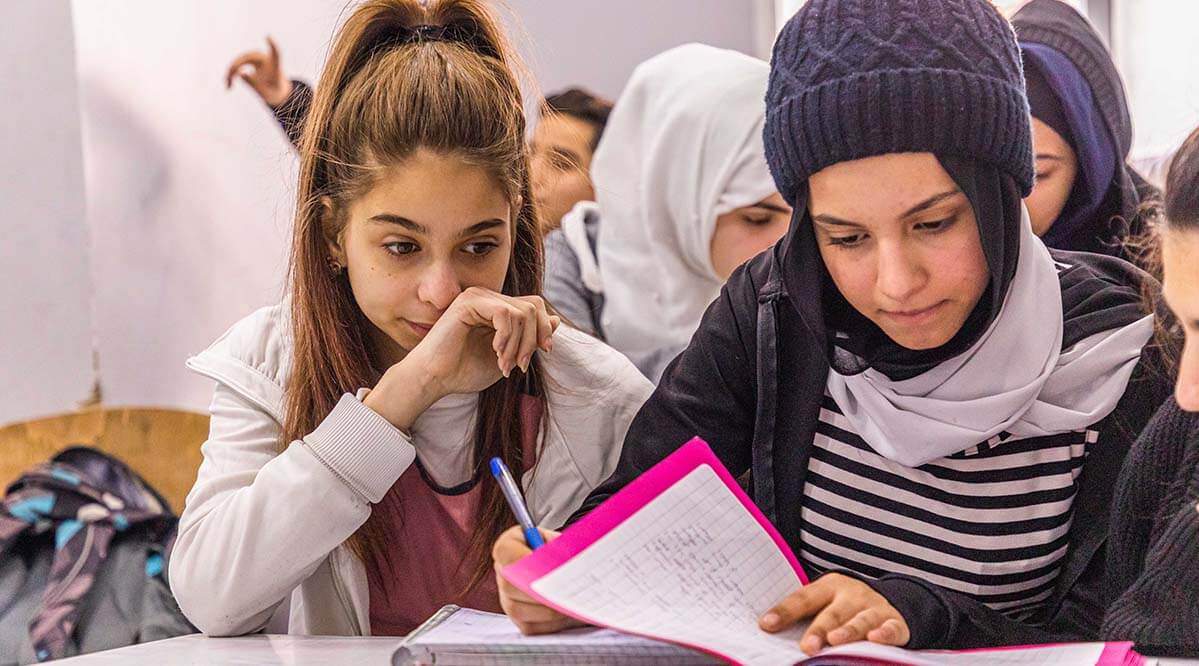
Large numbers of Syrian students returning from Lebanon are facing serious challenges integrating into schools at home, particularly due to language barriers and significant differences between the Lebanese and Syrian curricula. After years abroad, many students are encountering a new educational environment marked by different teaching methods, terminology and mathematical systems, creating feelings of alienation and frustration.
Human Stories Behind the Statistics
Rashed al-Tabbani, a sixth-grade student, recently returned with his family to Qusayr in the Homs countryside after nearly a decade in Lebanon. Having studied under a system where mathematics and sciences were taught largely in French and English, with Arabic limited to a single subject, he found the transition overwhelming.
In his new Syrian school, the language of instruction is entirely Arabic, and even the format of numbers and scientific terminology differs. The use of Eastern Arabic numerals and new subject names left him confused and discouraged.
“In the first few days, he didn’t want to go to school,” his mother said, explaining that he felt different from his classmates. Similarly, Ghazal, a fourth-grade student, was asked by her teacher to move back to the third grade due to weak Arabic reading and writing skills, despite excelling in French and English during her studies in Lebanon.
Linguistic and Psychological Barriers
Education specialists note that Arabic proficiency is the most significant obstacle for many returning students. While they may have strong skills in foreign languages, Syrian schools rely on Arabic as the primary language of instruction. Differences also extend to mathematics, where students accustomed to Western numerals and terminology must adapt to Eastern Arabic numerals and locally used expressions.
Experts warn that the challenges are not only academic but psychological. Students may feel isolated in classrooms or placed in separate support groups, which can intensify their sense of exclusion. The impact varies depending on age, previous schooling and the level of preparation before returning.
Official Measures to Support Integration
The Syrian Ministry of Education has announced a comprehensive plan supporting returning students. Measures include establishing special Arabic language classes for non-native speakers, implementing the “Category B” accelerated learning program for students who are academically behind and appointing educational supervisors in various governorates to monitor integration and provide psychological and academic support.
Director of Education Muhammad Saed Qaddour said the ministry has allocated dedicated spaces for Arabic instruction and ensured regular follow-up through specialized supervisors to help students regain academic and social stability.
The Family’s Role
Parents play a crucial role in easing the transition. Many stress the importance of patience and emotional support, warning that excessive pressure can harm a child’s confidence and academic performance.
Faisal al-Diyab, a father who returned from Lebanon, said he enrolled his children in private Arabic tutoring before returning to Syria, which helped them adapt more smoothly. He also highlighted the importance of teachers’ approaches, noting that engaging instruction can foster a love for the language, while rigid methods may discourage students.
Ultimately, successful reintegration depends on coordinated efforts between families, schools and authorities to provide academic reinforcement, psychological support and a welcoming environment, enabling students to reconnect with a homeland they have been away from for years.