On Friday, Feb. 27, the UN Security Council removed the “Al-Nusrah Front for the People of the Levant (JN),” also listed as “Hayat Tahrir al-Sham (HTS),” from its ISIS and Al-Qaida sanctions list, ending over a decade of international restrictions on the group.
In a statement, the Security Council committee overseeing sanctions under resolutions 1267, 1989 and 2253 announced it had deleted the entity from the ISIS and Al-Qaida Sanctions List. The decision lifts the asset freeze, travel ban and arms embargo imposed under Resolution 2734, adopted in 2024 under Chapter VII of the UN Charter. The listing, first imposed on May 14, 2014, targeted JN for its ties to Al-Qaida and its role in militant operations during Syria’s revolution, according to the committee’s official entry.
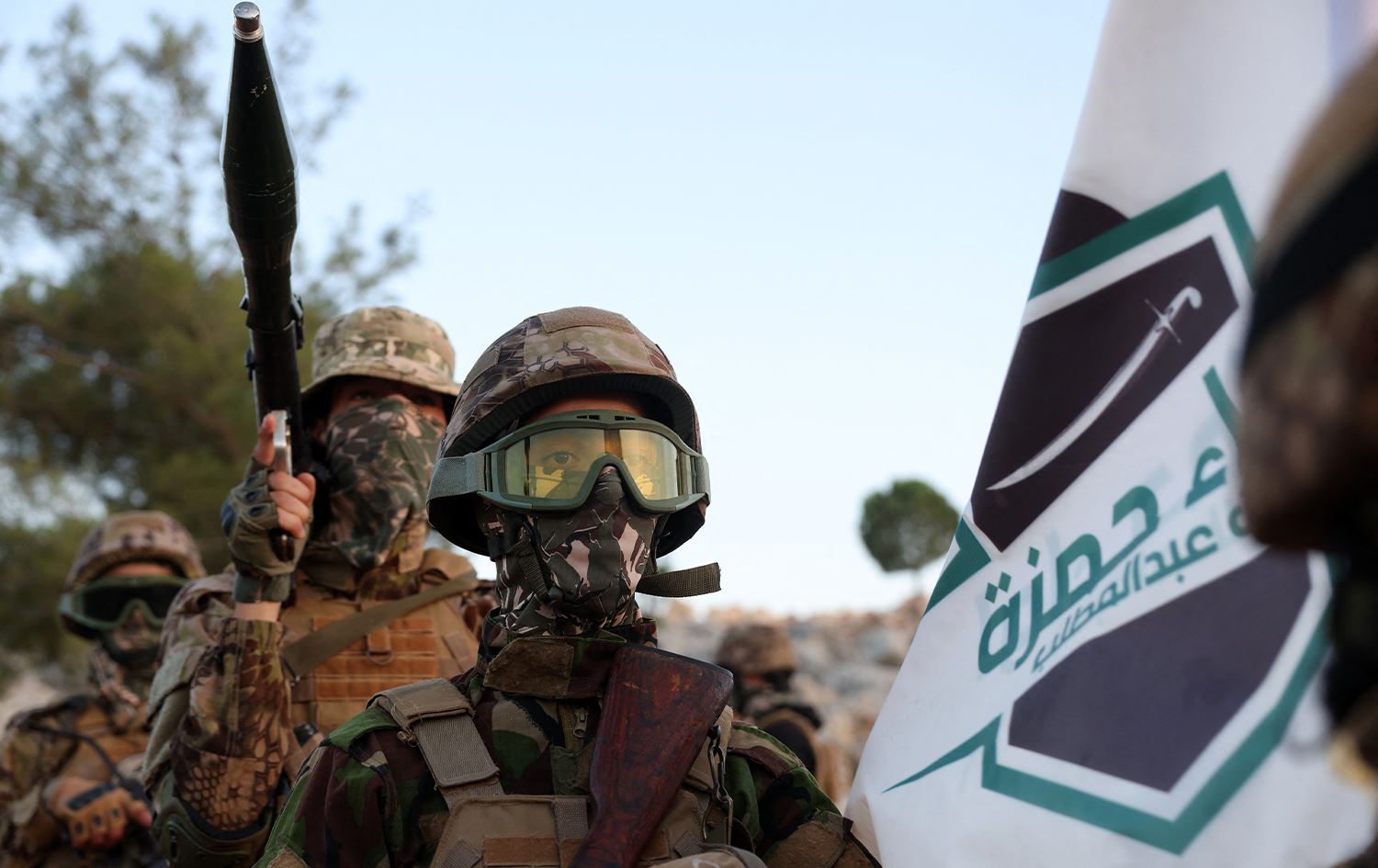
The group later reemerged as Hayat Tahrir al-Sham, or HTS, in 2017 after announcing it had severed ties with Al-Qaida in 2016. Despite the name change, the UN continued to treat HTS as an alias of the sanctioned organization. The removal means UN member states are no longer required to freeze the group’s funds, restrict the movement of its representatives or block arms transfers linked to it.
Shift in Post-Assad Syria Policy
The move marks a continued significant shift in international policy toward Syria following the 2024 fall of the Assad regime. HTS, once led by current Syrian President Ahmad al-Sharaa, played a central role in the offensive that toppled Assad’s regime.
Sharaa, formerly known as Abu Muhammad al-Jolani, led HTS during its transformation from an Al-Qaida affiliate into a dominant force in northwestern Syria. After assuming power in Damascus in December 2024, Sharaa announced the dissolution of all armed revolutionary factions, including HTS. He was removed from the UN sanctions list in 2025 following a resolution introduced by the US.
The latest action followed a request by Syria’s new authorities to delist “Al-Nusrah Front for the People of the Levant,” according to reporting on the committee’s decision. The UK, which holds the rotating presidency of the Security Council this month, announced the consensus decision in the absence of the committee’s chair.
Humanitarian and Reconstruction Implications
The delisting carries broad implications for Syria’s recovery after more than a decade of war. According to an analysis last year by the International Crisis Group, nearly 70% of Syrians are projected to require humanitarian assistance in 2025. The organization has argued that maintaining UN sanctions on HTS and its former leaders complicated engagement with Syria’s interim government and unnecessarily deterred reconstruction efforts.
Although the Security Council previously adopted humanitarian exemptions to sanctions, aid agencies remained cautious about operating in a country whose top leadership was linked to a listed entity. Sanctions also restricted formal diplomatic engagement and access to international financial systems, limiting economic stabilization efforts.
By lifting the measures, the Security Council has cleared a legal obstacle that many diplomats and analysts viewed as hindering Syria’s fragile transition. Supporters of delisting contend the decision better aligns the sanctions regime with current realities, noting that HTS publicly disavowed Al-Qaida in 2016 and dissolved as an armed group in late 2024.
While some member states had expressed concern about governance, foreign fighters and long-term security commitments, the committee’s action signals a willingness to recalibrate counterterrorism tools in response to political change.
The decision does not affect individual sanctions on Syria by UN member states. However, it removes one of the most prominent terrorism designations attached to the country’s new leadership and may open the door to deeper diplomatic and economic engagement in the months ahead.