Israeli military incursions and attacks across southern Syria intensified into what local monitors and residents describe as a near-daily pattern affecting civilians, farmland and public movement, with UN observers now expanding field investigations into multiple incidents.
A report by the Research and Consulting Center, published through a UN platform, documented nearly 900 incidents attributed to Israeli forces in southern Syria, including 123 in March alone. The report said the most significant shift has been the overlap between military activity and civilian protest movements, with demonstrations moving from town centers toward contact zones in late March and early April. Recent incidents in Quneitra and Daraa included house raids, road closures, checkpoints, artillery shelling, arrests and the reported abduction of civilians.
Local outlets reported Israeli patrols entered Kodna, Hamata and areas near Jamla in recent days, detaining several residents, including a 55-year-old man taken toward the occupied Golan Heights after a house raid. In Quneitra, residents reported the closure of key agricultural and village roads, including routes linking Asbah, Kodna and Ruwayhina, further restricting access to farmland and grazing areas.
UNDOF Expands Patrols and Opens Inquiries
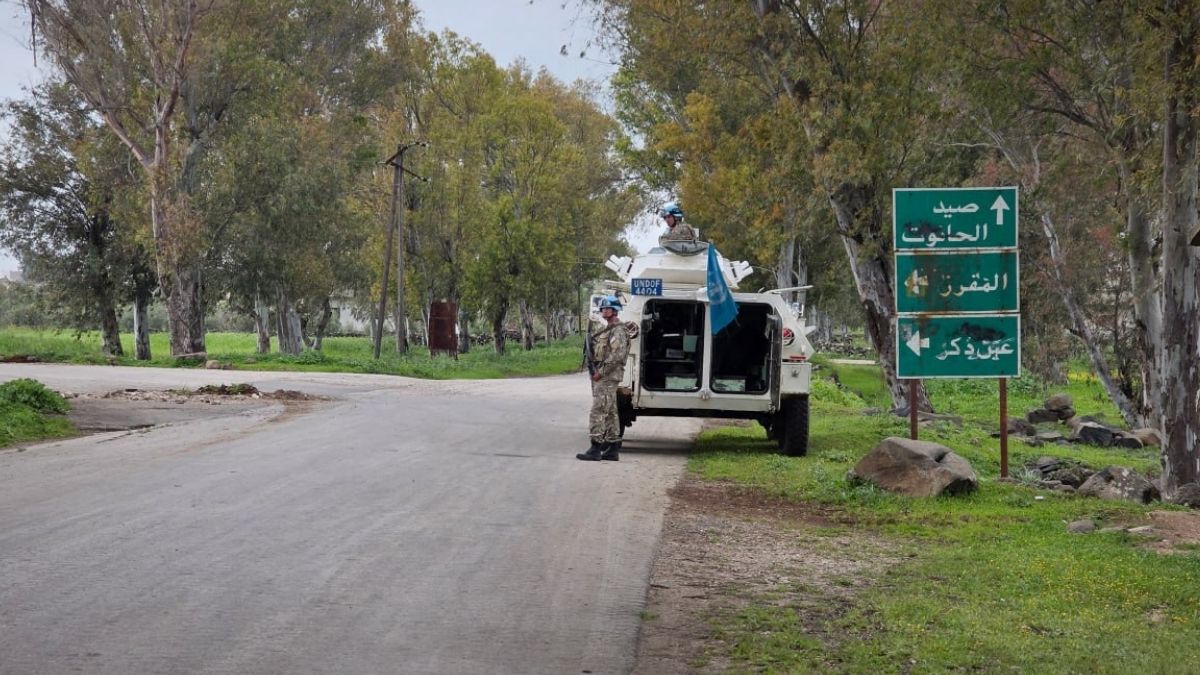
The UN Disengagement Observer Force (UNDOF), stepped up patrols along the 1974 ceasefire line while opening investigations into attacks killing or endangeringg civilians. UNDOF said its military observers saw an Israeli tank fire two shells April 3 near Zaroura killing 17-year-old Syrian, Osama al-Fahd while while inside his car.
In response, UNDOF launched a formal investigation, conducted a field assessment at the strike site and collected testimony from residents and nearby villages. In a statement, UNDOF said civilians “must never be targeted” calling any attack on civilians unacceptable and a violation of international humanitarian law. It also urged all parties to show maximum restraint and avoid actions that could raise tensions.
UNDOF patrols also entered Maariya in western Daraa this week to document testimony from residents about arrests, incursions and the theft of over 300 cattle locals said “Israeli settlers” took after crossing the ceasefire and separation zone.
Quneitra Media Director Muhammad al-Saeed said the UN deployment remains part of the standing 1974 disengagement framework, but its documentation role has become more active as violations increase. He noted the patrols have not stopped incursions, though they provide some reassurance to residents by documenting events.
International Criticism Mounts Over ‘Buffer Zone’
International concern mounts alongside the rising number of incidents. UN Under-Secretary-General for Peace Operations Jean-Pierre Lacroix said during a visit to Syria the presence of Israeli forces inside the “buffer zone” itself constitutes a violation of the 1974 Disengagement Agreement, which permits only UNDOF military deployment in that area.
That criticism comes as analysts describe the incursions as increasingly systematic rather than isolated border responses. Syrian-Israeli affairs analyst Khalid Khalil told Arabi21 raids fit into Israel’s pattern of regional military aggression which may be aimed at increasing pressure on Damascus during a volatile period of wider conflict.
Military analyst Brig. Gen. Abdullah al-Asaad said the expansion appears to have moved beyond temporary incursions into the creation of fortified operational points inside Syrian territory, describing it as an effort to establish “a new reality” before any renewed diplomatic negotiations.
Occupation Tactics Oppress Civilian Life
Beyond the immediate security impact, residents and local officials say the repeated raids, land restrictions and resource controls are changing daily life in villages near the occupied Golan. Officials in Quneitra say residents fear a strategy designed to pressure communities into “self-displacement,” echoing the long shadow of the 1967 war.
Despite that, local residents continue to reject leaving their towns, even as military patrols, surveillance drones and temporary night observation posts become more common. The cumulative effect, according to local reporting and UN-linked monitoring, points to a sustained pattern of incursions, civilian detentions and infrastructure disruption extending across multiple districts in southern Syria.
With UN investigators gathering evidence and international officials openly questioning the legality of military deployments in the buffer zone, the developments are drawing sharper scrutiny as part of a systemic, entrenched pattern of occupation-era pressure on Syrian communities.