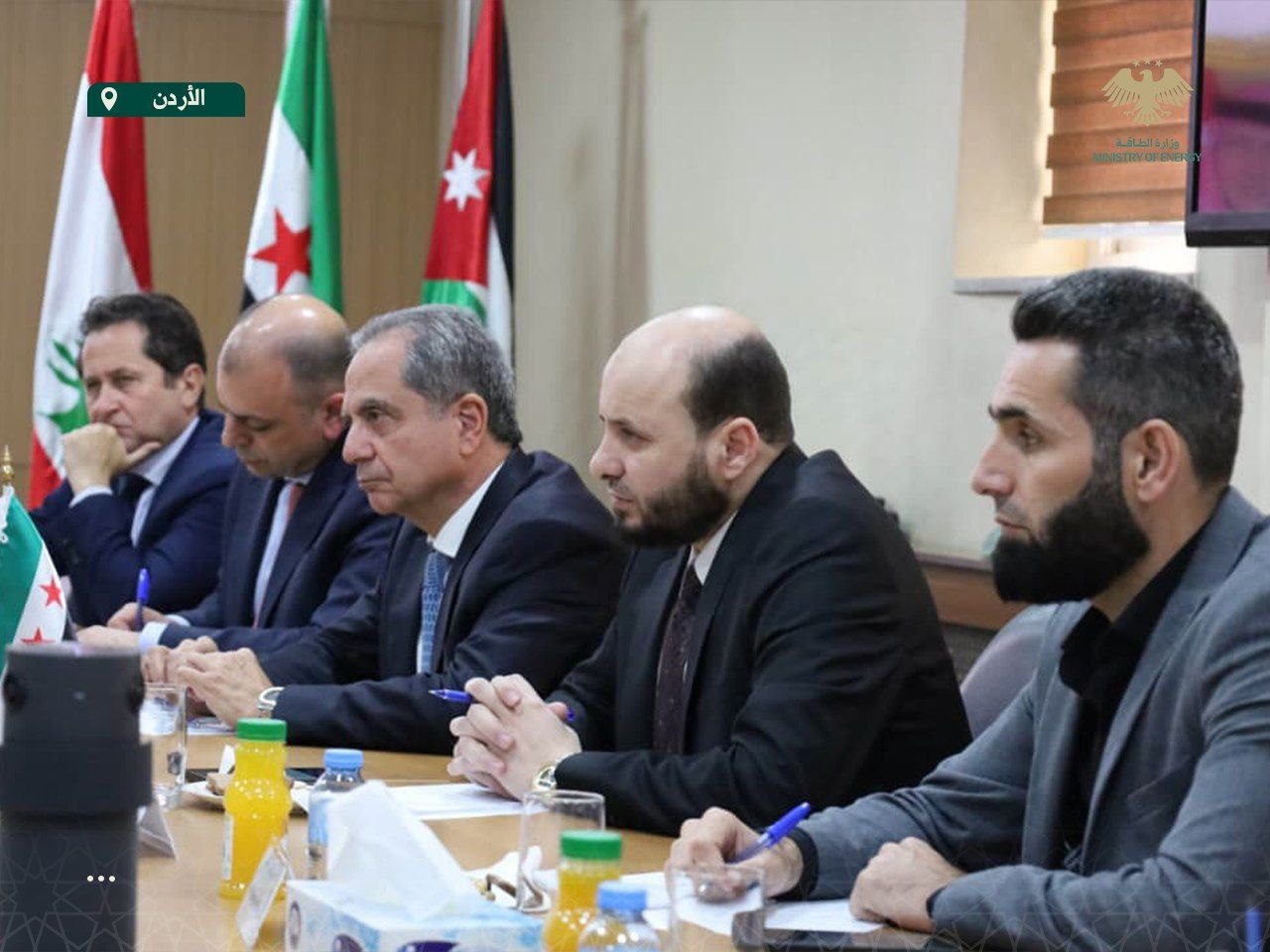
 The energy ministers of Syria, Jordan and Lebanon met in Amman to discuss closer cooperation across the region’s energy sector, with a focus on gas exchange projects, infrastructure use and electrical grid integration.
Syrian Energy Minister Muhammad al-Bashir, Jordanian Energy Minister Saleh al-Kharabsheh and Lebanese Energy Minister Joseph Sadi said the talks aimed to build on earlier agreements and move toward implementation.
In January 2026, Syria and Jordan signed an agreement for the sale and purchase of natural gas, allowing supplies to move through Jordanian territory into Syria. Officials say the deal forms part of a wider effort to strengthen regional energy stability and improve service delivery.
Speaking after the meeting, Bashir pointed to recent coordination with Jordan, saying efforts to rehabilitate the Arab Gas Pipeline and secure gas supplies have contributed to stabilizing Syria’s electricity grid and improving energy services. He added importing gas through the port of Aqaba and routing it into the pipeline has supported grid reliability.
The meeting, he said, reflects continued cooperation that began in earlier sessions. Bashir also expressed support for expanding regional electricity connections. He cited plans to restore a 400-kilovolt transmission line with Jordan and maintain four lines linking Syria and Lebanon, which are ready on both sides.
Technical Progress Nears Completion Stage
Jordan’s minister said technical work reached an advanced stage, with results from studies and assessments expected soon. Kharabsheh said recent efforts have included feasibility studies, infrastructure repairs and contract awards in several countries.
He noted that Jordan continues to play a central role in importing liquefied natural gas, converting it for use and sending it through the Arab Gas Pipeline to Syria. Kharabsheh said Syria’s electricity supply shows improvement as cooperation expands.
He also confirmed Jordan and Lebanon are close to finalizing agreements to repair gas networks, with similar steps under consideration for electricity cooperation with Syria. According to Kharabsheh, the next phase will focus on implementation once technical and contractual details are completed.
Lebanon Emphasizes Long-Term Energy Strategy
Lebanon’s minister described the cooperation as a strategic step rather than a purely technical arrangement. Sadi said the initiative supports Lebanon’s broader goal of rebuilding its energy sector with more sustainable and efficient systems.
He stressed the need for reliable and lower-cost energy sources to support electricity production. Plans for expanded grid connections with Jordan and Syria, and potentially with Turkey or Cyprus in the future, remain a priority. Sadi emphasized Lebanon is working to complete the necessary steps on a short timeline and expressed optimism about progress.