 The Syrian government is stepping up efforts to revive the national economy by strengthening ties with foreign investors. A series of high-level meetings with business leaders signals a push to open new avenues for economic partnerships as the country works to recover from years of conflict that damaged infrastructure and weakened key sectors.
Officials say these discussions reflect ongoing strategies to attract capital and expertise while creating a more stable and appealing investment climate. The approach focuses on rebuilding essential industries and encouraging private sector participation in long-term development.
Talks Focus on Construction and Infrastructure
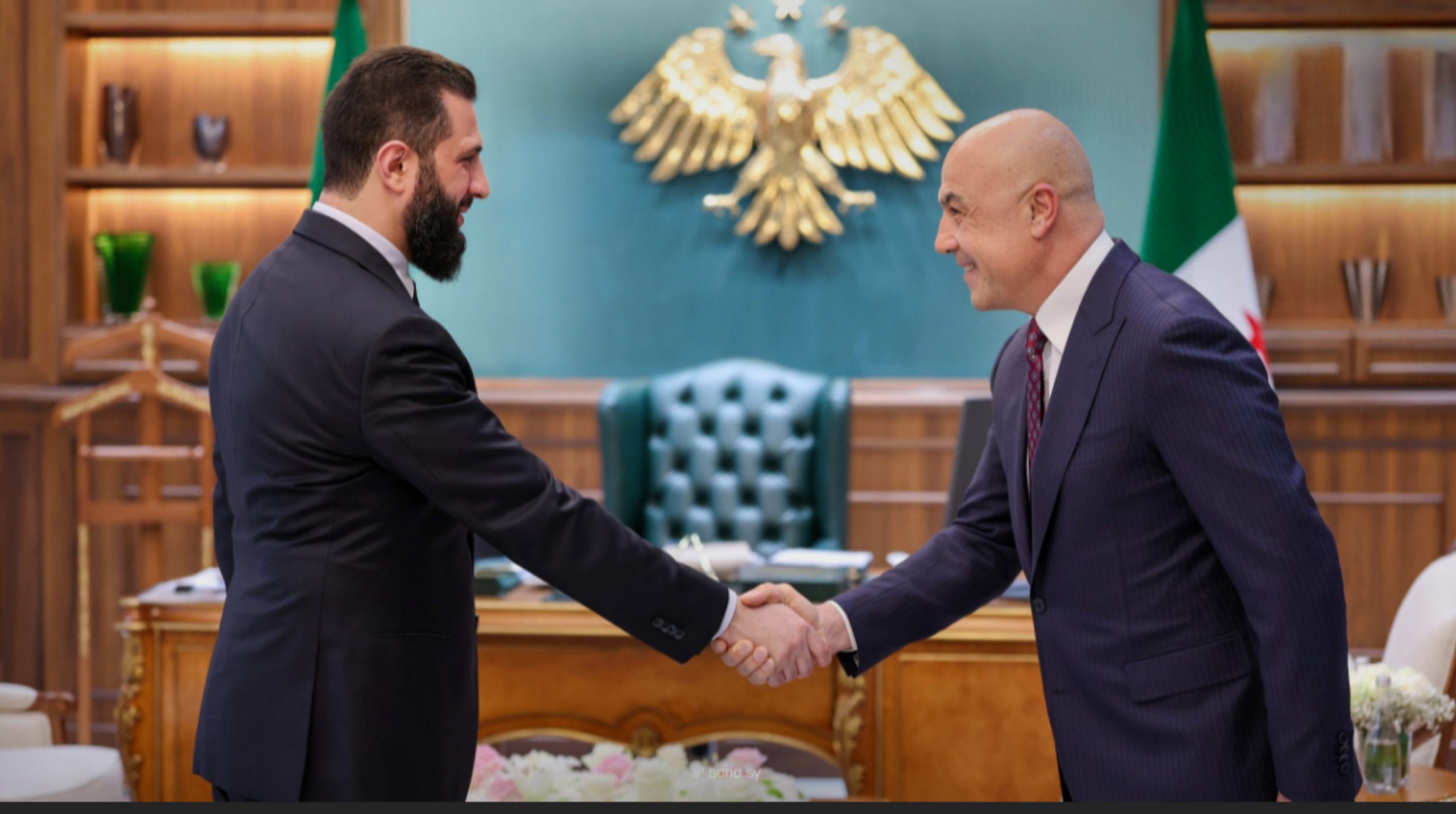
As part of this effort, Syrian President Ahmad al-Sharaa met with Egyptian businessman Hassan Allam to discuss cooperation in construction, infrastructure rehabilitation and real estate development. The talks also addressed ways to improve the business environment and draw higher-quality investments into the country.
Allam leads Hassan Allam Holding, a major regional firm with projects across the Middle East and Africa. The company built a reputation in engineering and large-scale infrastructure, making it a potential partner in reconstruction efforts. In a separate meeting, Sharaa held discussions with Emirati businessman Muhammad Ibrahim al-Shaibani on the possible role of UAE-based companies in rebuilding projects.
The talks focused on real estate, tourism and financial services, with both sides highlighting the need for clear incentives and regulatory support encouraging long-term investment. Shaibani is managing director of Investment Corporation of Dubai and has held leadership roles in several major companies tied to the emirate’s investment portfolio.
Tourism and Urban Development Opportunities
The government has also explored cooperation with international investors. Turkish businessman Fettah Tamince discussed opportunities in tourism, hospitality and urban development, sectors seen as key to economic recovery.
Tamince is the founder of Rixos Hotels and has led major projects which helped position Turkey as a global tourism destination. Syrian officials say similar investments could support the development of modern urban centers and expand the country’s tourism infrastructure.
The government emphasized the role of advanced construction technologies and updated urban planning in shaping future projects. These efforts aim to create cities meeting current needs while supporting long-term growth.
Balancing Ambition With Reconstruction Costs
Syria’s reconstruction strategy centers on two tracks. The first, restoring partially damaged areas by repairing essential services such as roads, hospitals and schools to support the return of residents. The second targets heavily damaged regions, where large-scale investment is seen as the most practical path forward given limited public resources.
Despite these plans, significant challenges remain. International estimates place reconstruction costs at up to $400 billion, underscoring the scale of the task ahead. Officials say investment partnerships will play a central role in addressing these challenges. By combining foreign capital with local priorities, the government aims to gradually rebuild infrastructure and restore economic activity across the country.