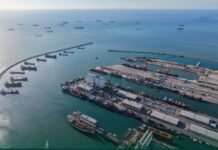
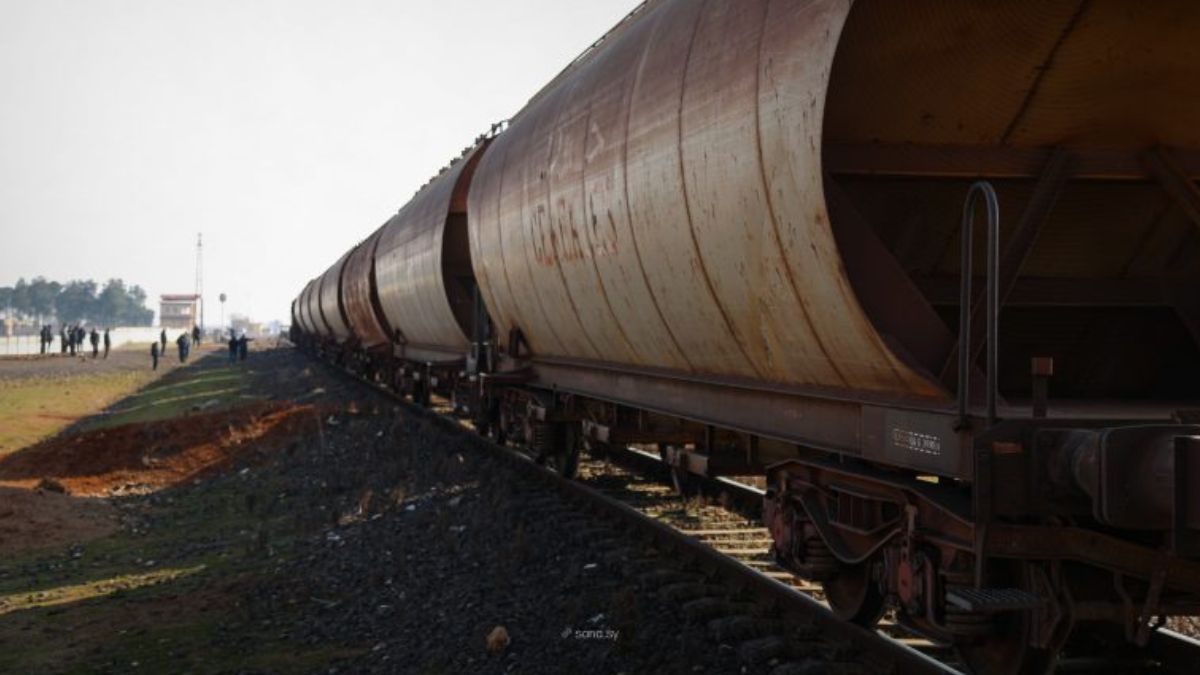
 Over 14 years after military operations stopped, the railway line linking the port of Latakia with the Adra industrial station in Rural Damascus has resumed service. The reopening carries major economic and logistical significance as Syria continues efforts to revive its railway sector while strengthening support for commercial and industrial activity.
Freight Route Returns to Service
Eng. Osama Haddad, director general of the Syrian Railways Establishment, told SANA the railway extends 360 kilometers and serves as one of the main transport arteries connecting Syria’s coastal and inland regions. He said reopening the line will improve the organization of cargo and container transport while increasing reliance on railways as a complement to road transport.
Haddad explained that reviving the Latakia port-Adra route will help reduce pressure on public highways, lower fuel consumption and decrease shipping and maintenance costs. The railway will also improve cargo delivery times between ports and industrial zones.
Before operations stopped, the line regularly transported containers and goods between Syria’s ports and industrial centers. Haddad said railway freight from the ports of Latakia and Tartous reached approximately 715,000 tons in 2010. Containers accounted for nearly 600,000 tons, or 84% of all rail cargo transported from the ports. Latakia alone handled roughly two-thirds of that volume.
Impact of the War on Rail Transport
Haddad said Syria’s railway sector experienced a severe decline during the war under the deposed al-Assad regime. Many railway lines went out of service, and container movement on the Latakia-Adra route stopped entirely.
Rail operational capacity also fell sharply, forcing the country to rely heavily on road transport. That shift increased logistical costs, added pressure on public roads and weakened supply chain efficiency in both timing and reliability.
Haddad noted goods transported across Syria’s railway network reached about 8.5 million tons in 2010, meaning port-related transport represented nearly 9% of all rail cargo at the time. The renewed operation of the line reflects broader attempts to restore infrastructure damaged or abandoned during the conflict and to reintroduce rail transport into the national economy.
Lower Costs and Faster Supply Chains
According to Haddad, logistical estimates indicate rail transport can reduce container shipping costs by as much as 30% compared with long-haul trucking. He said railways also consume less fuel, ease congestion on highways and improve cargo flow between ports and industrial areas.
Haddad described the reopening of the Latakia port-Adra line as an important step toward reintegrating rail transport into Syria’s economic cycle. He said the route creates a direct link between ports and industrial zones while helping reduce transportation costs and improve supply chain efficiency, particularly for large-volume containers that require stable and reliable transport.
He added that the railway’s importance extends beyond transportation services alone. The line also serves as an economic tool that supports commercial activity by facilitating the movement of goods from ports to inland regions and reducing logistical bottlenecks caused by dependence on road transport. According to Haddad, the railway will also help industrial facilities secure raw materials more quickly and reliably.