
The men in the workshop worked through the night as the shelling in western Aleppo grew louder. Diesel furnaces roared, shaking the thin walls. Sparks from the lathes lit the metal filings on the floor. The team had only hours before sunrise, when Russian aircraft would prowl overhead again.
Abdulghani, a machinist who asked to use a pseudonym for security reasons, remembers watching the molten aluminum shift from orange to white while listening for the distant hum of jets. The crew had one goal. They needed to cast enough mortars for the coming days of operations, or the front line may collapse.
These scenes became routine as Syria’s revolution entered its later years. What began as scattered tinkering with homemade launchers turned into an improvised weapons network that shaped battlefields across the northwest. The work seldom matched the resources of forces backed by Iran, Russia, and the Assad regime. Yet it produced tools that helped keep revolutionary factions alive during years of intensifying siege and air campaigns.
Forged Under Fire
Since the liberation, revolutionary factions have shared many developments that helped them oust the Assad regime. Among some of the greatest have been advancements in military technology, like those showcased in a recent military exhibition in Damascus. However, that is not the full story, as shared by many who took part in such programs.
Abdulghani said the earliest phase of local manufacturing grew directly from urgent battlefield demands. “As the war progressed, revolutionary forces were in need of weapons heavier than assault rifles and RPGs to take and keep more territory,” he said in an exclusive interview with Levant24 (L24). “Captured or donated artillery systems demanded a high-spec supply of ammunition as well as maintenance”. When foreign support arrived from the US and Saudi Arabia to vetted groups via Timber Sycamore, it came inconsistently and in quantities that left units scrambling to fill the gaps.
Mortars became the simplest answer. The design required a tube, a charge, and a munition. The challenge rested in producing enough of them, with an acceptable range and fragmentation, under constant pressure. Early teams used crude “hellfire cannons” that produced a powerful blast but struggled with accuracy and range. Aluminum bars sourced locally were melted down to cast bombs that flew farther but failed to break apart effectively on impact. “Aluminum mortars worked for a time,” Abdulghani said. “However, the fragmentation effects upon explosion were unsatisfactory.”
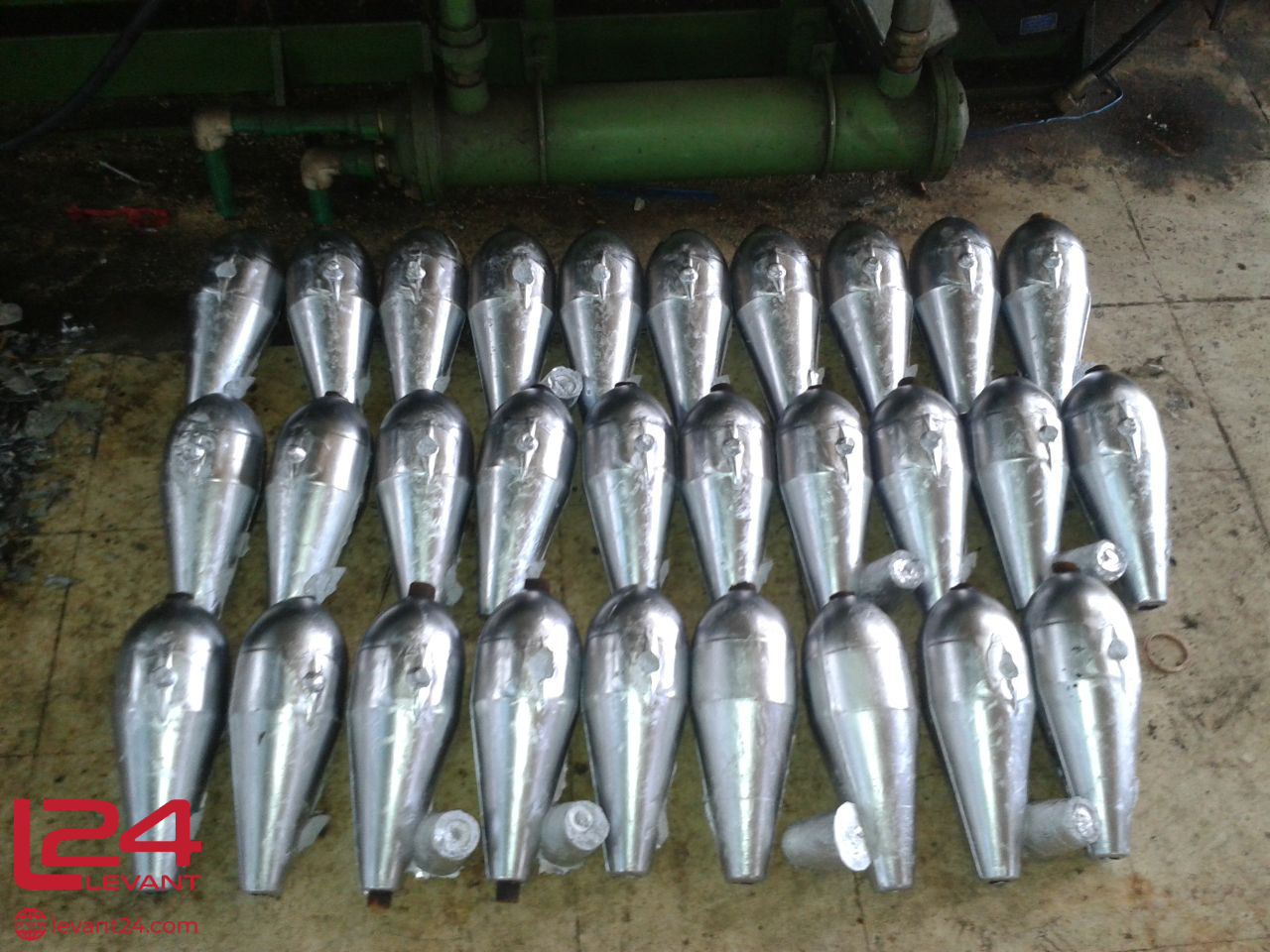
Abdulghani further explained that by 2014 and 2015, workshops in Aleppo province shifted to iron and steel, which delivered far better battlefield results but demanded higher temperatures and more skill. The shift marked the first major step from improvisation toward semi-professional production.
Lathes allowed teams to shape casings more precisely. CNC machines later improved standardization, allowing the use of pre-programmed instructions to automate tasks like cutting, drilling, and shaping materials with a high level of precision.
Much of the explosive material for munitions and locally designed fuses had to be sourced from regional markets. Nitrocellulose and aluminum powder came in from neighboring countries, often through smuggling and private middlemen. Sourcing components was not the only challenge; as Russian involvement intensified, security became a primary concern. Risks multiplied as the factories grew.
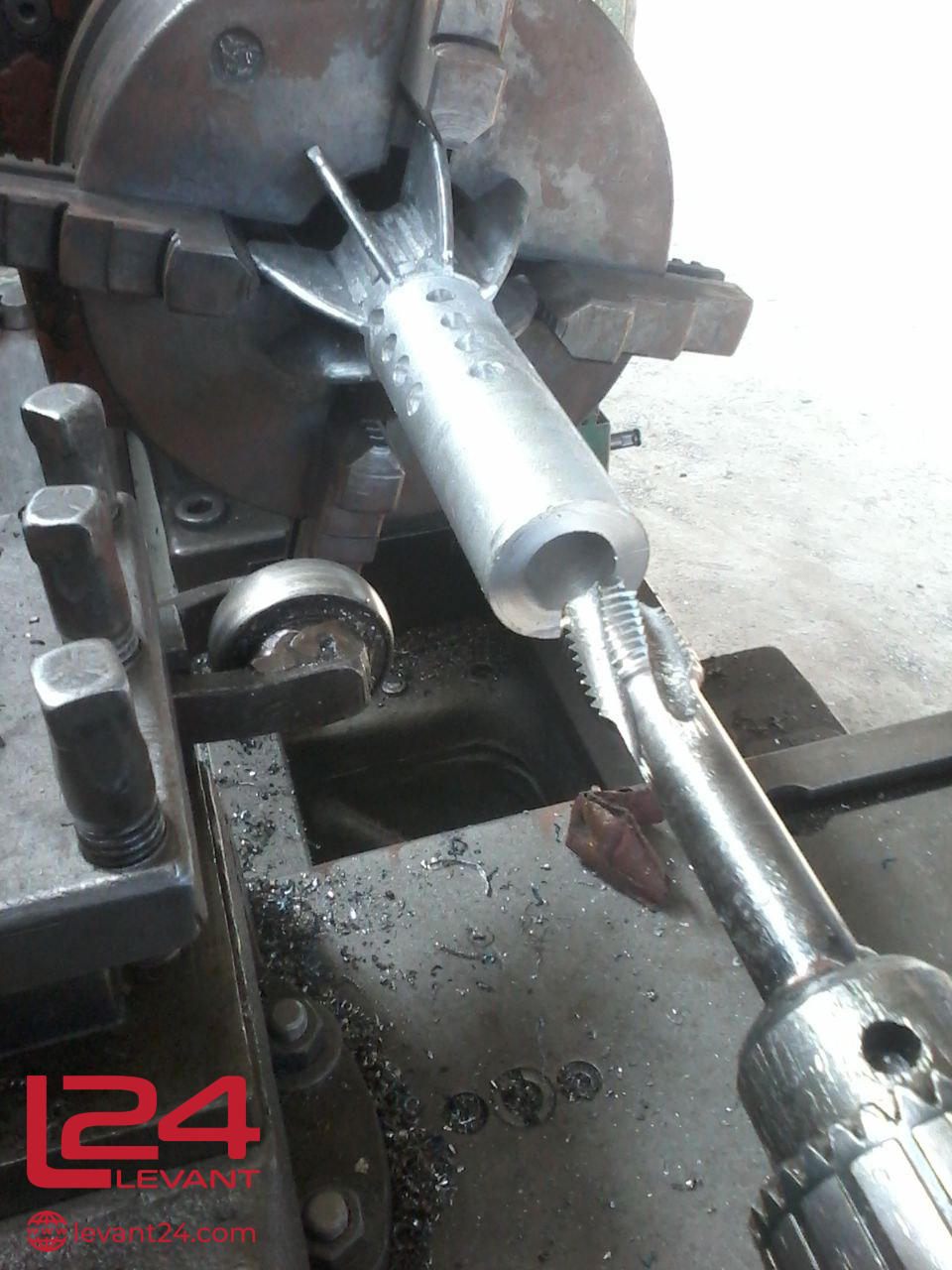
While accidental explosions were common, Russian airstrikes added another layer of danger after 2015. “At least two locations I worked at were struck by Russian warplanes,” he said. One major facility near Tal Hadya that “produced over 130 shells a day” was barely evacuated in time before Iranian-backed forces overran the area in 2016 according to Abdulghani.
The network expanded quickly. Abdulghani described dozens of workshops across northwestern Syria, including large facilities run by multiple factions, such as Ahrar al-Sham and Faylaq al-Sham. Separate facilities were also operated by Jabhat al-Nusra, which rebranded as Jabhat Fatah al-Sham in 2016 and later became a core component of Hayat Tahrir al-Sham (HTS).
Gaps in Foreign Support
For many revolutionary units, these factories filled a void left by foreign countries whose aid fluctuated with politics abroad. A covert CIA program, known as Timber Sycamore, running from 2012 to 2017, supplied an assortment of military aid, but it was the anti-tank missiles and training, albeit in very limited numbers, which made the greatest impact.
While the New York Times reported the program made an impact, such as in 2015, when US and Saudi supplied missiles helped revolutionary groups rout regime forces in parts of northern Syria. However, Charles Lister, an expert on Syria, told the newspaper that the support never matched the scale required. “They were drip-feeding opposition groups just enough to survive but never enough to become dominant actors,” he said.
The limited visibility of American officers on the ground, shifting alliances, and concerns about where weapons might end up all contributed to the program’s uneven results. Timber Sycamore was eventually shut down after failing to meet its original goals. For fighters on the front lines, that meant the domestic programs, or capturing what they could not import, were the sole remaining source for vital arms.
Abdulghani said innovations suffered most in areas that required secrecy and large budgets. Early attempts to build FPV drones appeared as early as 2012, but never received the funding they needed. “[Other] problems that were never solved were manufacturing anti-aircraft weapons that worked,” he said. “There was no organized and effective funding for what had to be a largely secret project.”
A Shifting Style of Warfare
Military analyst and Brigadier Pilot Asaad al-Zoubi said the limitations on weapons pushed revolutionary factions toward creative tactics and innovation. In an interview with Levant24, he noted that while regime forces enjoyed a clear advantage in firepower, the outcome did not depend on the technological superiority of weapons alone. “Many nations triumphed despite limited weaponry,” he said. “They triumphed in Vietnam, Afghanistan, and Iraq.”
What stood out in Syria, he said, was the adaptability of small units across different fronts. Revolutionary teams operated in several phases. Each mission required its own plan, which forced commanders to process information quickly and adjust. Brig. Zoubi described this as a form of tactical innovation growing from the realities of asymmetric war.
It also laid the groundwork for a broader shift he called a new kind of “military philosophy,” built on constant monitoring of the battlefield and rapid decision making and adaptation. Such shifts in tactical perspective informed military leadership’s understanding of battlefield needs, such as the rapid expansion of the drone program, which was a force multiplier allowing asymmetrical adversaries to stand on more even footing, as had been demonstrated in Ukraine against the Russians.
From Workshops to an Arms Ecosystem
By the later years of the conflict, the improvised weapons sector had grown into a full domestic ecosystem. Some groups, particularly in Idlib, blended captured equipment with their own production. According to the Economic Times, HTS invested in mortar shells, guided missiles, and homegrown drones made with 3D printers and other accessible tools. Precision drone strikes on Syrian regime military gatherings and installations signaled how quickly these capabilities had matured.
Local commanders told Middle East Eye that Shaheen drones, built with fiber-reinforced materials and equipped with live-streaming cameras, could target armored vehicles and gatherings with high accuracy. A military leader from Idlib claimed an error rate below five percent.
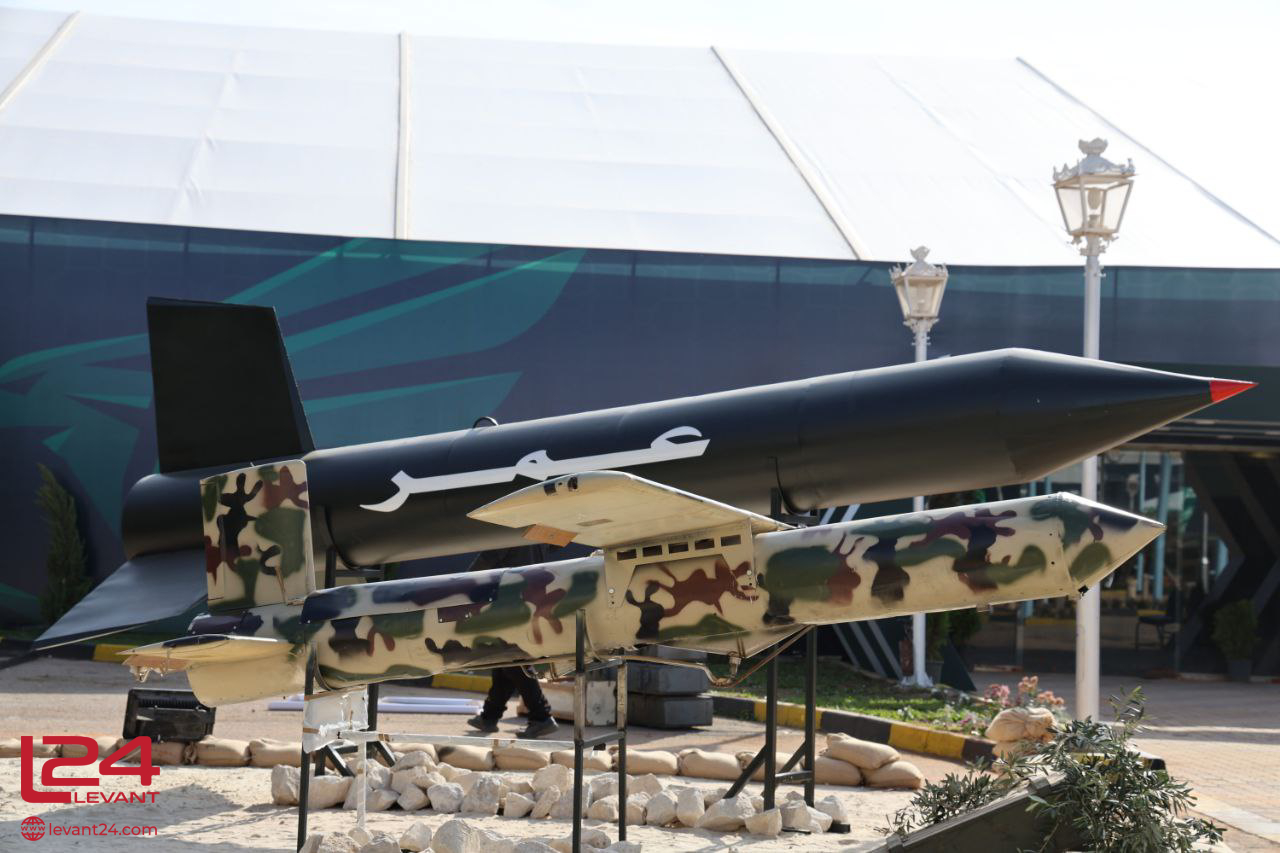
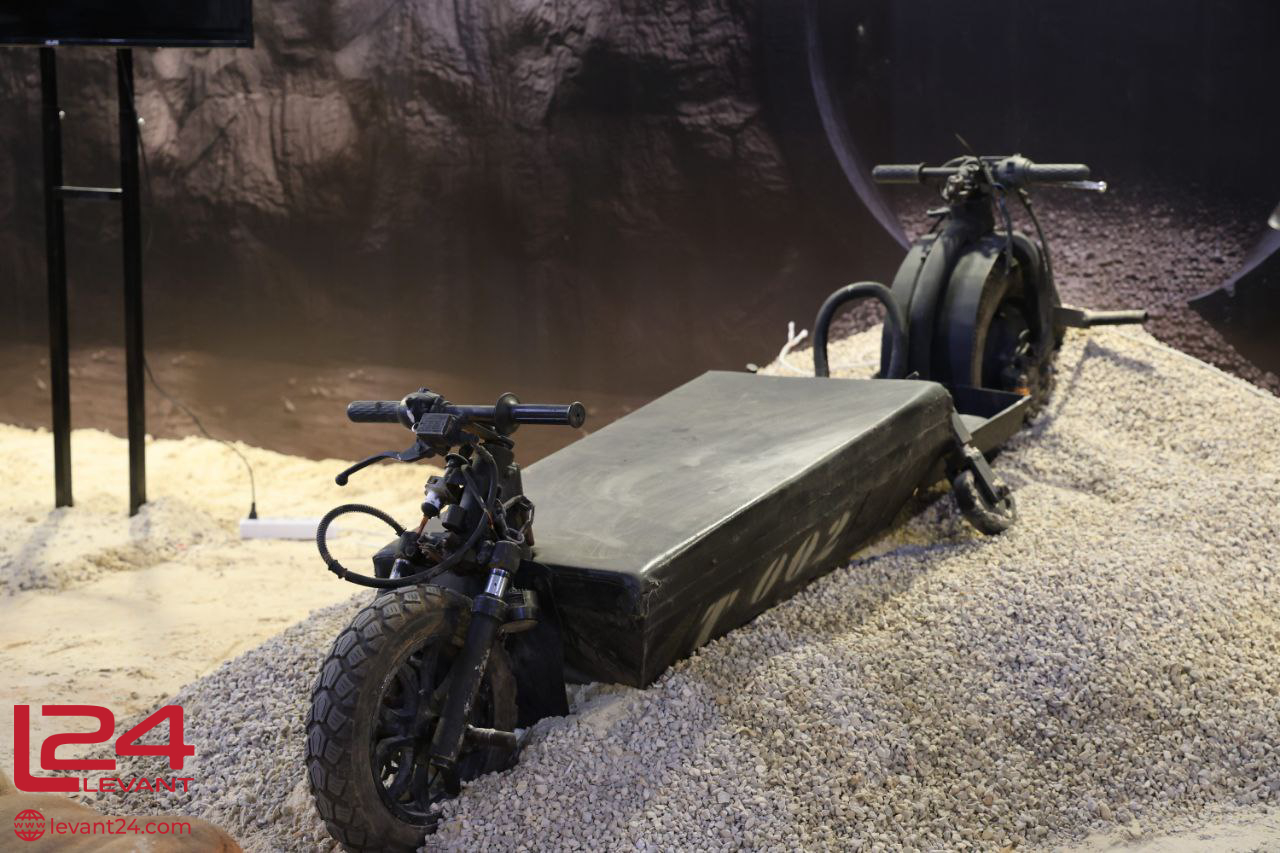
These tools changed ground dynamics and reduced the exposure of fighters who once relied on riskier tactics, such as vehicle-borne improvised explosive devices (VBIEDs). Lister told the Times that guided munitions like the locally developed Qaysar missile replaced the need for those earlier methods.
Groups also relied on captured equipment to expand their arsenals. Factions in the northwest seized Russian-made tanks, armored vehicles, yet also managed to develop a domestic industry producing their own armored personnel carriers and mobile rocket launching platforms.
Building the Means to Win
While local manufacturing never rivaled the scale or sophistication of state-backed militaries, it succeeded in providing material means to achieve a military victory long thought unattainable by many. Under siege conditions and chronic shortages, weapons systems built by revolutionary factions were shaped directly by operational need. Mortars cast from recycled metal, drones assembled from smuggled components, and improvised guidance systems were not stopgaps but functional responses to an asymmetric battlefield. Over time, this process embedded innovation into everyday military practice, influencing tactics, force projection, and battlefield decision-making.
More than weapons, these systems reveal how scarcity reshaped the conflict itself. Domestic production allowed factions to sustain resistance, adapt faster than better-equipped opponents, and offset the imbalance created by failed foreign intervention. What began in Aleppo workshops as an act of necessity evolved into an arms ecosystem that helped define the revolution’s endurance. In this sense, the conflict was not only fought on front lines but engineered in factories, where survival depended on the ability to turn constraint into capability.