The roar of a tank’s cannon echoed in the chill winter air as Syrian forces pushed into the border village of Hawik last February. Drones lurked above as gunfire erupted from houses along the Lebanese frontier. By nightfall, the clash had grown into one of the most intense confrontations between Syrian forces and smuggling groups in the Homs countryside in years.
The fighting left casualties on both sides, a bloody testament to the scale of the challenge facing Syria’s new authorities as they attempted to regain control over border regions plagued by years of war and illicit trade. Over a year later, those same borderlands have taken on renewed importance as regional tensions once again escalate.
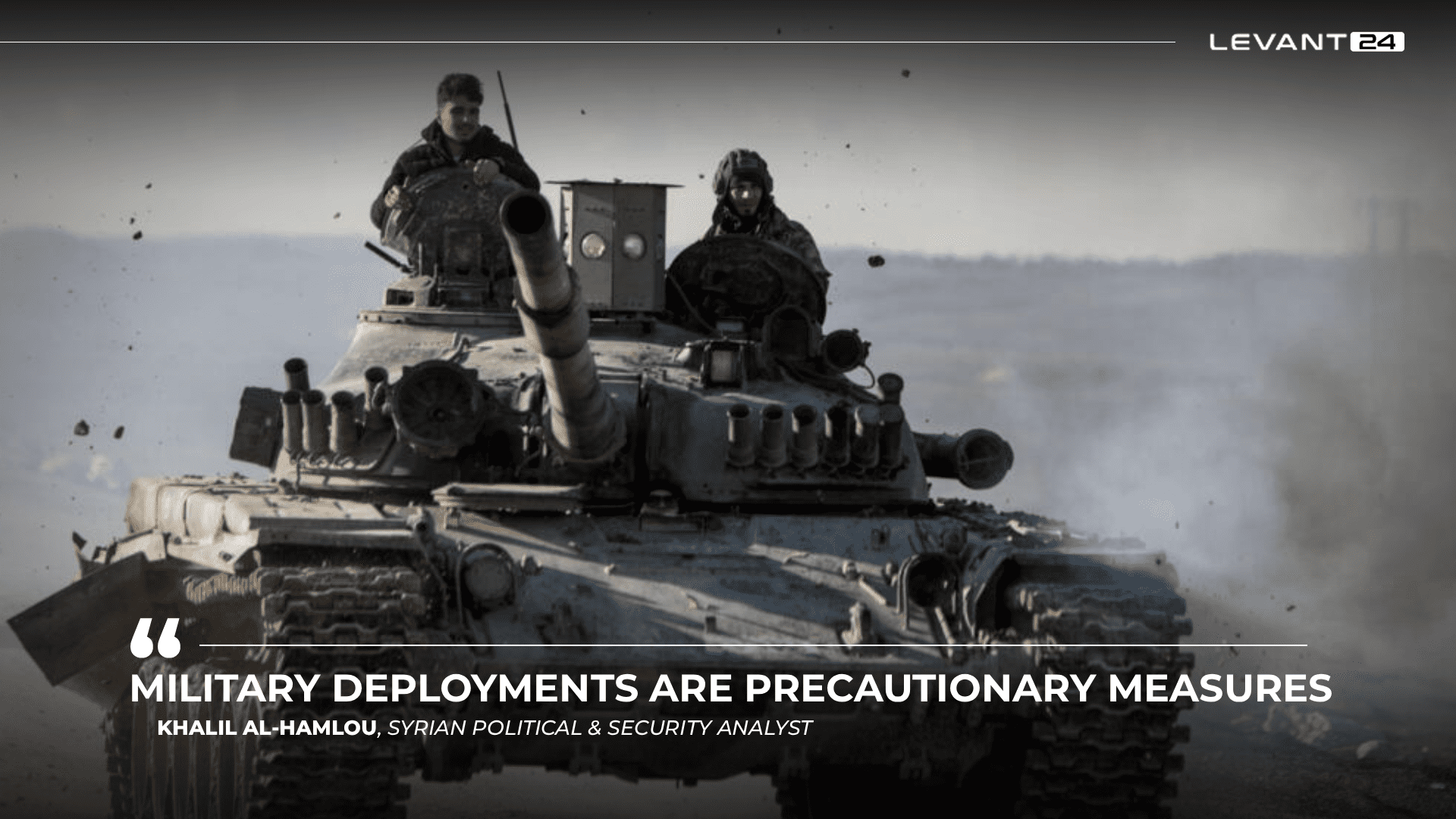
Syrian forces recently reinforced deployments along the Lebanese and Iraqi frontiers, citing the need to control smuggling routes and prevent militant groups from exploiting Syrian territory during a widening confrontation between Israel, the US and Iran.
Prevention Better Than Cure
Syrian officials say the latest deployments are part of a broader strategy to stabilize the country’s borders while preventing spillover from the regional conflict. “This is aimed at protecting and controlling the borders amidst the escalating regional war,” a representative of the Syrian army told Levant24.
The official said border guard forces and reconnaissance battalions have been tasked with monitoring crossings and combating smuggling operations. Syrian President Ahmad al-Sharaa also framed the deployments as a defensive measure in response to mounting instability across the region.
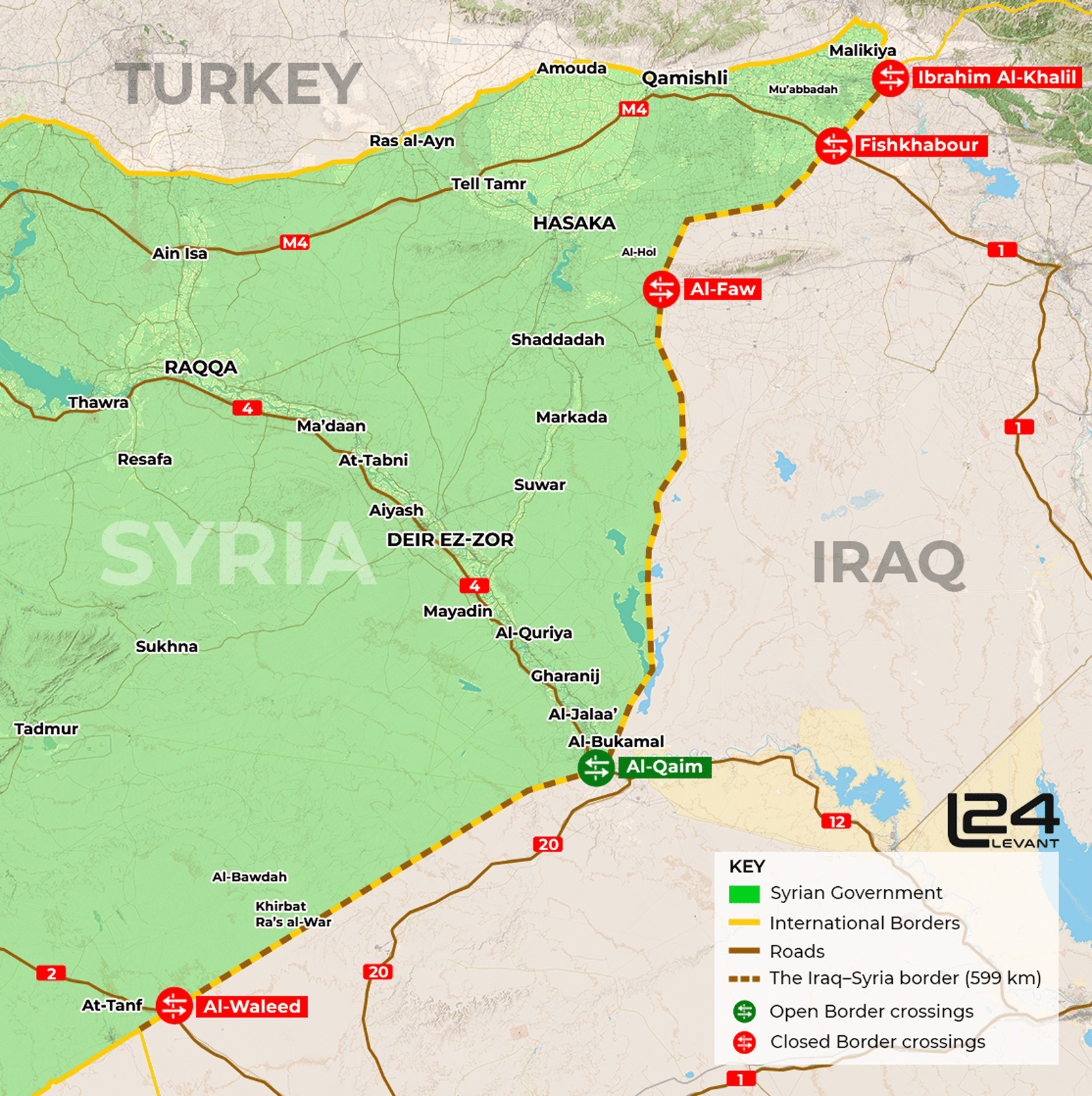
“Syria, which is located at a geographical crossroads between three active fronts, is subject to direct and serious repercussions as a result of these developments,” Sharaa said during a recent multinational video conference on the ongoing crisis. “We have reinforced our defensive forces on the borders as a precautionary measure to prevent the spillover of the conflict to Syrian territories, and to combat cross-border organizations and prevent them from using Syrian territories.”
The buildup comes as Iranian drones and rockets have crossed Syrian airspace during strikes against Israel, while Israeli forces increase operations in Lebanon. Syrian officials say the volatile environment has heightened the need to secure remote frontier regions where armed groups and traffickers have historically operated.
Assad-Era Legacy of Collusion and Corruption
The current campaign also reflects efforts by Syria’s new administration to dismantle networks that flourished under the Assad regime. Analysts say the country’s strategic location made it a key transit corridor linking Lebanon, Iraq and the Gulf.
According to Syrian political and security analyst Khalil al-Hamlou, large-scale trafficking networks once operated with the support of regime military units and allied militias near the borders. These networks facilitated the movement of narcotics, weapons and other contraband through Syrian territory.
Crackdowns Along the Lebanese Border
Government efforts to dismantle those networks intensified when the new authorities assumed power in December 2024. Security forces launched a series of operations along the Lebanese frontier, targeting villages long associated with smuggling activity. The raid on Hawik was part of that campaign.
Officials maintain such operations are an integral part of wider efforts to secure border areas which had become lawless during the years of conflict. Subsequent actions, such as the limited operations earlier this month, in the demilitarized zone of the Syrian Golan Heights, are necessary to monitor and counter outlawed cells and stem the flow of contraband.
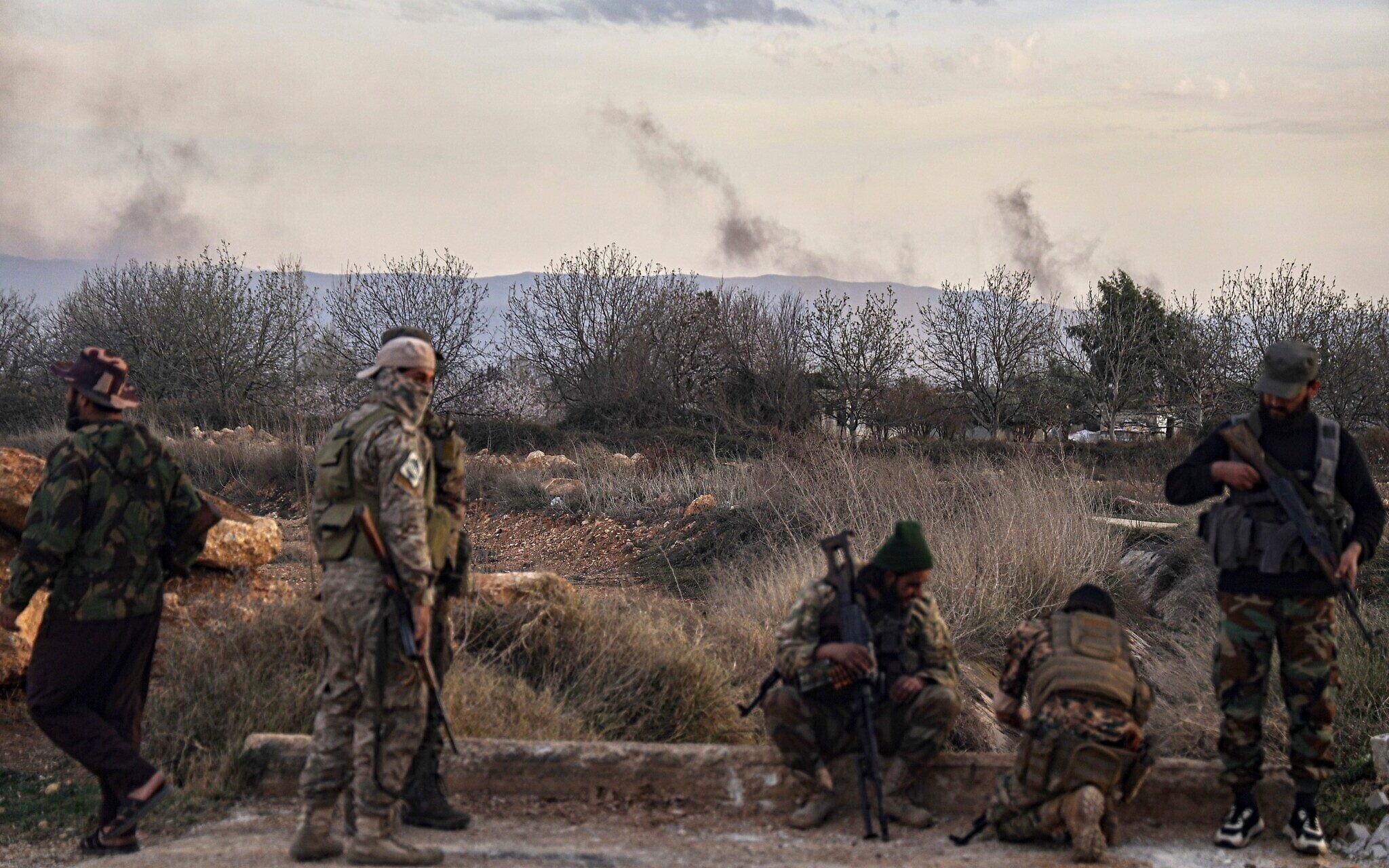
Syrian operations in the past year have intercepted Assad remnants, as well as Hezbollah and Iranian narcotics and weapons shipments. Some of these weapons consisted of Iranian suicide drones, 107mm Iranian rockets and 122mm Grad rockets, anti-tank and anti-personnel mines, explosives, RPGs (Rocket-Propelled Grenade), ATGMs (Anti-Tank Guided Munition), and munitions of assorted caliber for rifles and machine guns.
Real Reforms and Zero Tolerance
The government has also attempted to address disciplinary lapses within its own ranks as part of continued reforms. A source within the Syrian army told Levant24 authorities dismissed roughly a dozen soldiers assigned to border positions after discovering they had accepted bribes from smugglers.
The source, who requested anonymity as they were unauthorized to speak publicly, said the dismissals were evidence the government would not tolerate cooperation between soldiers and trafficking networks.
At the same time, Syrian officials remain concerned that armed groups aligned with Iran could attempt to exploit the country’s territory as the regional conflict intensifies. According to a Syrian army source, the possibility that Iraqi militias might transfer weapons to Hezbollah through Syria has been raised during discussions about regional security.
During the Assad regime era, Syria served as a key corridor for Iran to supply weapons to Hezbollah in Lebanon. Arms were transported through Syrian territory by air and land routes before being moved across the Lebanese border to Hezbollah forces. Syrian officials say preventing the re-emergence of such routes is now a central objective of the current border security strategy.
Regional Coordination
The latest deployments also reflect growing coordination between Damascus and Beirut. Hamlou said Syrian and Lebanese authorities increased cooperation to control border crossings and monitor illegal routes that once allowed smugglers to move freely between the two countries.
“There is high-level cooperation between the presidents and the governments in Syria and Lebanon in addition to an exchange of information and data on border issues,” he said. While official crossings remain open, he said both armies are working to shut down informal pathways used by traffickers and militant groups.
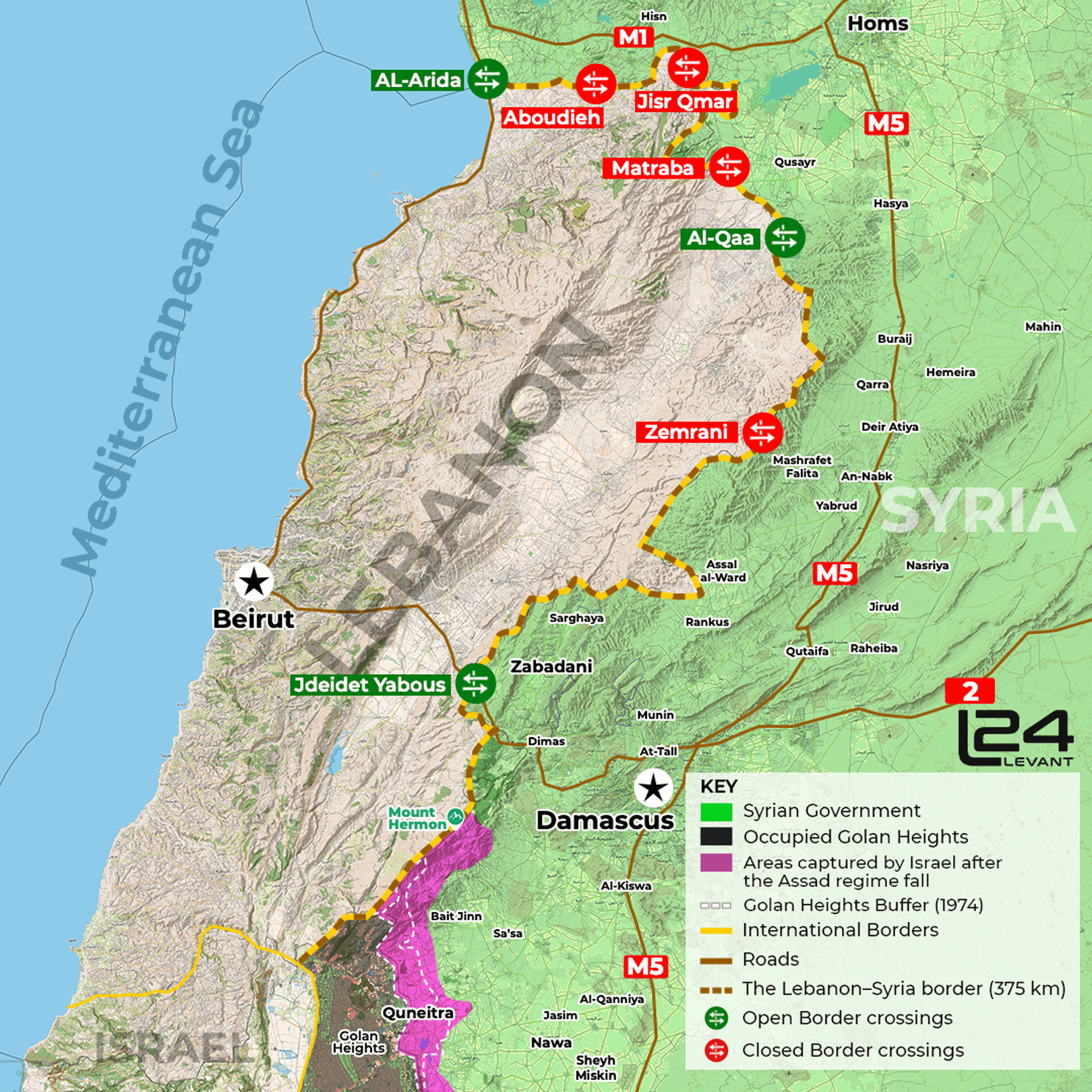
Measures include surveillance of areas where Hezbollah fighters could attempt to move through Syria toward Iraq or other regions. “The recent Syrian military deployments are precautionary measures to monitor and control the borders,” Hamlou said.
A Border Region in Flux
Despite renewed focus on border security, the situation remains tense. The Lebanese-Syrian frontier stretches across mountains, farmland and remote villages that have long provided cover for smugglers and armed groups. Years of conflict weakened state control in many of these areas, allowing illicit networks to entrench themselves.
Now, as Syrian authorities move to reassert control, those same borderlands have become a strategic front line in a region already strained by wider geopolitical tensions. For Damascus, securing the frontier is about more than stopping contraband. Officials say it is also an attempt to prevent Syria from once again becoming a conduit for militias, weapons and narcotics moving across the Middle East.
Whether the recent deployments will produce a lasting shift remains uncertain. But for the soldiers patrolling villages like Hawik and the remote deserts along the Iraqi border, the mission is already clear: reclaim territory that for years lay beyond the reach of the state.