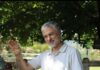
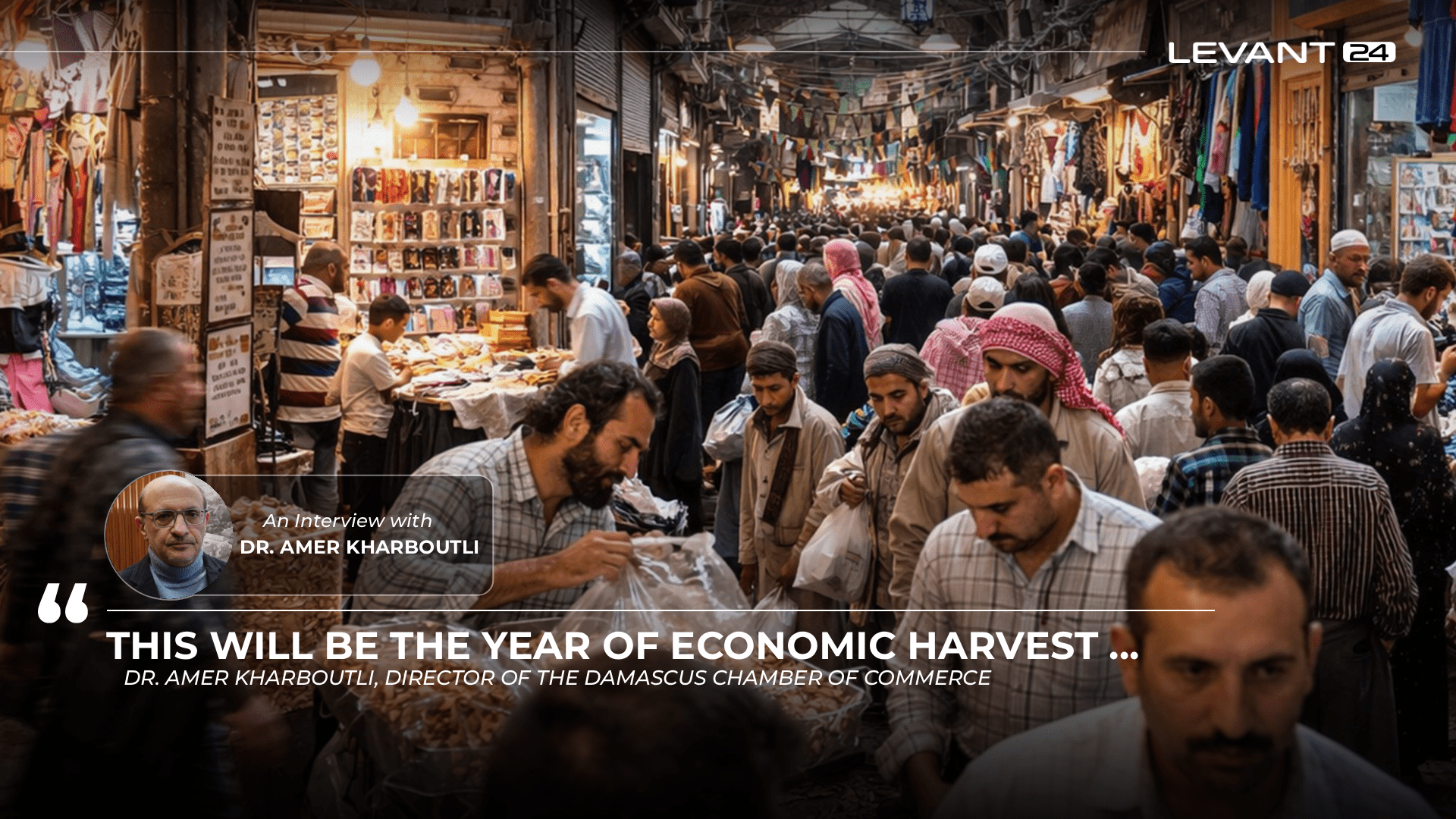
Dr. Amer Kharboutli has been the Director of the Damascus Chamber of Commerce since 2006 and holds a PhD in economics as well as a master’s degree in economic feasibility studies. Kharboutli is a member of the Board of Directors of the Syrian Science Association, and he is a lecturer and trainer on entrepreneurship, small projects, and feasibility studies in a number of Syrian universities.
In this interview with Levant24, Kharboutli offers an assessment of Syria’s economic reality and the return of a free-market system, highlighting both the depth of the losses during the war and the country’s untapped potential.
____________________________________________
Levant24: Over a year after the toppling of the Assad regime, how do you evaluate the Syrian economy, business, and trade sectors? Has Syria overcome the era of severe economic crisis or not yet?
Dr. Amer Kharboutli: “The defunct regime demolished the country’s economy. The Syrian GDP was 120 billion dollars in 2010 and decreased to 20 billion dollars in 2024. Syria lost around 85% of its GDP during wartime. This (GDP) number is small compared to Syria’s potential. Syria has gotten past the worst and is ready to develop its economy depending on its economic fundamentals of agriculture, industry, and trade.
The United Nations Economic and Social Commission for West Asia (ESCWA) said that Syria needs 600 billion dollars to rebuild its whole economy. I think Syria only needs 400 billion dollars to rebuild the demolished infrastructure.
It was not clear whether the Syrian economy during the era of the Assad regime was social or free; it was a strange cocktail. But this year, the Syrian economy returned to the 1950s free economy and market. This is very important to restructure all economic legislation and laws according to the new change.”
Levant24: Thousands of Syrian businessmen work in Turkey, Lebanon, Egypt, and other states. What is the role of the Chamber of Commerce and local businessmen in encouraging expatriate Syrian businessmen to return to the country and reinvest, reopen their businesses and factories? What can the government do to ease their return?
Dr. Amer Kharboutli: “Syrian businessmen and industrialists began to leave the country in the 1960s when the government nationalized their companies, factories, and banks. In 2012 and 2013, many Syrian businessmen and industrialists also left the country. After the liberation, large numbers of Syrian expatriate businessmen visited the country to check the feasibility of reopening their companies and factories.
I met with many delegations from the US and Canada whose fathers and grandfathers left the country in the 1960s, and today they want to work and invest in Syria. They believe in the new Syria and want to be part of it. The Chamber of Commerce welcomed them and helped them discover new investment opportunities.
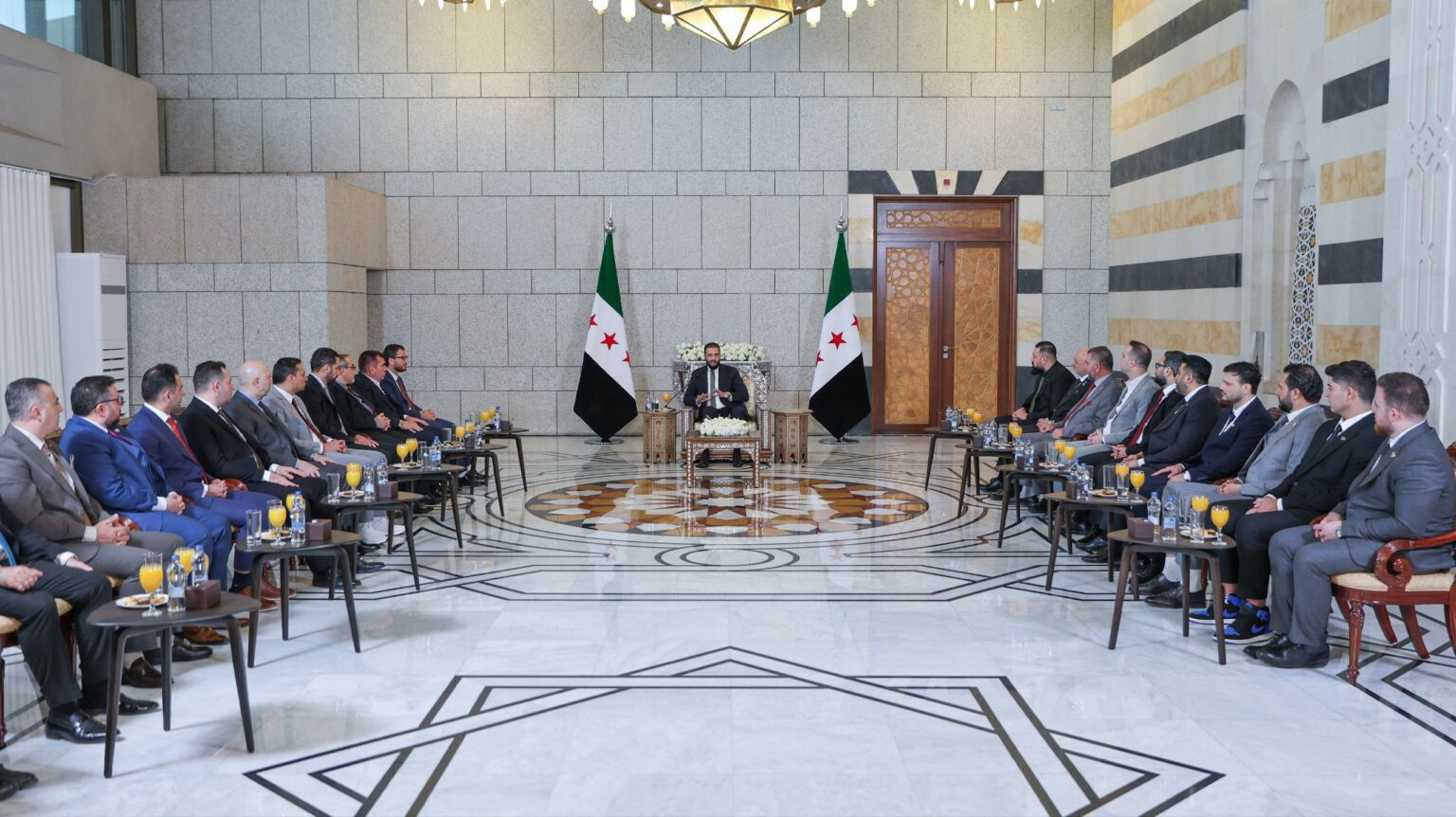
The Syrian government and the Syrian Investment Agency issued many orders and laws to ease the return of Syrian investors and encourage non-Syrian investors to invest their capital, potential, and experience in the country.
The government worked on linking banks and digitally transforming them to make fund transfers easier and encourage entrepreneurship.”
Levant24: From your perspective, what are the main obstacles to improving the Syrian economy, both on the government side and the private sector side?
Dr. Amer Kharboutli: “On the government side, the first obstacle is the unification of Syrian geography (territorial control) to allow the government to manage the country’s oil, gas, water, and underground wealth. The second obstacle is the change of all laws and rules that do not meet the new free Syrian economy. Syria needs real legislative reform. The third obstacle is improving and developing infrastructure and the digital sector.
On the private sector side, it needs a greater role and more trust from the government to discuss laws and legislation and draw a clear vision of the economy to take advantage of available opportunities and develop external partnerships.”
Levant24: The US administration has lifted the Caesar Act. What are the effects of this on the Syrian economy, banks, investment, and daily life?
Dr. Amer Kharboutli: “The repeal of the Caesar Act is the repeal of fear of dealing with Syria. The US decision to repeal it is the first step, but it is not enough to prompt foreign companies to come to Syria.
The Syrian government should prepare a clear investment map to pave the way for incoming companies to start their projects. Syria is fertile land for investment after 14 years of the stoppage of work and projects. Now is the time for Syrian and external companies to invest in land and maritime transportation, digital transformation, transit, imports, and exports. The Syrian market is new and has many promising opportunities.”
Levant24: Syria has suffered from untrained administrative departments, corruption, black markets, and an illegal tax system during the Assad era. How can the private sector and business community help the government solve these problems?
Dr. Amer Kharboutli: “From the outset, government and private sectors began dealing with problems inherited from Assad. The government reduced bureaucratic red tape that had hindered both sectors.
The government reduced the level of corruption, nepotism, and monopolization, which helped expand the free market economy and freedom of fund transfers and banking.
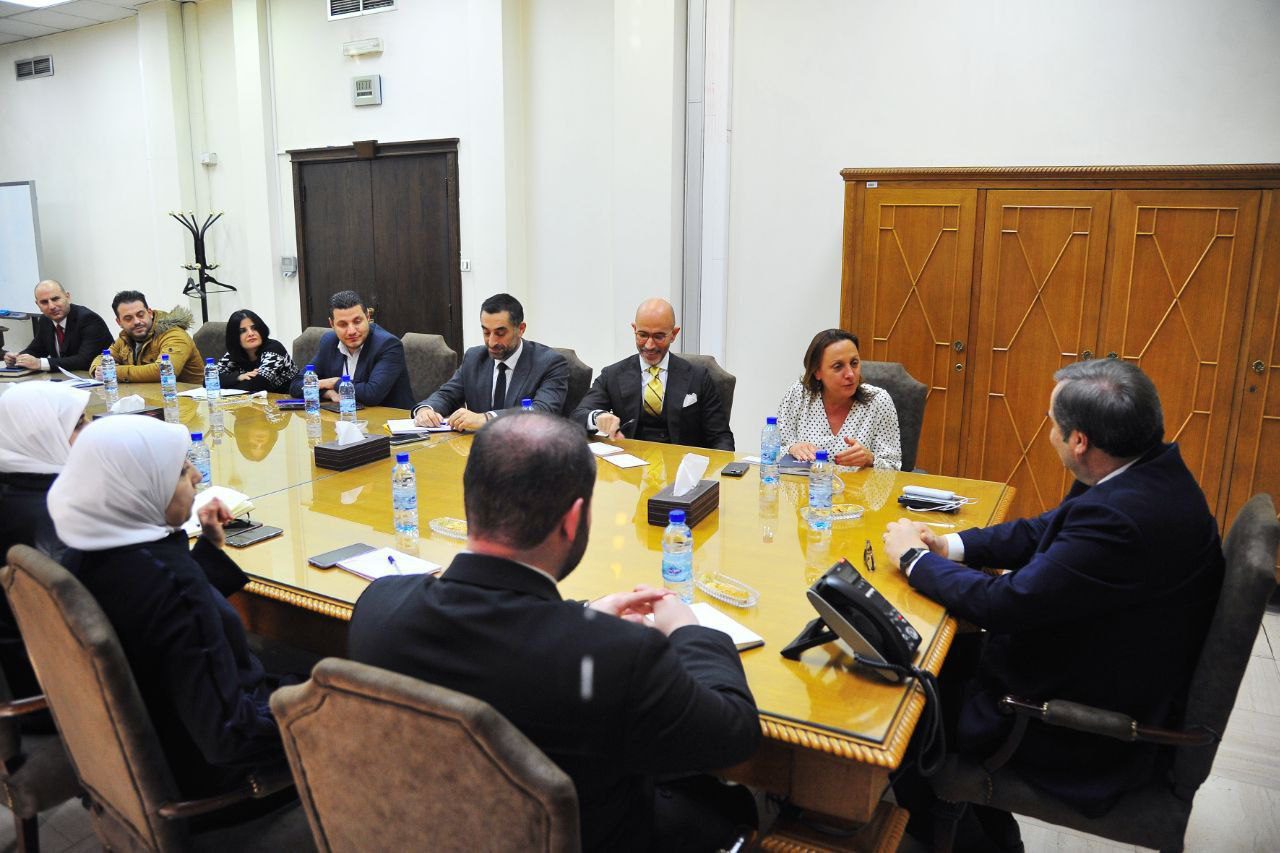
I can say corruption decreased by 80%, and I can give many personal stories to illustrate this. For example, four years ago I went to the Civil Affairs Directorate to obtain a document. I spent a long time, and employees were asking for bribes. Days ago, I went to the same directorate and was shocked by the employees welcoming people by saying, ‘Welcome, my citizen brother.’
I can give another example involving traffic police who stopped asking for bribes, as well as many examples in other government departments.”
Levant24: Syria has large natural resources and human potential. What is your message to Arab and international investors considering to invest in the country?
Dr. Amer Kharboutli: “My message to the world is that Syria has large natural resources, professional workers, and a new government that supports investors.
Syria has a key geographical position that helps it serve as a link between the East and the West. Syria has major opportunities for investors to invest in rebuilding demolished areas, transport systems and infrastructure, agriculture, and farming, among many other sectors.
Simply put, 2025 was a year of waiting and observation for investors and businessmen, but 2026 will be the year of economic harvest and project implementation.”