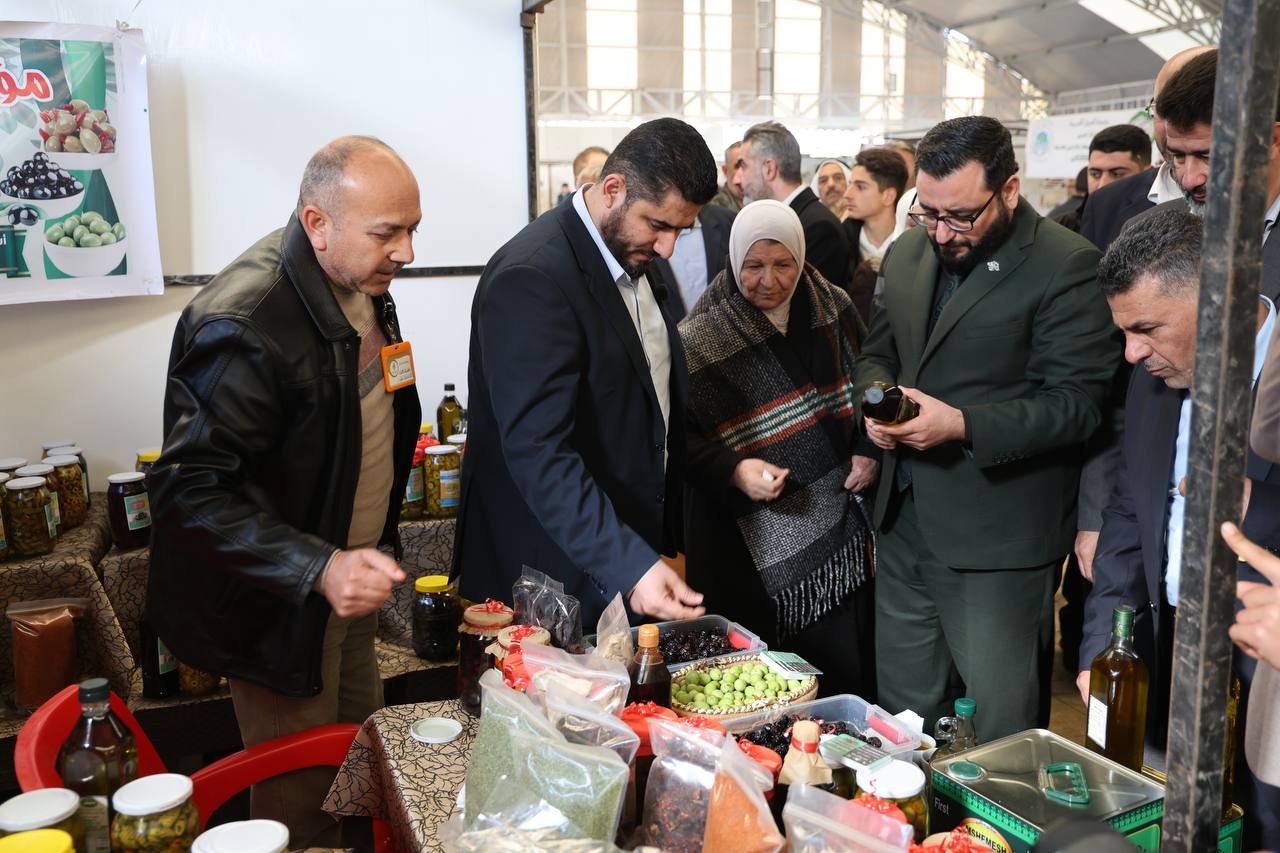
 After a fifteen-year hiatus, Idlib governorate revived one of its most emblematic agricultural events with the launch of the Olive Exhibition 2025. Organized under the Syrian Ministry of Agriculture, the exhibition brings together around forty companies specializing in olive oil production, marking a significant step toward restoring Idlib’s agricultural identity as one of Syria’s foremost olive-producing regions.
The exhibition aims to highlight the economic and cultural importance of the olive tree while creating direct links between farmers, official institutions, and the private sector. It provides a platform to expand marketing opportunities, improve production practices, and strengthen value chains within the olive sector.
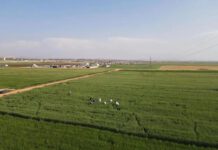
The Governor of Idlib, Muhammad Abdulrahman, stated that the return of the Olive Exhibition aligns with the broader reconstruction process that followed Syria’s liberation. He noted that improvements in agricultural conditions are helping restore Idlib’s historic standing, describing the governorate as returning “greener than before,” with renewed productivity in olives and olive oil.
Agriculture Beyond Production: Symbolism and Recovery
Deputy Minister of Agriculture Basil al-Swaydan described the exhibition as an event going beyond its agricultural function, carrying symbolic significance linked to resilience and recovery. He explained the current phase includes tangible measures supporting farmers, including the recent distribution of 250,000 olive saplings, with plans to expand this number in the coming period.
Additional efforts include securing fertilizers and essential agricultural inputs to compensate for damage inflicted on olive groves during previous years. Swaydan also announced preparations to reopen the Olive Office in the city of Idlib, with expectations for its return within approximately one month after having been relocated to Hama in earlier years. He described this step as part of an institutional effort to reorganize and locally manage the olive sector.
Promoting Knowledge and Sustainability
Director of Idlib Agriculture, Engineer Mustafa Muwahhid, emphasized the exhibition serves as an important meeting point for producers, experts, and stakeholders in the agricultural and food industries. He noted the event facilitates the exchange of expertise and introduces farmers to modern technologies and advanced methods aimed at improving productivity and quality in olive cultivation.
The exhibition provides an opportunity to discuss future prospects for the sector, particularly in light of climate challenges requiring adaptation strategies and a stronger focus on sustainability. The Olive Exhibition coincides with broader government initiatives announced in November 2025, which include planting over 200,000 olive saplings nationwide and prioritizing restoration programs.
These efforts are complemented by cooperation with the Food and Agriculture Organization (FAO) in Damascus and participation in national exhibitions such as “Food Expo 2025,” all aimed at supporting olive oil production, boosting exports, and strengthening economic resilience. The return of the Olive Exhibition in Idlib stands as both a celebration of liberation and a reaffirmation of the olive tree as a symbol of heritage, sustainability, and economic recovery.