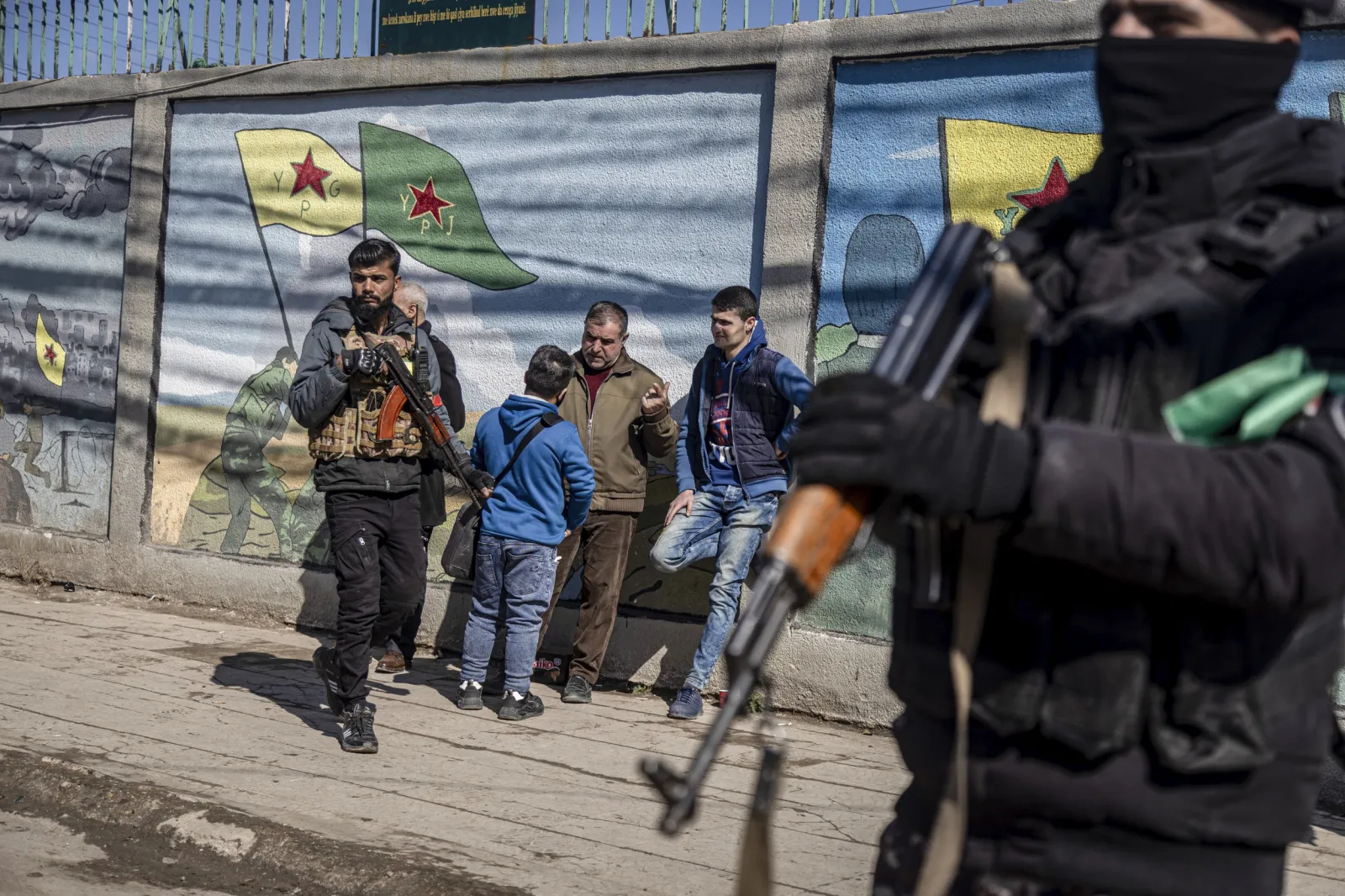
Residents and employees in areas controlled by the Syrian Democratic Forces (SDF) report a pattern of coercive practices tied to political loyalty, including salary deductions and threats of dismissal. Teachers and public employees in Hasakah Governorate told local outlets that the Autonomous Administration (AANES) deducted 35,000 Syrian pounds (SYP), a day’s wages, for each march they did not attend during November events marking the anniversary of the Kurdistan Workers’ Party (PKK) despite the group being a designated terrorist organization and having announced its dissolution.
A teacher using the pseudonym “Sabah al-Yusuf” said some employees lost as much as 105,000 Syrian pounds for missing three marches. “The process of deducting salaries is a punishment for every employee who did not participate,” Yusuf told Syria TV, adding that deductions occurred even with justified absences. He said the monthly salary of about 1,040,000 SYP, roughly $90, already fails to cover basic needs and is often paid late.
An employee in the Hasakah countryside municipality, identified as Abu Hussein, said supervisors threatened workers with dismissal if they repeatedly skipped demonstrations. He told local media that employees were transported from distant towns to centrally organized marches in Qamishli and required to register attendance to avoid penalties.
Raids and Civilian Casualties in Deir Ezzor
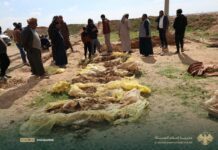
Security operations by the SDF have also drawn scrutiny in Deir Ezzor province. Local sources reported that an SDF raid in the town of Dhiban on December 21 resulted in civilian deaths and arrests. Local sources reported that three civilians were killed and six others detained during the operation, which began around 1 a.m. under a heavy security cordon and with air support from the US-led coalition.
The New Arab cited sources close to the SDF who said the raid targeted suspected Islamic State members, but acknowledged that Ghanem al-Sabouh and his son Mamoun were killed and their bodies transferred to the Omar Oil Field base. Residents described forced home entries and the use of explosives to break doors, creating panic among families.
Similar campaigns have taken place across eastern Deir Ezzor and Raqqa. According to Deir Ezzor 24 Network, SDF military police arrested at least 15 young men over a 24-hour period while they traveled between Raqqa and western Deir Ezzor, detaining them for compulsory military conscription.
Arbitrary Detention and Rights Concerns
Human rights monitors say arrests have increased since the fall of the Assad regime in December 2024. The Syrian Network for Human Rights (SNHR) documented nearly 800 arbitrary arrests across SDF-controlled northeastern Syria over the past year, including 87 children and eight women. The previous year saw about 600 cases.
SNHR said many arrests stem from suppression of political expression, criticism of SDF practices or celebrations linked to the new Syrian government. Raqqa Human Rights Observatory head Asyad Almousa told Syria Direct that residents have been detained for raising the Syrian flag or keeping its image on their phones.
Former detainees described harsh conditions. Khalil al-Ahmad, a Raqqa resident detained for three months after celebrating in Damascus, said guards beat prisoners and held detainees in unsanitary, overcrowded rooms. SNHR reported documenting torture cases and two deaths in custody in November 2025.
The SDF says its operations target “ISIS cells” and “criminal networks.” Analysts note ongoing insurgent threats but say the lack of transparency complicates efforts to assess the scale of legitimate security needs versus political repression.