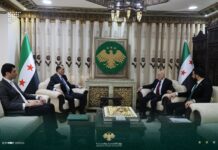
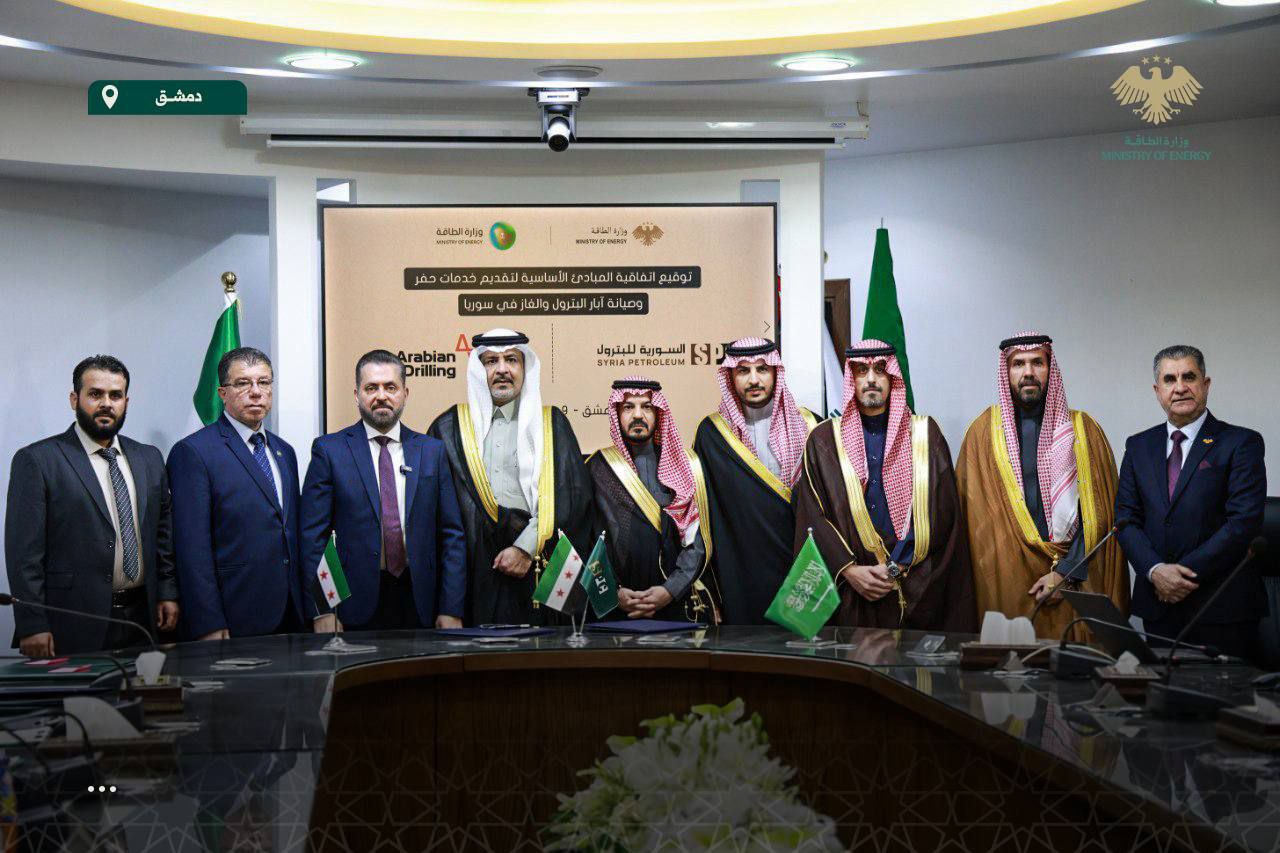
The Syrian Petroleum Company (SPC) signed four strategic agreements with leading Saudi companies in the oil and gas services sector, including ADES Holding, Saudi TAQA, ARGAS, and the Arabian Drilling Company. The agreements aim to develop production fields, enhance technical operations, and expand production capacity as part of broader national efforts to revitalize the energy sector and support the country’s path toward recovery after years of disruption.
Increasing Gas Output and Expanding Employment Opportunities
SPC Executive Director Yusuf Qablawi stated that the agreements aim to increase gas production from existing fields by 25% within the next six months, with a projected total increase of up to 50% by the end of 2026. He explained that the projects are expected to generate approximately 2,000 new job opportunities and noted that the four agreements operate within a unified framework to advance development within this vital sector.
According to ADES Holding Executive Director Muhamed Farouk, investment activities aimed at increasing gas production are scheduled to begin next June, with the company seeking to expand its work in Syria based on its technical experience in drilling and production.
Saudi Investments to Support Energy Production
Raed al-Iskandarani, Vice President for Middle East Operations at Saudi TAQA, said the agreement includes integrated drilling operations, well development, and maintenance services in Syria. He noted that today’s contracts build upon a memorandum of understanding signed with SPC two months earlier.
Muhammad al-Qahtani of the Arabian Geophysical and Surveying Company (ARGAS) explained that their agreement focuses on providing geophysical and geological services and consultations to support exploration operations. It is noteworthy that Syria recently signed a memorandum of understanding with Saudi Arabia to receive 1.65 million barrels of crude oil in support of domestic needs and to strengthen economic and developmental cooperation between the two countries.
A Strategic Step in Post-War Economic Recovery
The agreements reflect ongoing national efforts to rehabilitate Syria’s energy infrastructure, which sustained significant damage over recent years. Securing technical expertise and investment from regional partners such as Saudi Arabia is viewed as an essential step toward enhancing energy self-sufficiency, supporting reconstruction priorities, and laying the foundations for broader economic stabilization.