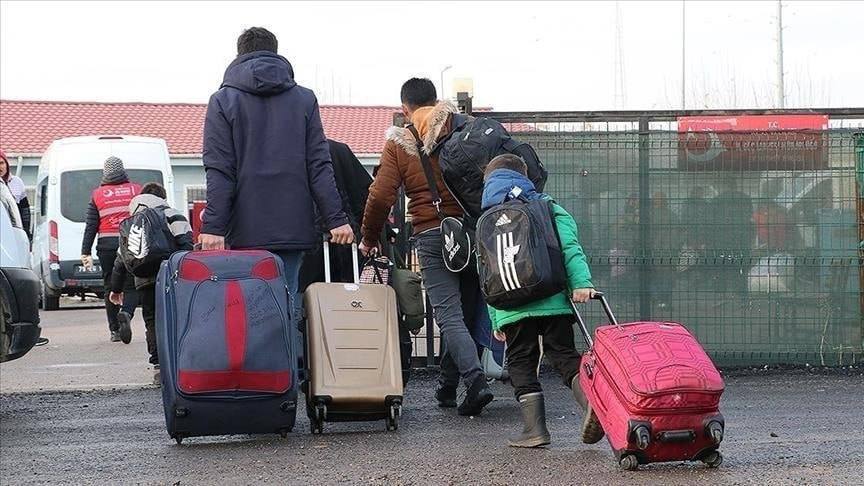
 The United Nations High Commission for Refugees (UNHCR) expects that around one million Syrian refugees will return to their country during 2026, according to Gonzalo Vargas Llosa, UNHCR Representative in Syria. The projection comes amid what the UN describes as a gradual recovery process following the fall of the former regime on December 8, 2024.
In an interview with Turkey’s Anadolu Agency, Llosa said approximately 1.3 million Syrian refugees have already returned since December 2024. In addition, nearly two million internally displaced persons (IDPs) have gone back to their areas of origin. In total, over three million Syrians returned home within a relatively short period.
Llosa noted that these returns are voluntary and reflect a significant shift after over 14 years of forced displacement. He emphasized that the climate of fear that once dominated Syrian society has receded quickly, giving way to a growing sense of hope among returnees.
Need for Coordinated International Support
While describing the large-scale return of refugees as a positive indicator, the UN official cautioned that improving economic conditions will take time. He stressed that sustainable reintegration requires coordinated and long-term international support, particularly in areas such as housing, livelihoods, basic services, and infrastructure.
Llosa underlined that returns alone are not sufficient without parallel efforts to stabilize communities and create economic opportunities, warning that premature withdrawal of international assistance could undermine the gains achieved so far.
Syria Reconnecting With the World
Syria’s recovery from years of war and isolation will not be immediate. With Llosa noting the fragility of the transitional period. However, he praised both the Syrian people and state institutions for what he described as a notable achievement in reconnecting the country with the international community.
He recalled that Syria had been largely isolated for over 14 years, yet within roughly one year it has restored relations with a growing number of countries. Llosa described this diplomatic re-engagement as “of utmost importance” for long-term recovery.
He also expressed optimism that the lifting of sanctions would unlock broader private-sector investment, which he said is essential for reconstruction, development, and accelerating economic recovery.
Turkey’s Role in the Transition
Llosa commended Turkey for hosting millions of Syrian refugees over many years and acknowledged its positive role in supporting Syria following the collapse of the Assad regime. He noted that regional cooperation remains a key factor in managing returns and ensuring stability.
His remarks follow recent statements by UN High Commissioner for Refugees Filippo Grandi, who has called for sustained international assistance to support refugee returns. Grandi expressed confidence that the current trend of voluntary return to Syria will continue in the coming period.