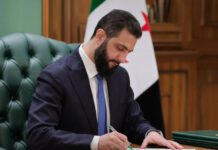
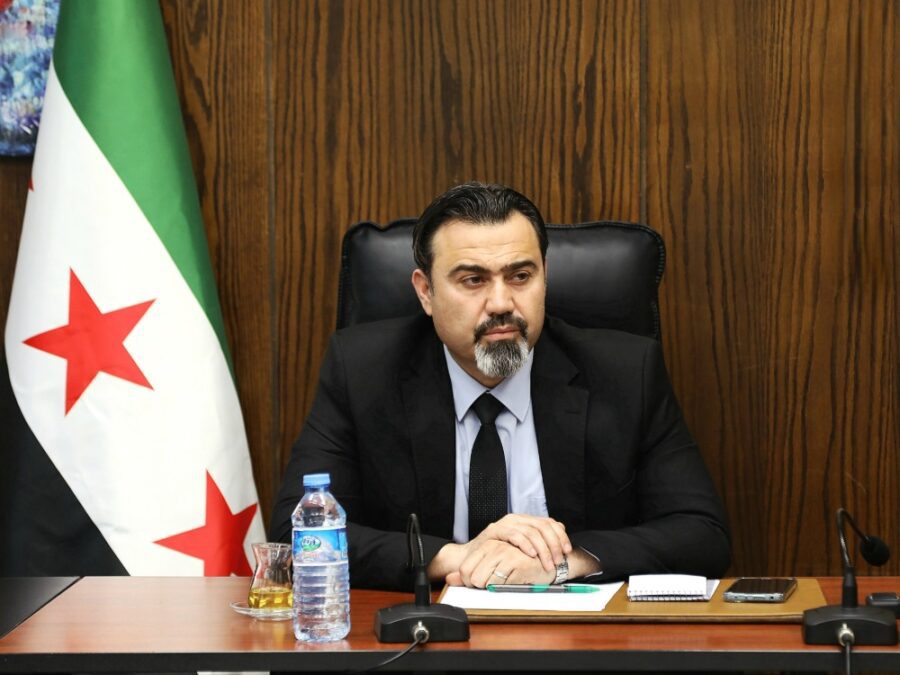
 Minister of Education Muhammad Turko confirmed the decree issued by President Ahmad al-Sharaa approving the teaching of the Kurdish language in public schools represents a qualitative step toward strengthening citizenship values in Syria. He noted implementation will begin immediately.
Decree Affirms Unity Through Diversity
Turko stated that Decree No. 13 of 2026 “reaffirms that Syria, with its deep-rooted history and civilizational mission, is built on the diversity of its people, and that its unity is strengthened by respecting cultural and linguistic identities within an inclusive national framework that excludes no one and marginalizes no component.”
He explained that approving the teaching of Kurdish in public schools constitutes “a concrete step toward consolidating equal citizenship, safeguarding the cultural rights of Kurdish citizens as an inseparable part of the Syrian national fabric, and preserving cultural diversity as a source of social and civilizational richness.”
Turko stressed that the decree reflects the state’s clear commitment to educational and cultural rights without discrimination, adding that the Ministry of Education will immediately begin drafting executive instructions and regulatory decisions to ensure swift and effective implementation.
Schools as the Primary Incubator of National Unity
“We believe the Syrian school will remain the primary incubator of societal unity,” Turko said. “Education is the most sincere bridge for fostering understanding, deepening national belonging, and raising generations that are confident in their identity, proud of their diversity, and committed to the unity of their homeland in land and people.”
A Kurdish Father Welcomes the Decision
Reacting to the decree, Khalid Kallo, a 45-year-old Kurdish citizen from Qamishli and father of two, told Levant 24, “I am glad this decree will ease the teaching of my Kurdish mother tongue and allow children to receive education in Kurdish after it was outlawed under the previous regime.”
Kallo acknowledged that the decision came late, but described it as meaningful. “It reflects the current leadership’s orientation toward preserving Syria’s diverse social fabric. It is a positive and unifying step, and it leaves no pretext for the Self-Administration or the SDF to accuse the government of discrimination. Today, Kurdish and Arab communities enjoy equal educational rights, without distinction among the Syrian people.”
Education as a Bridge, Not a Barrier
The decree underscores the role of schools as spaces of belonging rather than exclusion, justice rather than discrimination. By protecting linguistic and cultural diversity within a unified national framework, education becomes a bridge that connects Syrians, strengthening unity through mutual respect and shared citizenship.