The ceasefire and integration agreement between the Syrian government and the Syrian Democratic Forces (SDF) prompted a wave of international reactions, with global and regional actors framing the deal as a turning point for Syria’s political and security landscape. Statements from the US, the EU, Turkey and several Arab countries reveal broad support for Syria’s territorial unity, while highlighting differing priorities over Kurdish rights, counterterrorism and regional stability.
Washington Signals Shift Toward Damascus
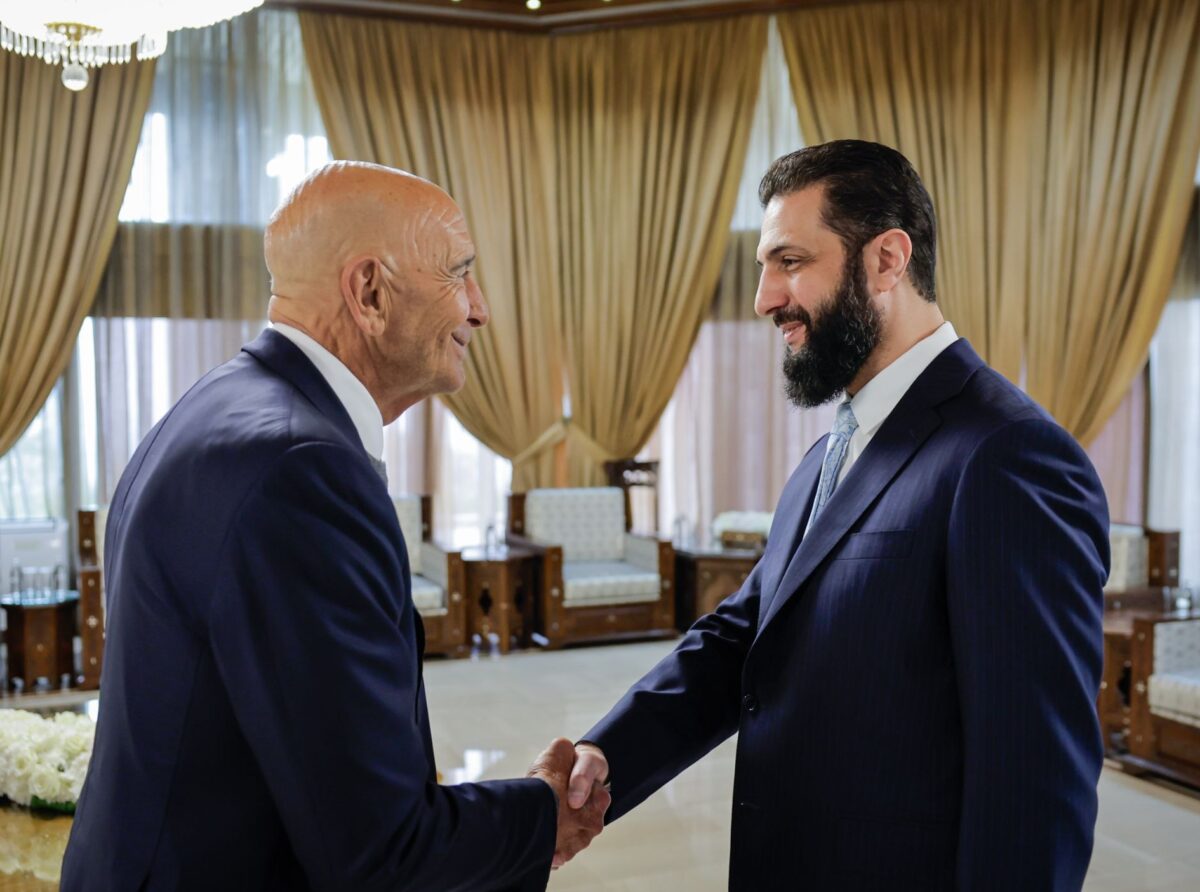
The US delivered its clearest signal yet that its Syria policy has fundamentally changed. US President Donald Trump confirmed Washington’s support for the Syrian government led by President Ahmad al-Sharaa publicly acknowledging the end of the SDF’s role as Washington’s primary partner on the ground.
In comments to the New York Post and later at the White House, Trump said US forces worked “with the government and the president in Syria” to prevent an attempted escape by ISIS detainees, describing Sharaa as “a strong guy, tough guy” capable of handling security challenges. He also voiced support for Syrian army operations after accusing the SDF of violating earlier agreements, according to AFP and Reuters.
US Special Envoy to Syria Tom Barrack reinforced that position in multiple statements posted on X, saying the “primary role of the SDF has ended” following the emergence of a recognized central government that has joined the international coalition against ISIS. Barrack said Washington is facilitating the transfer of security responsibilities to Damascus and does not seek a long-term military presence in Syria.
He stressed that the US priority is defeating ISIS and supporting national unity “without endorsing separatism or federalism.”During a phone call between Trump and Sharaa, both leaders emphasized preserving Syria’s unity, protecting Kurdish rights within the Syrian state and continuing cooperation against ISIS.
EU Backs Integration and De-escalation
The EU welcomed the ceasefire as a vital step to prevent further instability. In a statement issued Monday, the EU called for an immediate halt to military activity, protection of civilians and respect for de-escalation commitments.
The bloc said integrating military, security and civilian institutions into unified state structures is essential for long-term stability, while stressing the importance of safeguarding Kurdish rights within Syria’s territorial framework. The EU also underlined the need for Syria to maintain its commitment to counterterrorism efforts to prevent any resurgence of ISIS.
France echoed that position. The French Foreign Ministry said the agreement marked a positive development toward de-escalation in northern Syria and reaffirmed Paris’ commitment to its Kurdish partners, citing the SDF’s role in the fight against ISIS.
Turkey Calls Unity a Red Line
Turkey welcomed the ceasefire and integration agreement but framed it squarely around sovereignty and security. Burhanettin Duran, head of Turkey’s Presidency Communications Department, said the deal represents an important milestone toward establishing a “terrorism-free zone,” adding that Ankara will closely monitor its implementation.
Duran stressed that Syria’s unity and territorial integrity are a “red line” for Turkey and described Ankara as an influential actor both on the ground and at the negotiating table. Turkish President Recep Erdogan reinforced that message in remarks from Ankara, saying Syria belongs to all its people without discrimination and warning against any attempts to create a “state within a state.” Erdogan said Turkey would continue to stand by Syria in the fight against terrorism and urged full compliance with the agreement, including the disarmament and integration of SDF elements.
Arab States Emphasize Stability and Sovereignty
Several Arab countries issued coordinated messages supporting the agreement and Syria’s unity. Egypt’s Foreign Ministry described the deal as an important step toward launching a comprehensive political process that includes all Syrians. Cairo stressed the need to preserve Syria’s sovereignty, strengthen state institutions and confront terrorism, while calling for improved humanitarian and living conditions.
Qatar welcomed the agreement as a step toward civil peace, security and the rule of law, reaffirming its support for Syria’s unity and sovereignty. Iraqi leaders also highlighted dialogue and coordination as essential to preventing a return of terrorism and maintaining regional stability, according to statements carried by Iraqi and regional media.
Taken together, the reactions reflect a rare moment of convergence around Syria’s territorial integrity and the authority of the central government. While concerns remain over implementation and local tensions, the international response suggests growing acceptance of Damascus as the primary partner for shaping Syria’s next phase.