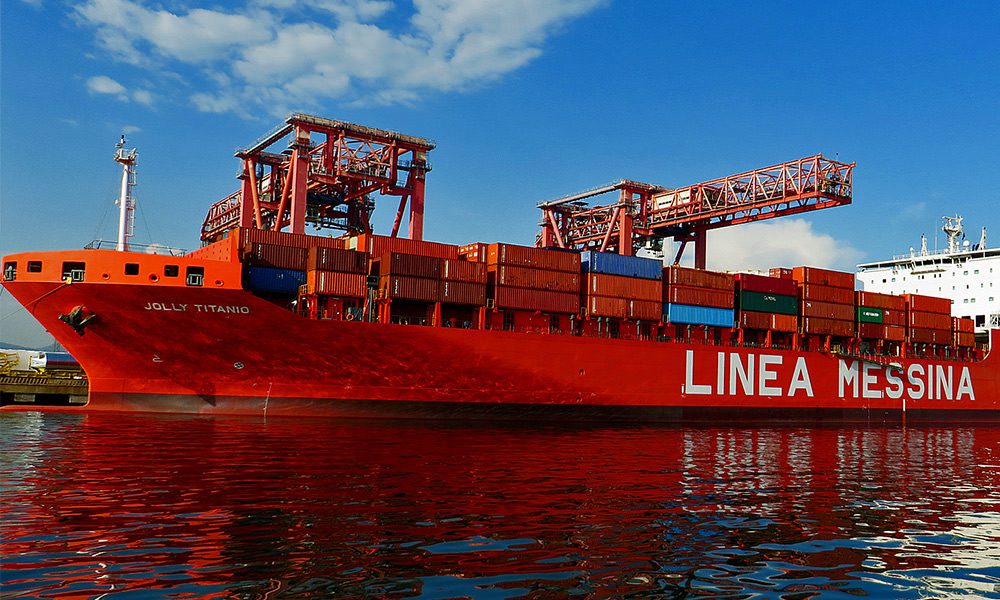
 In January 2026, Italian shipping line Ignazio Messina announced the resumption of port calls in Syria, officially adding the port of Latakia to its regular Middle East service. The move marks the Genoa-based company’s return after years of absence, following Syria’s political transition in late 2024 and the subsequent lifting of international sanctions.
Strategic Reconnection to a Reopening Market
Messina stated that the inclusion of Latakia strengthens connectivity within its Mediterranean, Middle East, and India network. The service is operated by three container vessels, each with a capacity of 6,000 TEUs, running on an 18-day rotation. The company said the decision responds to growing demand linked to reconstruction needs and the gradual restoration of regional supply chains.
Latakia’s Operational Revival
The decision comes amid renewed international interest in Syrian ports. Latakia, which handles the majority of Syria’s container traffic, recorded notable growth in 2025 following administrative reforms and modernization measures. A key development was the signing of a 30-year agreement with CMA CGM in May 2025 to manage and expand the container terminal, backed by a €230 million investment to raise annual capacity beyond one million TEUs.
In parallel, DP World signed a separate 30-year concession in July 2025 to develop the port of Tartous, committing approximately $800 million in investment. These agreements signaled renewed confidence among major global port operators in Syria’s maritime sector.
From Occasional Calls to Regular Service
While some European operators, including Grimaldi, resumed limited spot calls to Syrian ports in late 2025, Messina’s move is distinguished by integrating Latakia into a fixed, scheduled service. This provides continuity and predictability for shippers, positioning Messina among the first companies to establish a permanent presence in Syria’s post-sanctions maritime market.
Part of a Broader Expansion Strategy
Messina’s return to Syria coincides with a broader corporate transformation. The company has completed its transition to a container-only fleet, now operating 21 vessels with a total capacity exceeding 40,000 TEUs. It has also expanded services in the Indian subcontinent and launched a new route serving Algeria.
Despite regional instability, Messina maintained regular transits through the Suez Canal during the Red Sea crisis, preserving competitive transit times. The company reported a 31.2% increase in shipping volumes in 2024, with the Latakia call forming part of a wider strategy to expand its network in recovering and emerging markets.