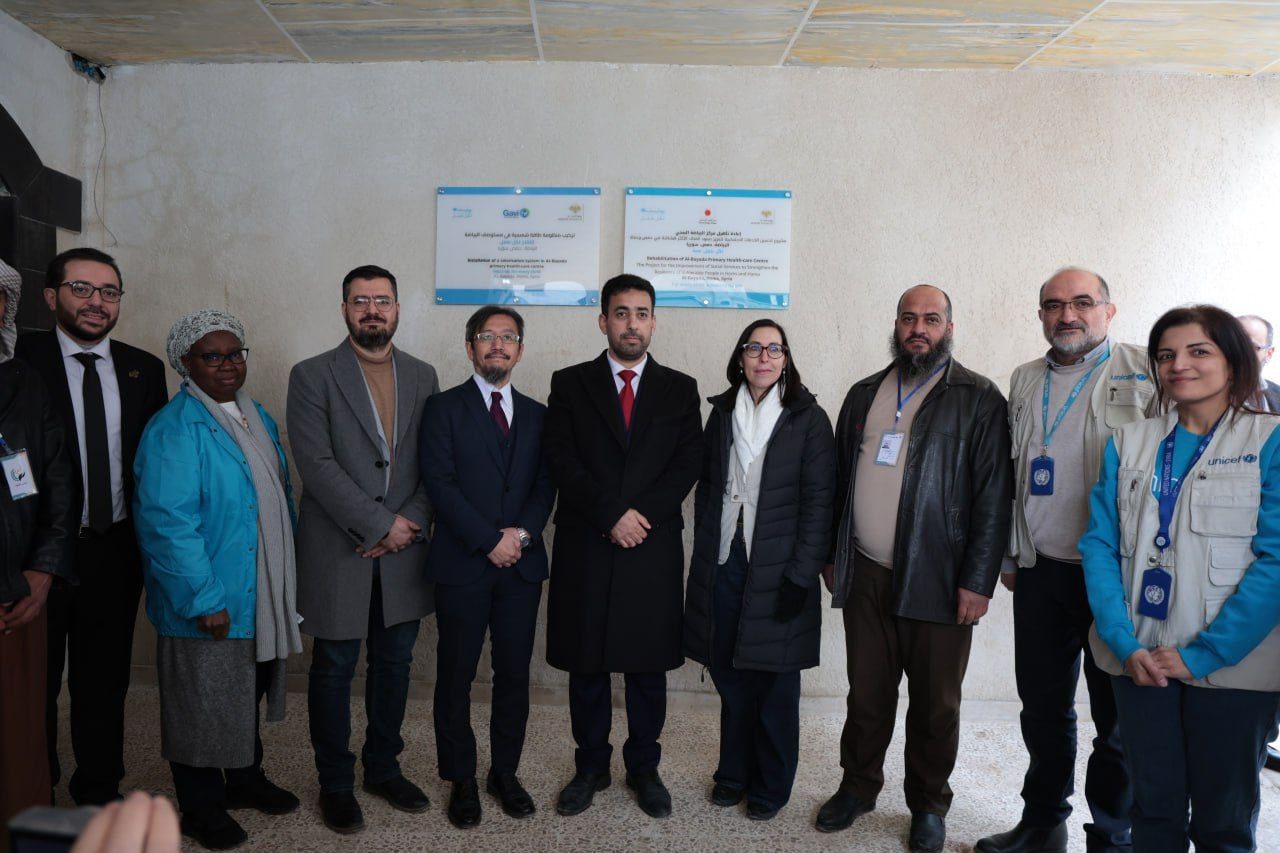
 The city of Homs witnessed a major healthcare milestone with the inauguration of a new nephrology building at Homs Grand Hospital in the Waer neighborhood. The facility was officially opened by Minister of Health Dr. Musab al-Ali as part of ongoing efforts to strengthen healthcare infrastructure and improve the quality of medical services for citizens.
Specialized Services and International Partnerships
The project was implemented with substantial support from the Japanese government and in close partnership with international organizations. The United Nations Office for Project Services (UNOPS) supervised the restoration and rehabilitation works, while the World Health Organization (WHO) provided advanced medical equipment. The collaboration reflects a successful model of cooperation between the Syrian government and international partners in the field of healthcare reconstruction and early recovery.
During his tour of the facility, Ali explained that the kidney building includes a fully equipped operating room, an intensive care unit, and inpatient wards with a total capacity of 40 beds. The building also houses a modern laboratory, 22 dialysis machines, and a dedicated medical waste incinerator.
Among the most notable equipment installed are lithotripsy machines used for non-surgical treatment of kidney stones, X-ray systems, and CT scanners. In addition, a modern MRI machine has been installed and is expected to become operational soon, significantly enhancing diagnostic and treatment capabilities in Homs and surrounding areas.
Officials Highlight Sustainability and Cooperation
Ali stated that the new facility “carries a message of hope for patients,” reaffirming the Ministry of Health’s commitment to the sustainable development of the healthcare sector. For his part, the Chargé d’Affaires of the Japanese Embassy in Damascus, Mr. Akihiro Tsuji, expressed pride in Japan’s contribution, emphasizing that rehabilitating healthcare infrastructure is a cornerstone of early recovery efforts.
UNOPS Representative Mr. Muhammad Akram noted the project will ease pressure on existing health services and is expected to serve approximately 500,000 residents in Homs, with the capacity to support up to three million people across central Syria. Meanwhile, WHO Representative in Syria Dr. Asmus Hammaric highlighted the project’s importance in improving healthcare quality and supporting national health priorities.
Continuing Healthcare Reconstruction Efforts
The inauguration of the nephology wing is part of the Ministry of Health’s broader plan, implemented in cooperation with international partners, to rehabilitate medical facilities across the country. Ali also revealed that plans are under consideration to rebuild and rehabilitate the National Hospital in Homs, which was previously destroyed, underscoring the government’s commitment to restoring and expanding vital healthcare services.