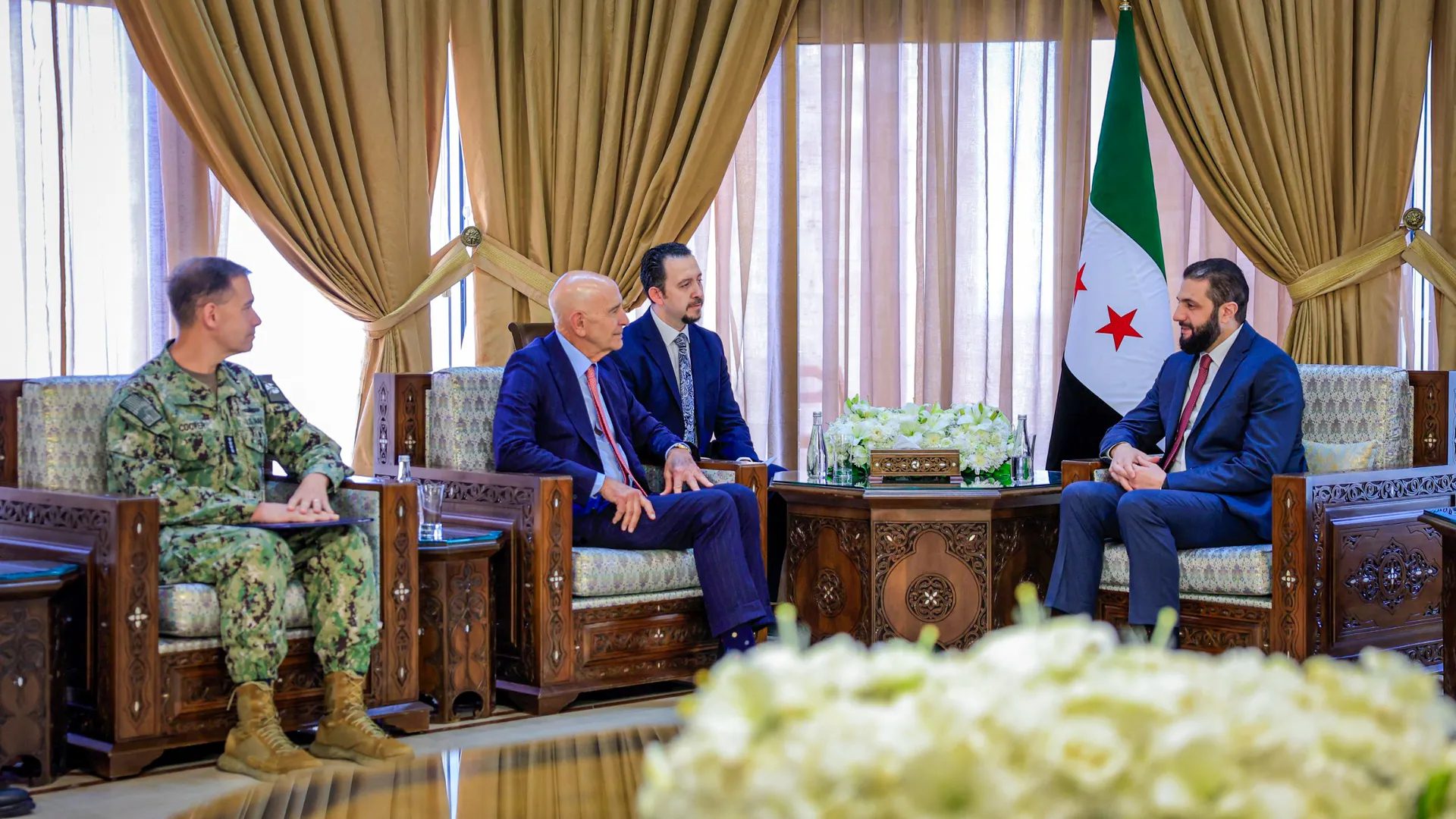
US-mediated talks between Syrian and Israeli officials in Paris concluded this week with what American and Israeli officials described as positive momentum toward a new security agreement, marking a renewed diplomatic push after months of stalled contacts.
The American news website Axios reported that the fifth round of negotiations ended with agreement to accelerate talks, hold more frequent meetings and pursue confidence-building measures. Axios cited unnamed Israeli and US officials with direct knowledge of the discussions. The talks were held under US auspices and framed as part of President Donald Trump’s broader Middle East initiative.
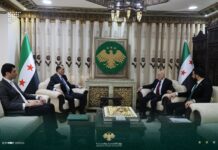
A joint US-Israeli-Syrian statement issued by the US State Department said senior officials met in Paris and agreed to establish a joint coordination mechanism to facilitate intelligence sharing, reduce military escalation and maintain continuous communication. The statement added that Washington “commends the positive steps” and pledged support for implementing the understandings.
Coordination Cell and Freeze Proposal
According to Axios, the US proposed creating a joint Syrian-Israeli-American coordination cell, also described as an integration or fusion mechanism, to be based in Amman, Jordan. A US official told the outlet the cell would oversee security in southern Syria, host further talks on disarmament and address Israeli troop deployments.
The same official said Washington proposed freezing military activity by both sides at current positions until technical details are finalized, with representatives from Syria, Israel and the US focusing on diplomatic, military, intelligence and trade issues.
Reuters separately reported that Israel and Syria agreed to establish a communications cell to coordinate intelligence exchanges and reduce escalation. The Jerusalem Post reported the mechanism is intended to serve as a “permanent communication channel” to manage sensitive security exchanges and “prevent misunderstandings” under US supervision.
Economic Elements and Disputed Territory
Axios also wrote Washington submitted a broader proposal including establishing a demilitarized economic zone on both sides of the border. A US official said the plan envisions wind farms, agricultural projects and a ski resort on Mount Hermon, with unnamed regional partners already committed to funding. Israeli officials told Axios that Israel insists on remaining on the summit of Mount Hermon in any future arrangements, while Syria has pushed to reactivate the 1974 Disengagement Agreement.
A Syrian government source told the state news agency SANA that Damascus views reactivation of the 1974 accord as guaranteeing Israeli withdrawal to lines held before December 8, 2024. “It is impossible to move forward with strategic issues with Israel without a binding and clear timetable for a complete Israeli withdrawal,” a Syrian source told Reuters.
Participants and Regional Reactions
According to Axios and the Jerusalem Post, the Syrian delegation included Foreign Minister Asaad al-Shaibani and intelligence chief Hussein al-Salameh. The Israeli delegation included Ambassador to Washington Yehiel Leiter, Prime Minister Benjamin Netanyahu’s military secretary Roman Goffman and acting national security chief Gil Reich. The US delegation included Syria envoy Tom Barrack, Middle East envoy Steve Witkoff and Jared Kushner.
Barrack told the Post the talks represented a “breakthrough,” saying Syria “harbors no hostile intentions toward Israel” and that economic cooperation and open dialogue could support stability.
Israeli officials said the dialogue would continue, emphasizing border security and the “safety of the Druze minority,” while Syria reiterated that sovereignty and noninterference remain central to any agreement.