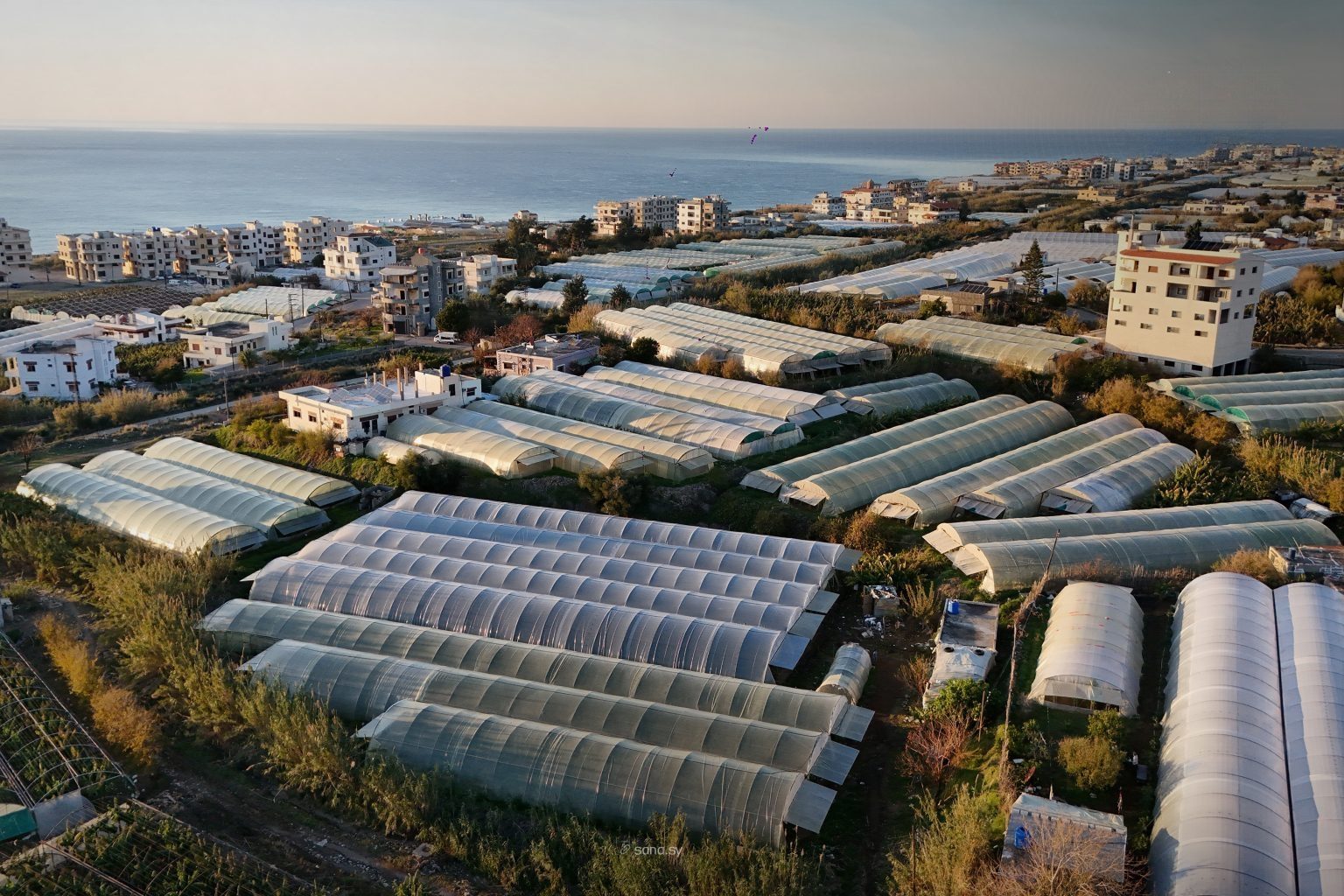
 Protected agriculture in Tartous Governorate has emerged as a key economic and social pillar, sustaining the livelihoods of nearly 30,000 families while fully meeting local market demand and generating a surplus for export. This success is driven by the governorate’s mild coastal climate and the long-standing expertise of local farmers.
Diverse Production Capacity
According to Dr. Muhammad Ahmad, Director of Agriculture in Tartous, the governorate contains approximately 150,000 greenhouses, concentrated mainly in Tartous and Banias. These facilities produce a wide range of crops, led by tomatoes, followed by eggplants, cucumbers, peppers, strawberries, and zucchini, in addition to newly introduced tree varieties. This diversified production provides farmers with relatively stable incomes capable of covering annual household needs.
A Vision for Development and Challenges Hindering Growth
Despite its strong performance, the sector faces structural challenges, including fragmented land ownership and limited opportunities for horizontal expansion due to mountainous terrain. High production costs and weak export mechanisms further constrain profitability. In response, the Directorate of Agriculture and the Agricultural Bank offer technical guidance and financial support, while the Disaster Relief Fund intervenes to assess and compensate damages during emergencies.
Future plans focus on reducing production costs, stabilizing export channels, and promoting high-yield crop varieties. Proposed measures include establishing hybrid seed production stations, packaging centers that meet international standards, and local manufacturing facilities for agricultural inputs. These steps aim to enhance sustainability, improve competitiveness, and reinforce food security for families dependent on protected agriculture.
Farmers Highlight Cost Pressures
Farmers emphasize that rising input costs remain the most pressing concern. Hadi Saleh al-Jadou, a greenhouse farmer, notes that prices for fertilizers, pesticides, and plastic sheeting continue to climb, while market prices for produce remain low. Agricultural engineer Abdulqadir Mansour echoes this concern, explaining that production costs, from nylon and fertilizers to fuel for generators, place heavy pressure on farmers, leaving them vulnerable to market fluctuations despite working in climate-controlled environments.
Mansour also points to gradual improvement in export performance. While exports were previously conducted individually and through intermediaries, resulting in limited quantities, exported volumes have increased by around 30 percent this year. At the same time, production costs have declined significantly, with the average seasonal cost dropping from nearly 16 million Syrian pounds (SYP) to between 9 and 10 million.
A Vital Sector with National Impact
Total greenhouse output in Tartous this season is estimated at around 500,000 tons from approximately 139,000 greenhouses. These figures underscore the sector’s capacity to secure local food supplies and contribute to the national economy through exports, provided that structural challenges and cost pressures are effectively addressed.