 After its liberation from Syrian Democratic Forces (SDF) control, Raqqa has entered a highly sensitive phase as it works to reorganize and rebuild its healthcare sector. Years of conflict left hospitals damaged, services disrupted, and medical systems close to collapse. With rising pressure on remaining facilities and a growing number of patients, restoring healthcare has become a top priority.
A Sector in Critical Condition
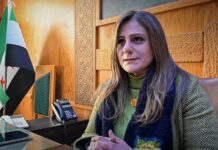
Dr. Abdullah al-Hamoud, Head of the Health Directorate in Raqqa, described the current healthcare reality as “chaotic and dilapidated,” noting the absence of most basic administrative and technical foundations.
He confirmed upon assuming his post, he immediately began efforts to restart hospital operations, starting with Tabqa National Hospital and extending to the National Hospital in Raqqa city center, while maintaining the existing medical workforce.
Legacy of Collapse Under SDF Control
During the years of SDF control, Raqqa suffered severe deterioration in health services. The province faced acute shortages of medicine and qualified medical personnel, alongside the near-total absence of functioning health clinics in rural areas. As a result, many patients were forced to travel long distances to other cities for treatment, significantly increasing both financial and physical hardship.
The Syrian government has launched efforts to restore the healthcare sector’s vital role in Raqqa and rebuild a system capable of meeting residents’ needs. Assistant Minister of Health for Health Affairs, Dr. Hussein al-Khatib, conducted an inspection tour of the National Hospital and the Maternity and Children’s Hospital to assess conditions and identify urgent requirements.
Khatib emphasized that the Ministry will mobilize all available capabilities to rehabilitate the main building of the National Hospital and ensure the provision of medical services that meet acceptable standards of care.
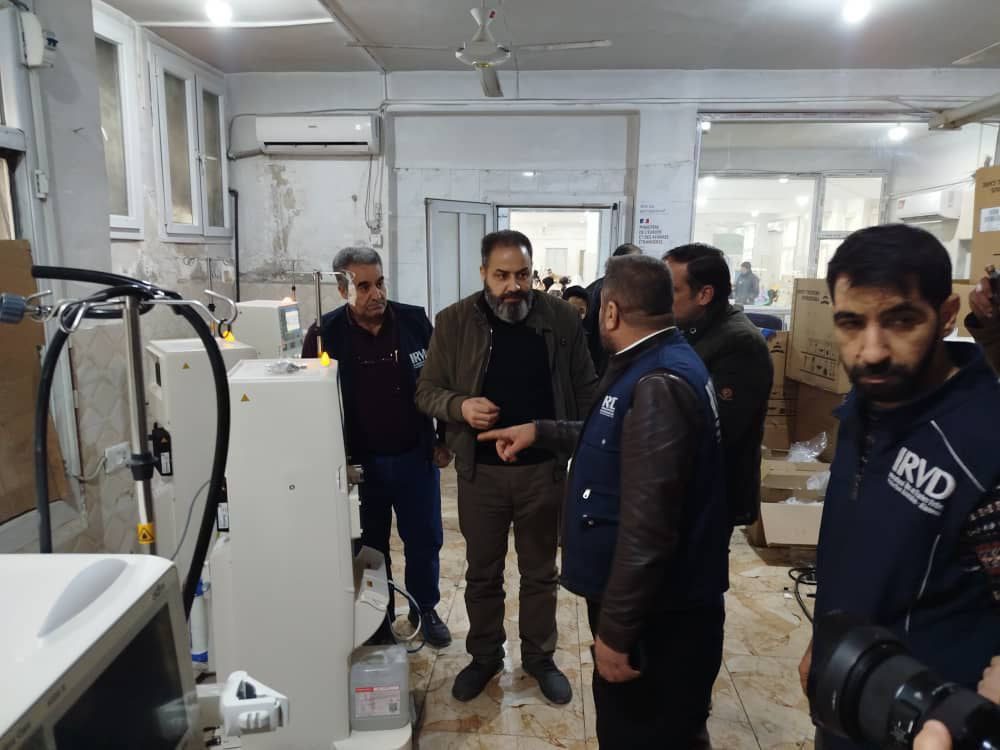
In a concrete step forward, Raqqa Governorate announced the arrival of 20 modern dialysis machines at the National Hospital. Governor Abdurahman Salama stated these machines will significantly reduce the suffering of kidney failure patients who were previously forced to travel to other provinces for treatment.
Doctors and Patients See Renewed Hope
Speaking to Levant 24, kidney disease specialist Dr. Hassan Khalil explained, “The dialysis center at the National Hospital in Raqqa was the only such center in areas previously controlled by the SDF. It had just five old and inefficient dialysis machines, forcing hundreds of patients to endure long waiting periods or travel to Damascus, Aleppo, or Hama for treatment.”
He expressed gratitude to the Ministry of Health for providing the new machines, saying they will “greatly ease patients’ suffering by eliminating long waits and exhausting, costly journeys.” Dr. Khalil added, “I hope new dialysis centers will be opened in Tal Abyad and Tabqa, as well as in Deir Ezzor and Hasakah, to reduce pressure on the Raqqa center.”
While Raqqa’s path to healthcare recovery remains long and complex, these initial steps signal a serious attempt to address a prolonged humanitarian crisis and restore essential medical services to the population.