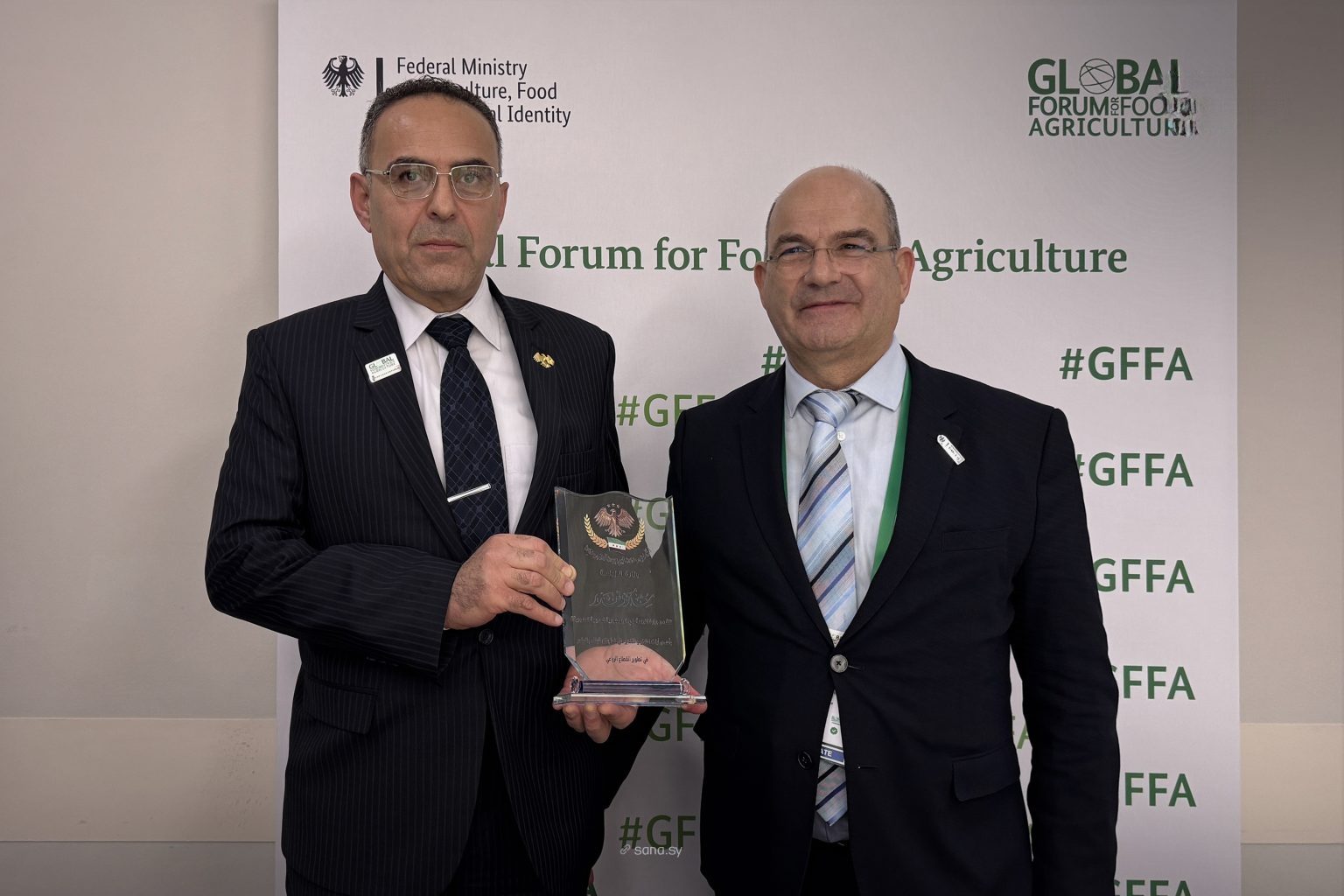
 After years of absence from specialized international platforms, Syria’s participation in the Global Forum for Food and Agriculture (GFFA 2026) in Berlin marked a pivotal turning point, signaling the country’s renewed engagement in global strategic discussions on food security and agricultural development.
Opening to the World and Building Cooperation Bridges
Raed Hamza, Director of the National Center for Agricultural Policies, explained that Syria’s participation went beyond symbolic representation, opening direct channels of communication with a broad network of international stakeholders. These included UN agencies, development banks, and leading agricultural technology companies.
The Syrian delegation, headed by Minister of Agriculture Dr. Amjad Badr, gained exposure to the latest global innovations in key areas such as water-scarcity management, drought-resistant seed technologies, and financing mechanisms designed to support small-scale farmers. Hamza noted that these exchanges provided valuable insights that could be adapted to Syria’s specific agricultural challenges.
From Dialogue to Tangible Partnerships
Discussions at the forum translated into concrete steps toward cooperation. Syria reached an understanding with the Ukrainian side to appoint focal points tasked with preparing a memorandum of understanding to expand agricultural cooperation and technology exchange.
In addition, the World Organization for Animal Health (WOAH) agreed to dispatch a technical team to Syria to conduct a comprehensive assessment of the livestock sector. The mission aims to develop a roadmap to improve veterinary services, enhance disease control, and raise overall productivity.
Syria also expressed openness to Brazilian investments in the livestock sector, seeking to benefit from Brazil’s extensive experience in animal production. Furthermore, a follow-up mechanism was established with the Committee on World Food Security (CFS) to sustain dialogue and coordination on food security policies.
Practical Visions for Sustainable Development
Hamza emphasized that Syria’s participation was not limited to outlining challenges, but also focused on presenting practical solutions. Among the ideas discussed was leveraging “blue economy” concepts through the development of aquaculture projects and integrated systems making better use of coastal and riverine water resources.
Modern river management and rehabilitation models were also explored, with potential applications to the Orontes and Euphrates rivers to improve productivity, address pollution, and support surrounding agricultural communities.
A First Step on a Long Road
Held under the theme “Water, Crops, Our Future,” GFFA 2026 focused on sustainability and adaptation to climate change, issues of critical relevance to Syria. The country’s return to this global forum represents a positive first step toward reconnecting its agricultural sector with international networks of knowledge, finance, and technology.
Syrian officials stressed that the ultimate goal is to translate the cooperation opportunities initiated in Berlin into tangible field projects, strengthening the resilience of Syrian farmers and contributing to long-term national food security.