 Guided by a systematic national strategy to open a new chapter of development, reconstruction, and the safe return of residents, the Syrian government, represented by the Damascus Governorate, has launched a comprehensive project to rebuild the neighborhoods of Jobar and Qaboun.
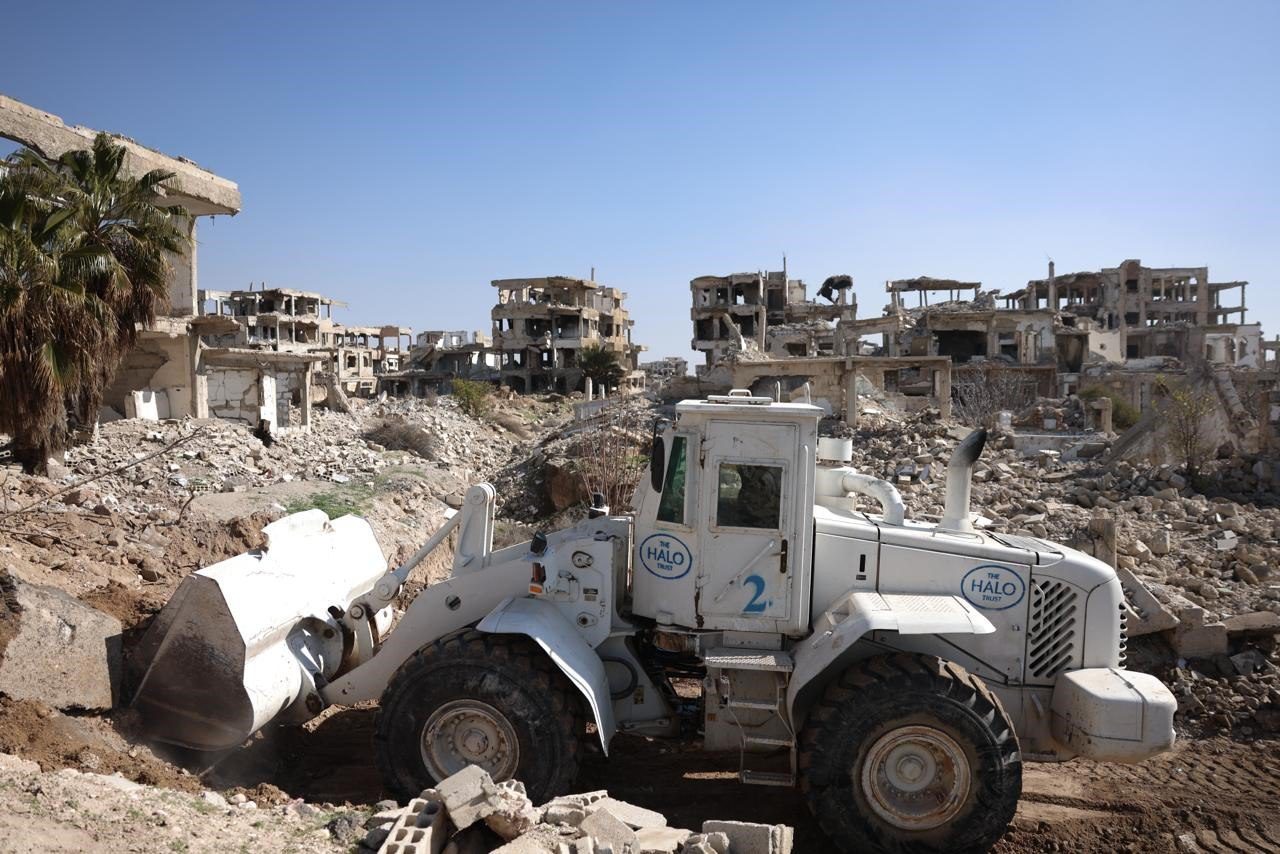
The plan goes beyond merely removing the physical scars of war. It follows a practical, multi-phase methodology that begins with clearing landmines and unexploded ordnance to ensure public safety. It then moves to documenting property rights and drafting new regulatory plans, before concluding with rubble removal and site preparation for reconstruction. This parallel and structured approach is designed to ensure coordination, transparency, and efficiency throughout the rebuilding process.
In cooperation with the German Agency for International Cooperation (GIZ), the Damascus Governorate has established a pioneering Housing, Land, and Property (HLP) Rights Support Unit for Jobar residents. The unit will provide integrated services, including capacity building, legal assistance, and technical guidance. It also aims to create a platform for participatory urban planning, supporting equitable development and spatial justice in the rebuilt neighborhood.
Safety Remains a Priority
Engineer Rama al-Dahir, supervisor of the reconstruction pathway within the “Damascus Is Preparing” urban development program, said the current phase focuses on removing mines and war remnants, stressing that no construction can begin before this step is completed. She explained that the work is being carried out by Damascus Governorate directorates and the urban development program in coordination with the Ministry of Emergency and Disaster Management.
Dahir added that particular importance is being placed on documenting property rights, with active community participation through neighborhood trustee councils, as well as engineering and legal committees formed by residents of the area. The process, she said, is built on transparency and partnership with the local community.
Residents Welcome Long-Awaited Progress
Ahmad Hussein, a former resident of Jobar, told Levant24 his family was forced to flee the neighborhood February 6, 2013, relocating to the town of Taal in the Damascus countryside, where they struggled to rebuild their lives.
“Although access to Jobar became possible again in 2018, returning was not feasible due to the scale of destruction and the widespread presence of landmines and unexploded ordnance,” he said. “Now, with the launch of the reconstruction project, we have finally received the news we have been waiting for all these years,” Hussein added.
“I strongly support the state’s current efforts, especially the critical first phase of mine clearance. We immediately registered with the Property Documentation Office, which provides essential legal guidance and helps verify ownership documents.”
He stressed cooperation with state institutions at this stage is crucial. “The government is serious about reconstruction, and we are eager to return. While official efforts are underway, continuous follow-up and active engagement by the local community remain essential to ensure success.”