In a recent article by former Israeli Defense Minister Yoav Gallant, he presents a strategic assessment of the Middle East after what he describes as “the weakening of Iran’s regional axis.” Syria is at the center of his analysis, not as a domestic political story, but as the main geopolitical arena where the next phase of regional competition is unfolding.
Gallant frames the fall of the Assad regime as a decisive outcome of sustained pressure on Iran and its network of proxies. In his view, Tehran’s regional architecture, built on militias, missile infrastructure, and strategic depth, has suffered severe disruption. Syria, once a cornerstone of Iran’s westward projection toward Lebanon and Israel, is now depicted as a vacuum.
Middle Eastern Vacuums ‘Rarely Remain Empty’
According to Gallant, Turkey is the actor most prepared to fill the space Iran is leaving behind in Syria. He describes Ankara’s growing footprint as deliberate and strategic, not improvised. Since the regime’s collapse, Turkey intensified its involvement, providing backing to Syria’s transitional authorities while consolidating its military and intelligence presence.
Gallant emphasizes several dimensions of this expansion. Turkish forces continue to control territory in northern Syria. Turkish-backed factions have expanded their operational reach. Intelligence and air defense assets are being positioned to create what he calls “strategic depth.” He also claims Turkish influence now stretches toward the Damascus area, bringing Ankara’s sphere of activity geographically closer to Israel’s border than at any previous time.
Same Game New Players
Syria’s internal political transformation or governance challenges are not Gallant’s focus. He treats Syria almost exclusively as a strategic chessboard. He asks not how Syria rebuilds, but who shapes the emerging balance of power within its territory.
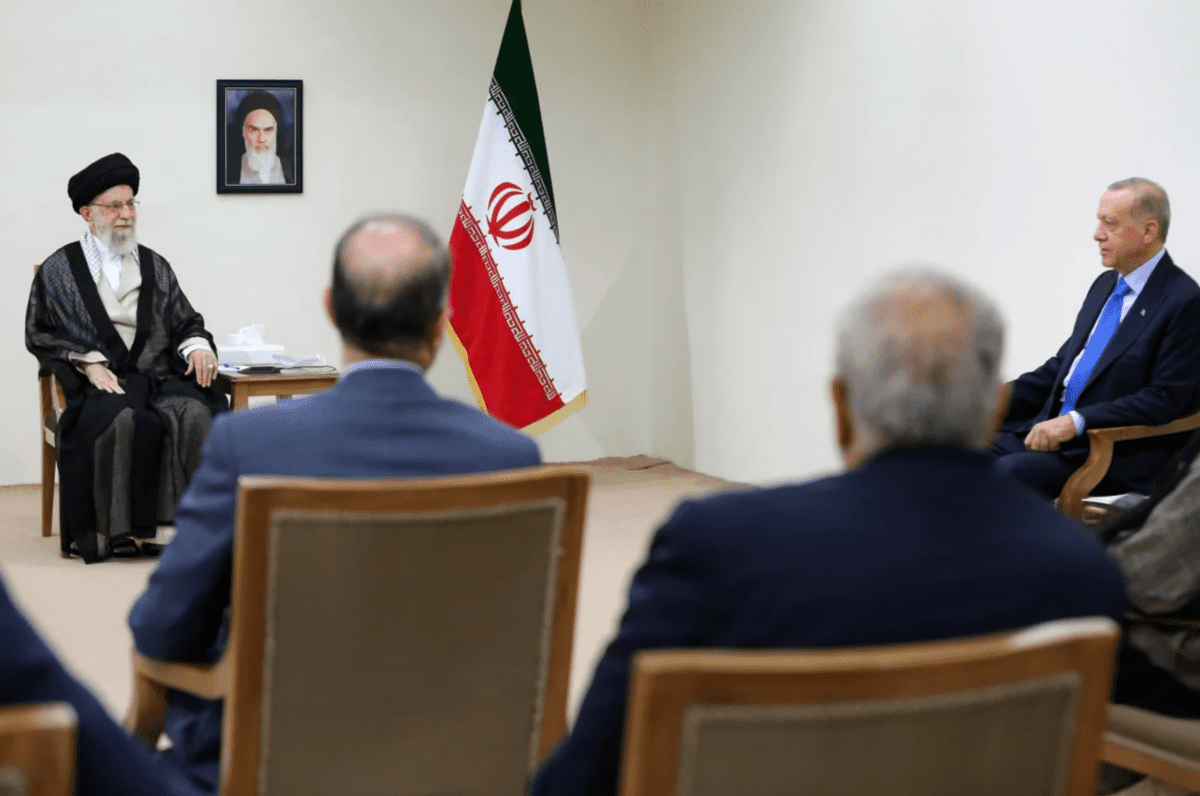
He contrasts Iran’s model of influence, characterized as proxy-driven and destabilizing, with Turkey’s approach, which he presents as state-centered and institutionally embedded within the Western system through NATO. This distinction is central to his thesis.
Unlike Iran, Turkey is not isolated. It is a NATO member with diplomatic legitimacy and advanced military capabilities. That makes its expansion in Syria, in his assessment, more structurally significant and potentially more durable.
At the same time, Gallant avoids framing Turkish influence as inherently hostile. He recalls earlier decades of strategic cooperation between Israel and Turkey and suggests renewed engagement is possible. However, he draws a red line: where Turkish-backed forces operate near Israel’s frontier, Israeli security calculations shift.
Syria, therefore, becomes the testing ground of a broader regional transition. Gallant views the weakening of Iran as a strategic achievement, while warning that what replaces Iranian influence will define the next generation of Middle Eastern order. In that equation, Syria is not peripheral, it is central.
For observers of Syria, Gallant’s article offers insight into how Israeli strategic circles interpret the country’s transformation. It also underscores a reality Syrians know well: their country remains a focal point of regional competition. The post-Assad phase may mark the end of one axis of influence, but it has already opened the door to a new contest over Syria’s future.