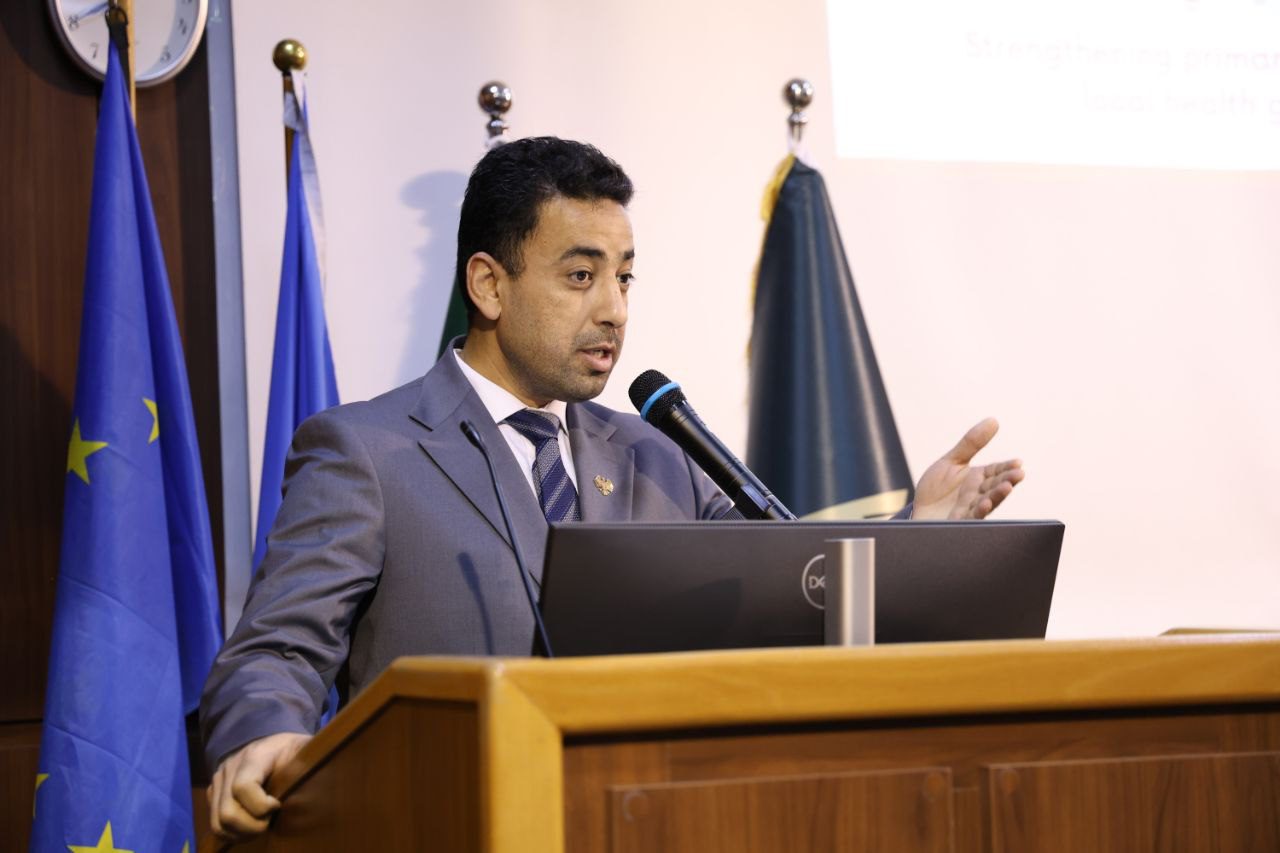
The Ministry of Health, in partnership with the EU, the World Health Organization (WHO) and the Italian organization Un Ponte Per (UPP), launched two initiatives aimed at strengthening primary healthcare services in Syria. The projects were unveiled at the Ibn al-Nafis Medical Complex in Damascus and focus on improving service delivery, reinforcing health governance and enhancing crisis response capacity.
Project Details
The first initiative, supported by UPP, targets underserved areas in rural Aleppo with a €7 million budget. The project includes the restoration and rehabilitation of 22 health centers and seeks to improve the quality of care, promote integrated primary health services while strengthening local governance and institutional capacity.
The second initiative, implemented in cooperation with WHO for 2026–2027, has a budget of approximately €1 million. It aims to modernize primary care management through adoption of the “Family Health” model and the integration of mental health services. The project also contributes to policy development within the Ministry of Health while providing institutional support to the Center for Strategic Studies and Health Training.
Strengthening the Health System
Health Minister Dr. Musab al-Ali described primary healthcare as “the backbone of the ministry’s strategic plan,” emphasizing that projects are designed to reduce pressure on hospitals and ensure equitable, timely access to services.
He noted the initiatives extend beyond infrastructure rehabilitation and medical equipment provision to include training healthcare workers, improving referral and emergency transport systems and strengthening community-based services.
Michael Ommacht, chargé d’affaires of the EU Delegation to Syria, described the projects as a tangible expression of European and international cooperation in support of the health sector. “Health is a top priority and a fundamental pillar for ensuring a stable future,” he said. “No development can be achieved without an integrated health system.”
Toward Sustainable Recovery
EU officials said approximately €8 million has been allocated to the two initiatives as part of broader support for Syria’s national health strategy, with the aim of transitioning from emergency assistance to sustainable recovery.
Asmus Hamerich, acting WHO representative in Syria, emphasized that primary healthcare is not limited to service delivery but serves as a cornerstone for building resilient societies and reforming health systems on the basis of equity and efficiency.
The Aleppo-focused project will concentrate on three main pillars: technical support, infrastructure rehabilitation and human capacity development, reflecting a comprehensive approach to strengthening Syria’s primary healthcare network.