
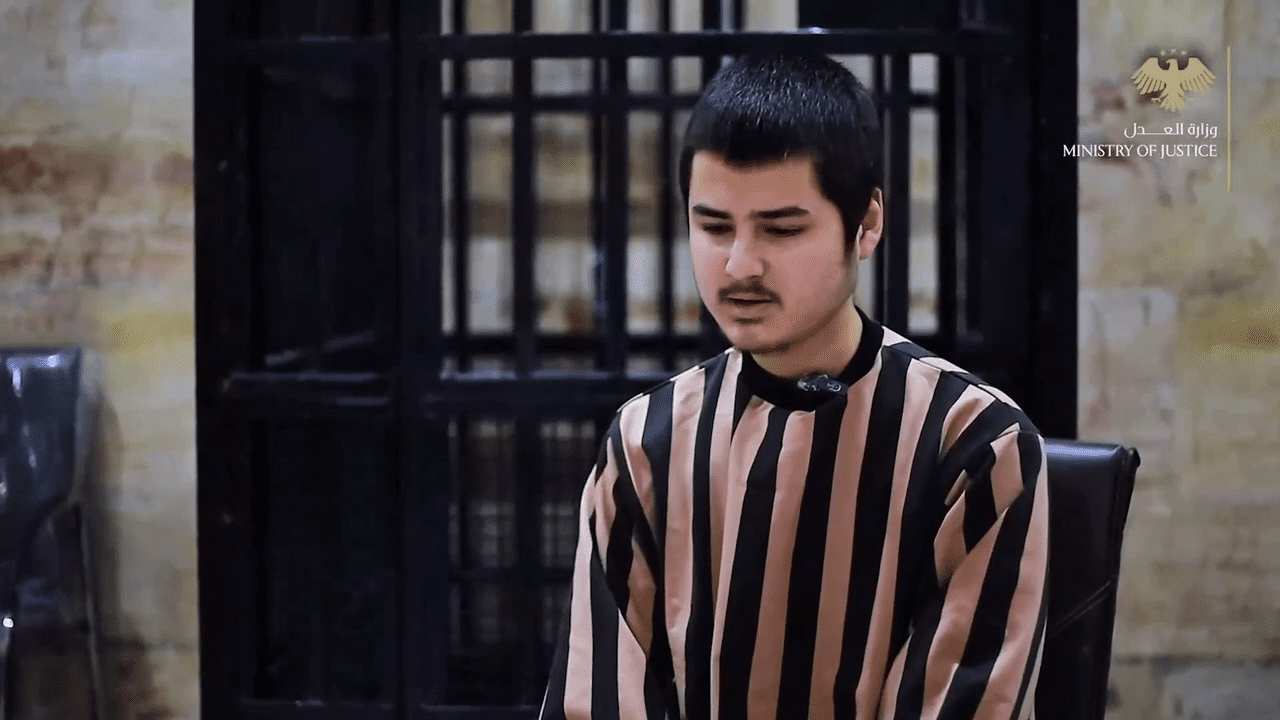
The Syrian Ministry of Justice released new details from its investigation into the bombing of Mar Elias Church in the Damascus countryside and an alleged plan to attack the Sayyida Zeinab shrine, saying judicial procedures are underway against those involved.
In a video statement published by the ministry, officials said the investigation began immediately after the bombing and led to the arrest of members of an ISIS cell responsible for planning and carrying out the attack. The ministry said suspects confessed within two hours of their apprehension and provided information about the structure of the cell and its intended targets.
According to the Ministry of Justice, the investigation focused on identifying both the perpetrators and planners to ensure prosecution under Syrian law. The ministry described the bombing as a “heinous crime” targeting civil peace and places of worship.
Suspects and Roles Identified
The ministry named Hassan Rustam, also known as Abu Waqas, as one of the main suspects. Investigators said he participated in the Mar Elias Church bombing and was assigned to carry out a separate attack at the Sayyida Zeinab shrine. Another suspect, Abdullah al-Jumaili, also known as Abu Khattab or Abu Imad, was identified as a senior ISIS figure and a planner of both attacks.
In his confession, Abu Waqas said the group remained in the area for about a month and traveled through desert routes using camouflage techniques. He told investigators that he rode in a vehicle with Abu Hatoun al-Iraqi, whom authorities described as an ISIS leader responsible for organizing the church bombing. Abu Hatoun was later killed during a foiled attempt to bomb the Sayyida Zeinab shrine, the ministry said.
Planning and Timing of Attacks
Investigators said the suspects detailed specific timelines and reconnaissance efforts. Abu Waqas stated that the church bombing was scheduled for 5 p.m., after the afternoon prayer, while the planned attack near the Sayyida Zeinab shrine was set for about 8 p.m., around dinnertime.
He told investigators that the church was surveyed multiple times and that the attacker was instructed to open fire upon entering before detonating an explosive belt. The confession also described weapons, explosives, detonators and other materials stored at a house used by the cell, according to the ministry’s video statement.
Foiled Shrine Attack and Legal Proceedings
The Ministry of Justice said heightened security measures prevented the bombing of the Sayyida Zeinab shrine and stopped the suicide bomber from reaching the site. Officials described the church bombing as an attempt to incite sectarian violence and destabilize society.
The ministry said public prosecution proceedings have been initiated against those arrested, and an investigating judge has assigned charges under applicable laws. The case has been referred to the criminal court, which will determine final verdicts and sentences, according to the Ministry of Justice.