
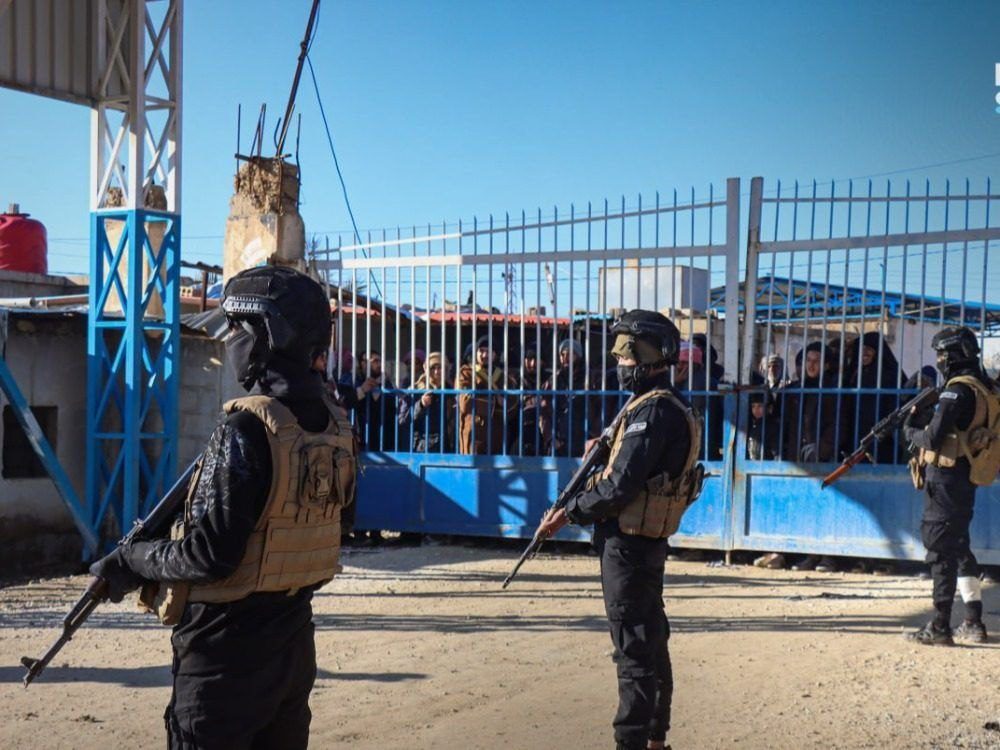
According to AFP, a source from Syria’s foreign ministry blamed the Syrian Democratic Forces (SDF) for security lapses at Hawl camp following their withdrawal, saying the group failed to ensure an orderly handover.
Hawl camp, located in the desert of Hasakah province, has long been the largest camp in Syria housing relatives of ISIS fighters. Before the recent transition, it accommodated approximately 24,000 residents, primarily women and children. Among them were around 15,000 Syrians, several thousand Iraqis, and over 6,000 foreign nationals representing roughly 40 countries.
For years, the camp was administered and secured by the SDF. However, as territorial control in northeastern Syria shifted and Damascus expanded its authority over formerly SDF-held areas, the Syrian government formally took over management of the facility last month.
Humanitarian sources told AFP that the section designated for foreign nationals, previously a high-security annex separated from Syrian and Iraqi residents, is now nearly empty. One aid worker said fewer than 20 foreign families remain in the annex. Another source described the area as “basically empty,” noting that a small number of foreign women had been transferred into the main camp.
Officials stated that authorities are currently conducting a census of the camp’s population. While they did not confirm whether escapes had occurred, they indicated any breakdown in security stemmed from what they described as a disorderly withdrawal by the SDF. At the time of publication an inquiry made to Syria’s Ministry of Interior, regarding the details of foreign detainees has not been answered.
Reorganizing Families and Tackling Radicalization
According to sources on the ground, Damascus is now attempting to track down and regain control over families who left the camp following the security breakdown. Authorities are reportedly working to locate and reorganize these individuals in a structured manner rather than concentrating them in a single location. The most radicalized among them are expected to remain in detention.
Children are expected to undergo de-radicalization programs, with supervised educational and recreational activities designed to prevent further ideological influence. Officials also indicate that repatriation for those wishing to return to their home countries will be coordinated directly with the relevant foreign governments.
January 20, the SDF announced it was “compelled to withdraw from Hawl,” while Syrian authorities accused the group of abandoning the facility. Following the SDF’s departure, the Syrian army entered the camp, and the interior ministry stated it was taking necessary measures to restore order and maintain security.
Hawl has long been regarded as one of the most complex security and humanitarian challenges in Syria’s anti-ISIS campaign. The recent developments signal a significant shift in how the issue of foreign ISIS-linked families is being handled under centralized state authority.



 for security lapses at al-Hol camp following their withdrawal, saying the group failed to ensure an orderly handover.)