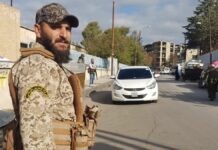
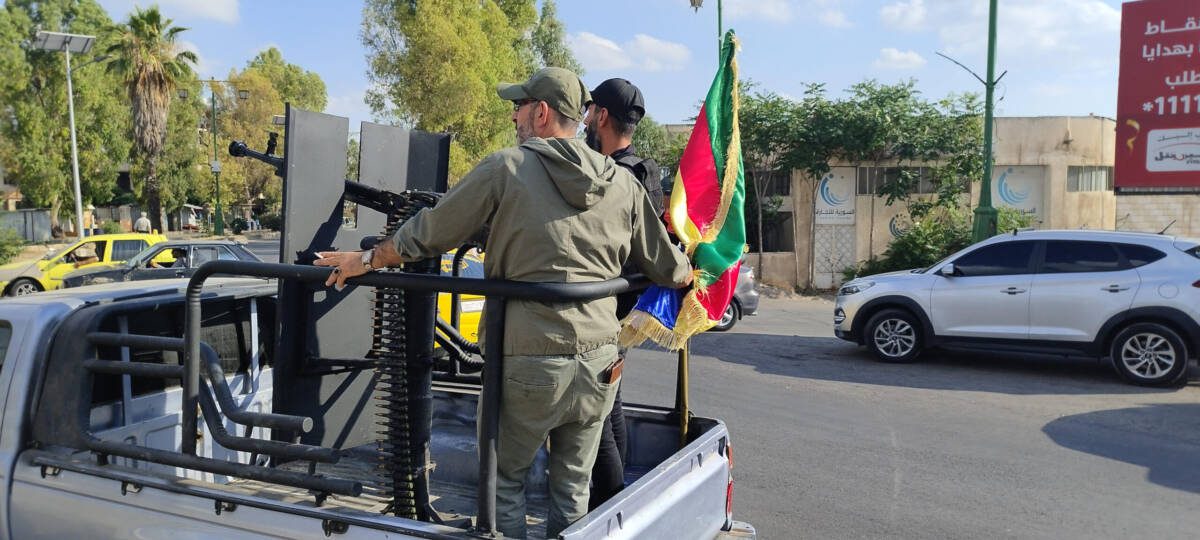
The Israeli-backed National Guard militia in Syria’s southern Suwayda province has imposed sweeping restrictions on information, drawing concern from local residents and observers who say the measures deepen isolation and suppress dissent. In a Feb. 7, circular the militia banned the broadcasting, circulation or publication of any videos, images or field news of a “military nature,” including the names of fighters, injuries or wounded, regardless of the “publishing entity,” according to the local outlet Suwayda 24.
The National Guard said the decision followed what it described as “chaos and confusion” caused by reports on military activity “near front lines” and residential neighborhoods. In its statement, the group claimed the ban aimed to protect “defense operations,” prevent civilian panic and curb misinformation. The circular warned that violators would face “legal accountability” through what it called the “military judiciary” in Suwayda.
Local journalists and activists told local outlets the decision resulted in a near-total blackout on security developments, with many choosing silence to avoid reprisals. The restrictions also extend to “political information” issued by “unofficial entities,” further limiting public discussion inside the province. This comes in the wake of repressive actions such as the shooting of journalist Marhaf al-Shaer and previous killings of political opponents such as Druze Sheikhs Raad al-Matni and Maher Falhout.
Road Closures and Civilian Pressure
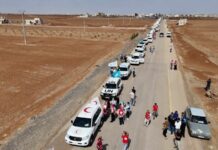
The clampdown has coincided with physical restrictions on movement. Armed groups affiliated with the National Guard closed the Damascus-Suwayda highway starting Sunday the morning or Feb. 8, preventing civilians from traveling to the capital. Local sources told Syria TV that buses heading to Damascus were turned back, and transport companies were instructed to suspend trips to Suwayda, while commercial convoys continued to move toward the province.
Tensions flared at the Umm al-Zaytoun checkpoint, where residents pressed guards to allow passage. Sources told Suwayda 24 weapons were discharged in the air as traffic backed up for hours. Only people carrying identification issued outside Suwayda were eventually allowed to leave, while residents of the governorate remained trapped.
University students reported seeking help from Syrian Arab Red Crescent (SARC) centers to reach Damascus for exams but were turned away due to what officials cited as “security concerns” and a lack of vehicles. Residents also expressed concern for patients with chronic illnesses who rely on hospitals in the capital.
Defections and Internal Strains
The restrictions come amid signs of internal strain within the militia. On Jan. 18, about 20 National Guard members defected in Suwayda and were transferred to Damascus under security supervision, according to sources cited by Syria TV. The defectors reportedly belonged to the Men of Dignity Movement faction, underscoring divisions within armed groups aligned with Druze leadership.
Meanwhile, clashes between the National Guard and Syrian government forces have continued intermittently. With reports of renewed fighting Feb. 6, including mortar and machine gun fire near Mazaraa village, with each side accusing the other of violating ceasefire arrangements.
As the National Guard tightens its control over information, movement and communication, critics say the measures risk further alienating Suwayda’s population from the rest of Syrian society and placing additional strain on the Druze community the militia claims to protect.