 Saudi Arabia is reportedly seeking to reroute the East to Med Data Corridor (EMC) through Syria, instead of Israel, signaling a notable geopolitical shift in regional digital infrastructure planning. The EMC project, announced in 2022 as a partnership between Saudi Telecom Company (STC) and Greece’s Public Power Corporation (PPC), aims to establish a fiber optic cable linking the Gulf to Europe.
As Gulf countries expand investments in artificial intelligence and data centers, secure and efficient data corridors to Europe are becoming strategically critical. The original route was planned to pass through Saudi Arabia and Jordan before reaching Israel.
However, Riyadh is now reportedly requesting that the route be modified to cross Syrian territory instead. Saudi Arabia is also studying an electricity interconnection project with Greece via a High Voltage Direct Current (HVDC) cable that could similarly pass through Syria.
Geopolitical Calculations
Kristian Coates Ulrichsen of the Baker Institute at Rice University said integrating Syria into these projects aligns with Saudi efforts to reintegrate Damascus into the regional framework while reducing tangible links with Israel.
The shift reflects a broader Saudi strategy to position the Kingdom as a central hub connecting Asia, Europe and Africa. In the modern geopolitical landscape, control of data routes increasingly parallels the strategic importance once reserved for energy corridors. Countries that host such infrastructure gain not only transit revenues but also long-term political leverage.
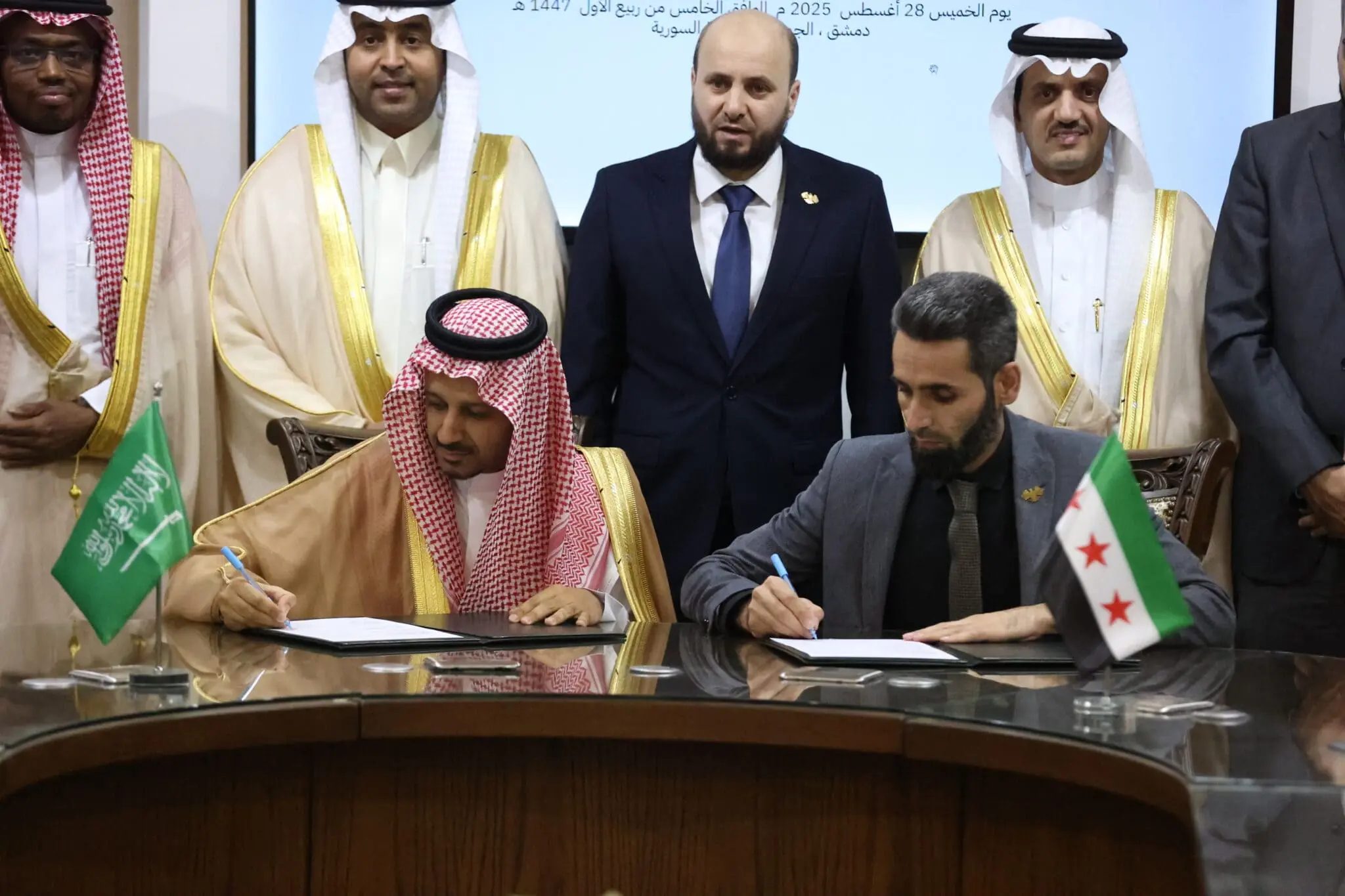
In February, STC announced plans to invest approximately $800 million in telecommunications infrastructure in Syria, including a fiber optic network spanning over 4,500 kilometers enhancing regional and international connectivity.
Syria’s Role in the Digital Equation
Syrian engineer Mohannad Sultan said routing the cable through Syria would increase the country’s international data transmission capacity, reduce latency and provide a backup route to strengthen national network resilience.
Mohannad Sawas, Director of Networks at the Ministry of Energy, described the potential rerouting as a major geopolitical shift. He noted the project could generate investment and employment opportunities while reconnecting Syria to global digital networks, a step seen as supportive of broader economic recovery.
Challenges and Outlook
Despite the opportunities, technical and security concerns remain, particularly given Syria’s war-damaged infrastructure. However, submarine cable consultant Julian Rawle described the EMC as one of the more feasible regional projects compared to alternative initiatives.
Beyond telecommunications, the project represents a broader strategic development. In an era increasingly defined by data corridors, Syria’s inclusion would mark not only an infrastructure upgrade but a recalibration of regional power dynamics, where digital connectivity serves as a new arena for economic competition and diplomatic alignment.