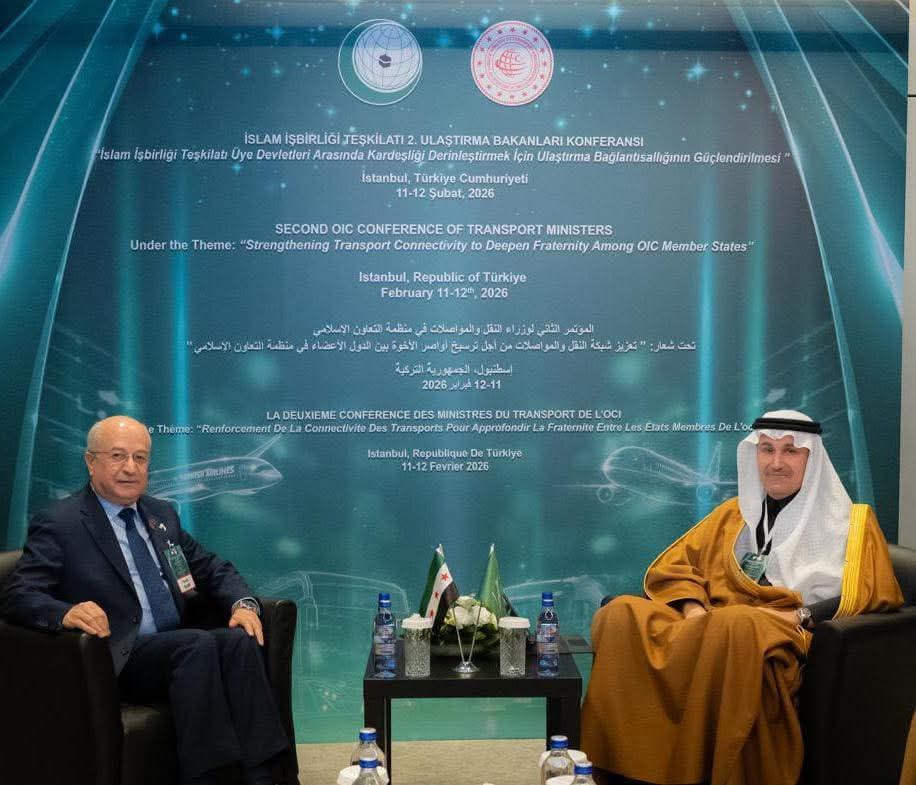
 In a move to revitalize and expand Syria’s transport infrastructure, Transport Minister Yarub Badr held separate meetings with his Saudi and Turkish counterparts on the sidelines of the second OIC Conference of Transport Ministers in Istanbul.
Badr met with Saudi Minister of Transport and Logistics Services Saleh bin Nasser al-Jassir and Turkish Minister of Transport and Infrastructure Abdulqadir Uraloglu to discuss strengthening bilateral cooperation and enhancing regional connectivity in land and rail transport.
Strengthening Cooperation with Saudi Arabia
During talks with the Saudi minister, the two sides explored mechanisms to activate joint cooperation, particularly in the land transport sector. They agreed to hold a technical meeting in Saudi Arabia next March, bringing together officials from both countries to follow up on technical matters and deepen coordination.
The ministers also reviewed cooperation between railway and highway teams and examined ways to further develop collaboration in support of regional economic integration. Badr extended an official invitation to his Saudi counterpart to visit Syria in the coming period to build on the outcomes of their discussions and translate them into concrete steps toward rail connectivity.
Such cooperation would capitalize on the strategic geographic positions of both countries to facilitate the movement of goods between Europe and the Arabian gulf through an integrated railway network guided by a clear roadmap. The Saudi minister expressed appreciation for Syria’s decision to open its airspace to Saudi transit flights and voiced hope that flight frequencies would increase when conditions permit.
Rail Connectivity with Turkey
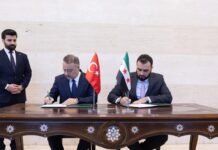
In a separate meeting, Badr and Uraloglu discussed mechanisms for enhancing rail connectivity among Turkey, Syria, Jordan and Saudi Arabia. Both sides emphasized the importance of establishing a guiding framework for a regional railway network, including unified technical specifications and a clear implementation timeline.
Uraloglu affirmed Turkey’s readiness to prepare the railway line extending to Meydan Ekbaz for freight transport. However, given current security and social considerations restricting the entry of foreign trucks into Syria, it was proposed that cargo be transferred to Syrian trucks at the border under a transshipment system. Transit convoys would continue operating in accordance with approved regulations.
Ongoing Coordination
The ministers underscored the importance of sustained technical coordination, paving the way for a meeting between specialized teams in Gaziantep on March 24–25. The meeting will serve as preparation for a tripartite ministerial gathering scheduled for April 7, 2026, in Amman.
Officials say these developments could significantly impact trade and transport by expanding commercial opportunities, supporting reconstruction efforts in Syria and positioning Damascus to leverage its strategic location as a key logistical corridor linking the gulf to Europe through integrated regional transport networks.