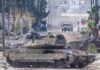
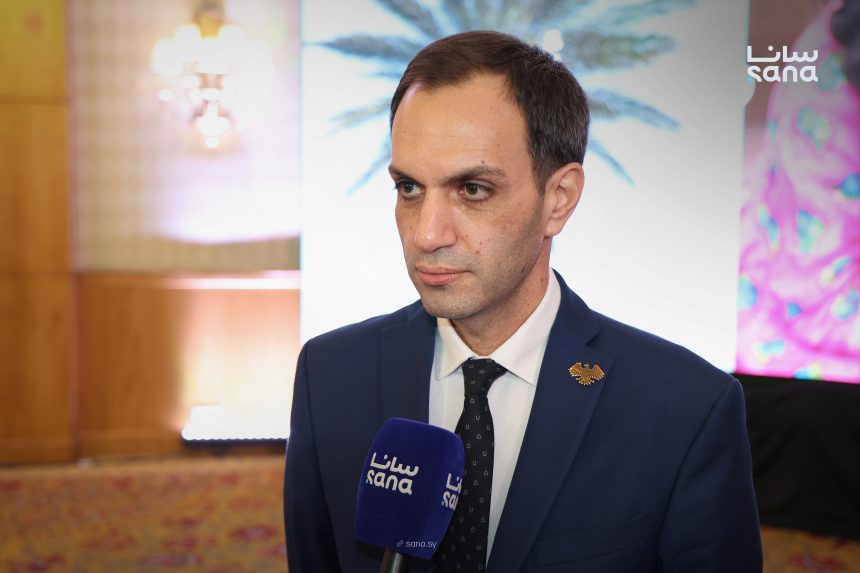
The Supreme Committee for People’s Assembly Elections announced Monday, Feb. 2, that it is preparing to complete elections in areas that were previously unable to participate, including Raqqa Governorate, Hasakah Governorate, and the Ain al-Arab (Kobani) region in Aleppo’s countryside. Nawar Najma, the committee’s spokesman, said the decision follows improvements in local security and will take place under the supervision of the Syrian state.
Najma added, “Once the security situation stabilizes in Hasakah Governorate and the Ain al-Arab region, the People’s Assembly elections will be completed in these areas,” signaling the government’s intent to extend electoral participation to all regions.
Preliminary Results and Earlier Delays
The first phase of the elections was held on October 5 in most Syrian governorates, with Raqqa, Hasakah, and Suwayda initially excluded due to security and political complications. On October 23, the Supreme Committee issued preliminary results for the districts that were able to vote. In Tal Abyad, Raqqa, Saad al-Shuwaish secured a seat with 31 votes, and Khalil al-Kanou Khalil won with 30 votes. Abdullah al-Abdullah won the Ras al-Ain seat in Hasakah with 21 votes.
At the time, Najma confirmed that the remaining seats in Raqqa, Hasakah, and Suwayda would remain vacant until conditions permitted supplementary elections. Negotiations with de facto authorities in these governorates delayed the process, reflecting the ongoing challenges in extending full electoral access across the country.
Structure and Candidate Overview
The People’s Assembly in Syria consists of 210 seats, one-third of which are appointed directly by President al-Sharaa, while the remaining two-thirds are contested in elections. In the first phase, 1,578 candidates competed across fifty electoral districts for 140 seats.
Women made up 14% of candidates, but their representation fell below three percent after votes were counted. Muhammad Taha al-Ahmad, head of the Supreme Committee for People’s Assembly Elections, acknowledged the shortfall and said President Sharaa will take steps to address it.
Security and Supervision Measures
The committee emphasized the upcoming elections will only proceed once security conditions allow safe participation. Observers will oversee the process to ensure that electoral activities occur under stable and transparent circumstances. The completion of voting in Raqqa and Hasakah is viewed as an essential step in fully forming the People’s Assembly and restoring parliamentary representation in areas affected by conflict.
Officials framed the supplementary elections as a milestone in Syria’s broader efforts to consolidate governance and strengthen political inclusivity. By completing voting in previously excluded regions, the government aims to integrate all citizens into national decision-making processes while reaffirming the role of the state in ensuring safe and fair electoral procedures.
The Supreme Committee’s announcement marks a continuation of the electoral roadmap, signaling both a response to improved local security conditions and a commitment to completing the assembly’s formation across all governorates.