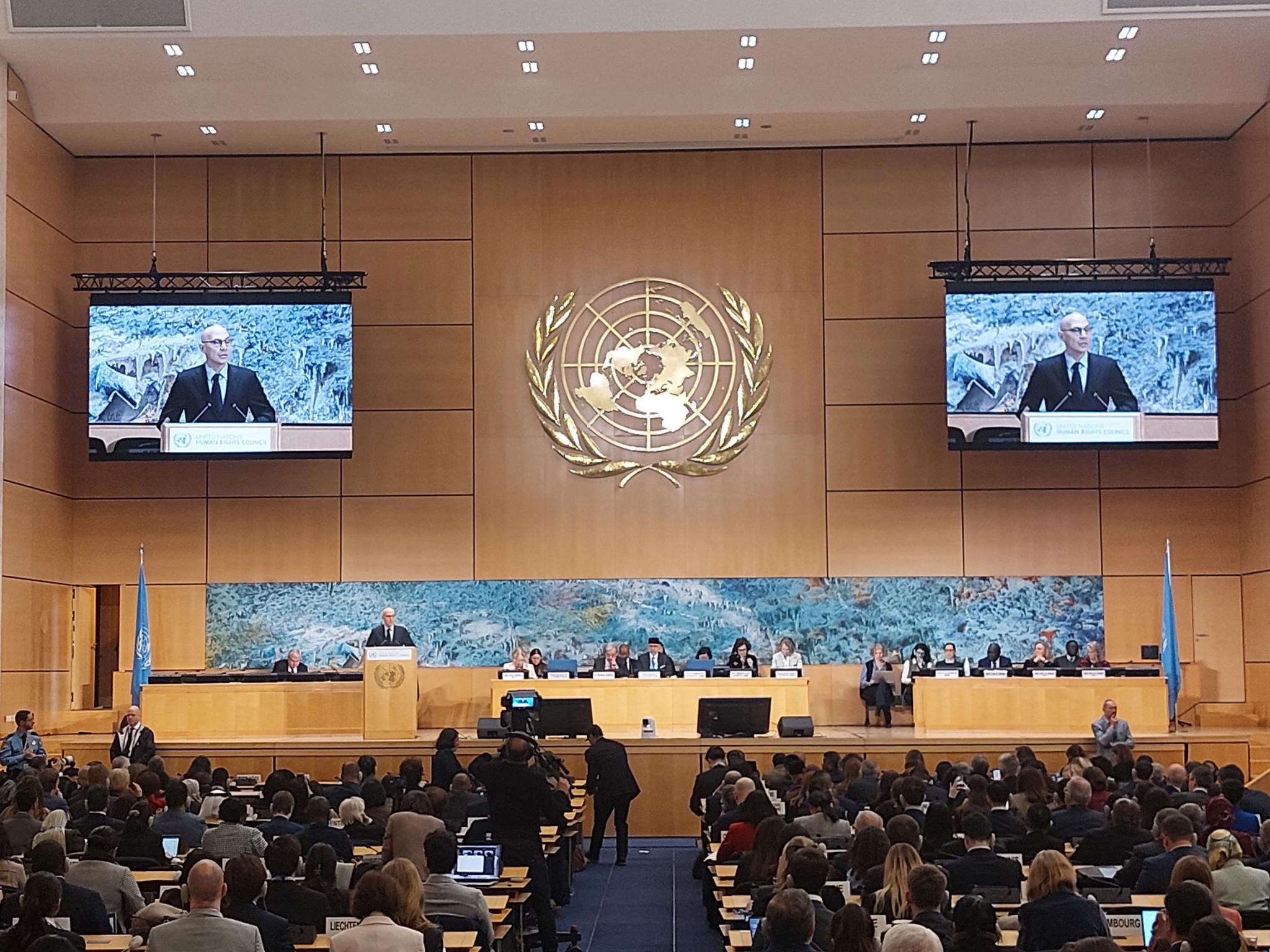
Syria informed the UN Human Rights Council its commitment to human rights is a historic national obligation rooted in decades of suffering, not a diplomatic maneuver. Speaking during the council’s 61st session in Geneva, Syria’s delegation head said engagement is based on institutional reform, practical dialogue and technical cooperation, rather than the political polarization characterizing previous years. He noted the adoption by consensus of a resolution on Syria in April 2025, for the first time since 2011, reflects what he described as a shift from a phase of “reactions” to one of “institutionalization” and nationally driven measures.
Constitutional and Judicial Reforms
Following the fall of the Assad regime, Syria began what officials describe as a process of rebuilding state institutions based on the rule of law. The delegation said a new constitutional declaration explicitly prohibits torture and enforced disappearance and affirms judicial independence.
Authorities have also issued professional and military codes of conduct and expanded training on international humanitarian law in cooperation with the International Committee of the Red Cross and the Office of the High Commissioner for Human Rights. A presidential decree formally recognized the cultural and linguistic rights of Syrian Kurds, affirming equal citizenship, freedom of religion and the principle that national diversity is a source of strength.
Women and Children as Priorities
The delegation reaffirmed Syria’s commitment to the Convention on the Elimination of All Forms of Discrimination against Women and outlined efforts to preserve gender equality and integrate women into economic recovery, and civil, political and transitional processes.
In the field of children’s rights, authorities launched the “Back to Learning” campaign in cooperation with UNICEF and reinstated 15,000 teachers dismissed under the former regime. A specialized committee was also established to oversee the rehabilitation and reintegration of children in camps in northeastern Syria.
Investigations and Accountability
Addressing recent coastal unrest and ongoing issues in Suwayda, the delegation acknowledged civilian casualties and said independent investigative committees, composed of judges and experts, referred over 560 suspects to the judiciary. Officials described the incidents as the result of sectarian divisions dating back decades and exacerbated by external interference, rather than state policy.
The delegation acknowledged the scale of reconstruction challenges, citing widespread infrastructure destruction, high poverty rates and reconstruction costs estimated at more than $216 billion. Despite these conditions, officials said efforts to build human rights institutions are proceeding in parallel with restoring and unifying state authority, while also citing what they described as over 1,000 Israeli violations.
Concluding the address, the head of the delegation said Syria is determined to prevent a recurrence of past abuses. “We are the people who have been burned by the fire of violations for sixty years,” he said. “We are building a Syria of law and institutions, a state that does not settle for its citizens merely escaping fear, but seeks to ensure dignity and well-being for all, without discrimination.”