
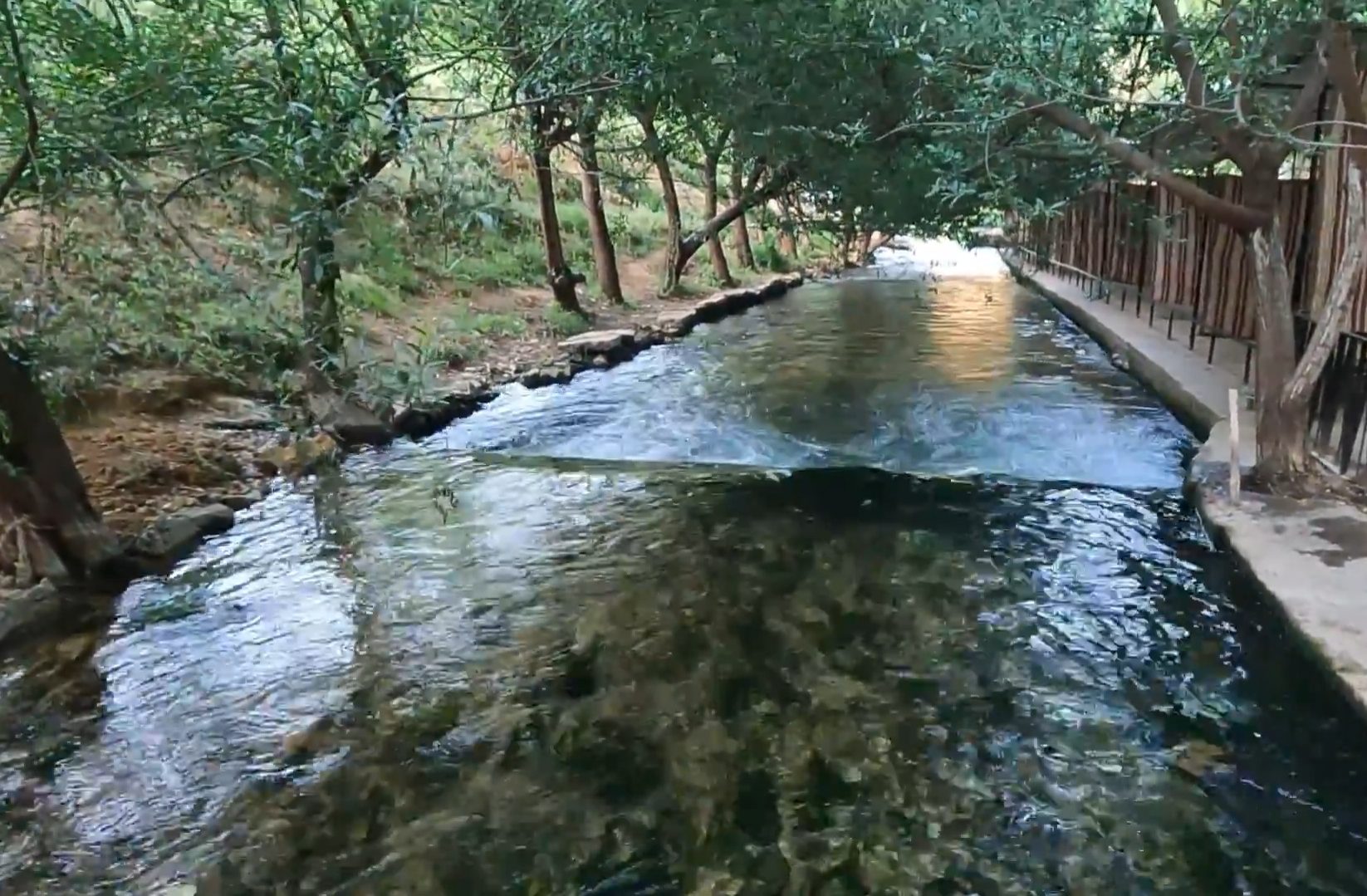
The cornerstone for the rehabilitation of Barada Spring in Zabadani was laid at the beginning of March, marking a significant step toward restoring one of the region’s most prominent natural and historical landmarks after years of neglect and war-related damage.
Located in the heart of Zabadani, the spring was once a major recreational destination for residents of Damascus and a leading domestic tourism site. For decades, parks and cafés lined its banks, forming a vibrant social and economic hub.
Economic and Community Revival
Madaya Mayor Muhammad Yusuf said the project represents a key step in reviving the tourist resort while creating hundreds of job opportunities for local residents. Barada Spring played a central role in the area’s agricultural and economic life since ancient times.
However, Yusuf noted the Assad regime dried up its waters in 1999 as part of a plan to redirect tourism elsewhere. After the outbreak of the Syrian revolution in 2011, the area was transformed into a military zone, leading to the destruction of facilities and a complete halt to tourism.
Yusuf said coordination with the Ministry of Energy halted the pumping of water from Barada Spring toward Damascus, replacing it with supply from the Fijeh Spring. Combined with heavy rainfall, this has allowed the spring to flow again. The rehabilitation project currently provides over 350 jobs, with potential for further employment through future initiatives such as a cable car project.
Environmental Sustainability and Water Management
Authorities say the project also aims to balance water security between Damascus and the surrounding region through coordinated pumping schedules that maintain river flow while safeguarding the capital’s drinking water supply.
Damascus countryside Environment Director Yaman al-Sawwaf said the initiative includes a three-stage wastewater treatment system to remove pollutants and ensure water quality before discharge into the river. The system will reduce untreated wastewater, support controlled groundwater recharge and ensure continuous monitoring in line with international standards.
Sawwaf added that environmental simulations using artificial intelligence technologies predict a temperature drop between two and four degrees Celsius in the river basin, along with a potential 60% increase in green space. These changes could improve thermal comfort, enhance biodiversity and support groundwater replenishment.
Restoring a Historic Tourist Destination
Barada Spring is more than a natural landmark, according to Damascus countryside Tourism Directorate media official Diaa Haidar, who described it as one of Zabadani’s most recognizable symbols. He said the project aims to restore the city’s position on the domestic and international tourism map by creating a sustainable economic hub rather than simply rebuilding what was destroyed.
Plans envision transforming the area into an integrated tourist complex capable of attracting visitors from across Syria and abroad, including diplomatic missions and educational institutions. Officials believe the initiative will also revive small and medium-sized businesses that once supported hundreds of local families while ensuring community participation in managing and preserving the site as a shared public resource.