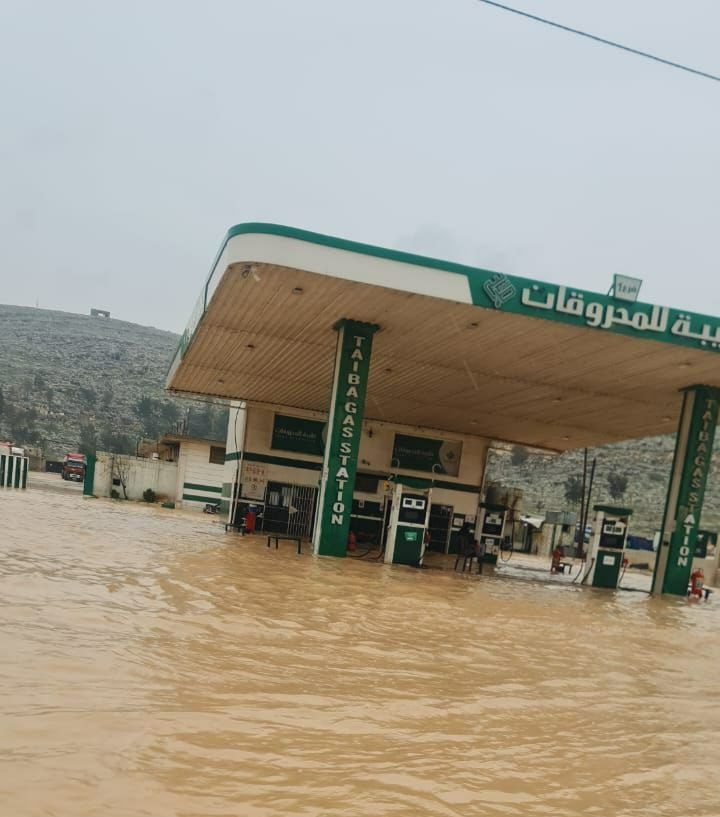
 Syrian Civil Defense teams continued emergency operations for a second consecutive day in Hasakah Governorate after torrential rains triggered widespread flooding across towns and neighborhoods. Crews focused on key areas including Tal Hamis and Yarubiyah, reinforcing earthen barriers and opening drainage channels to redirect water.
Minister of Emergency and Disaster Management Raed al-Saleh said in a statement posted on X over 120 families were evacuated from flood-damaged homes. He added teams were working to expand operations in Hasakah city by deploying additional equipment and personnel to ensure rapid response in the hardest-hit locations. Officials also confirmed ongoing coordination with UN agencies and international organizations to support relief efforts and assist displaced residents.
Homes and Farmland Sustain Heavy Damage
The Syrian Civil Defense reported over 100 homes were either completely or partially damaged, with over 300 families affected in Tal Hamis and Yarubiyah alone. In Tel Hamis, flooding inundated more than 400 homes, according to Yusuf Azzo, head of field operations at the ministry, in a statement carried by the Hasakah Media Directorate.
Floodwaters also caused significant agricultural losses. Civil Defense teams said hundreds of hectares of farmland were submerged, damaging crops and threatening livelihoods in a region heavily dependent on agriculture.
The Khabur River overflowed again in parts of Hasakah, sending water into residential neighborhoods including Mirdian, Nashwa and Ghwairan. The Syrian Arab Red Crescent said it evacuated families to temporary shelters, including a center established at Hassan Khamis School, equipped with basic supplies and medical support.
Severe Weather Batters Multiple Regions
The flooding comes amid successive low-pressure systems affecting Syria, bringing heavy rainfall, thunderstorms and occasional hail. According to Civil Defense reports, damage was recorded in at least 40 locations across several governorates, including Aleppo, Idlib, Latakia, Homs, Hama and Damascus.
Emergency teams responded by opening waterways, pumping water from flooded homes and clearing blocked roads. They also handled partial building collapses and carried out multiple rescue operations as water levels rose in residential areas.
Weather officials warned conditions may worsen, with forecasts predicting continued rainfall through the end of the week. Authorities cautioned residents about the risk of flash floods, particularly in low-lying and flood-prone regions.
Dam Breach Worsens Agricultural Losses
In southern Aleppo, part of the Sayha dam collapsed under pressure from rising water levels, releasing floods that inundated large areas of farmland. Faisal Ali, Civil Defense operations commander in Aleppo, told SANA news agency about 600 hectares of agricultural land were affected.
Efforts to seal the breach were hindered by high water levels, forcing teams to shift strategy and reinforce nearby embankments to protect surrounding villages. Officials said the damage could increase if rainfall continues and water flows intensify. With additional storms forecast and rivers already swollen, authorities urged caution as response teams work to limit further destruction and protect vulnerable communities.