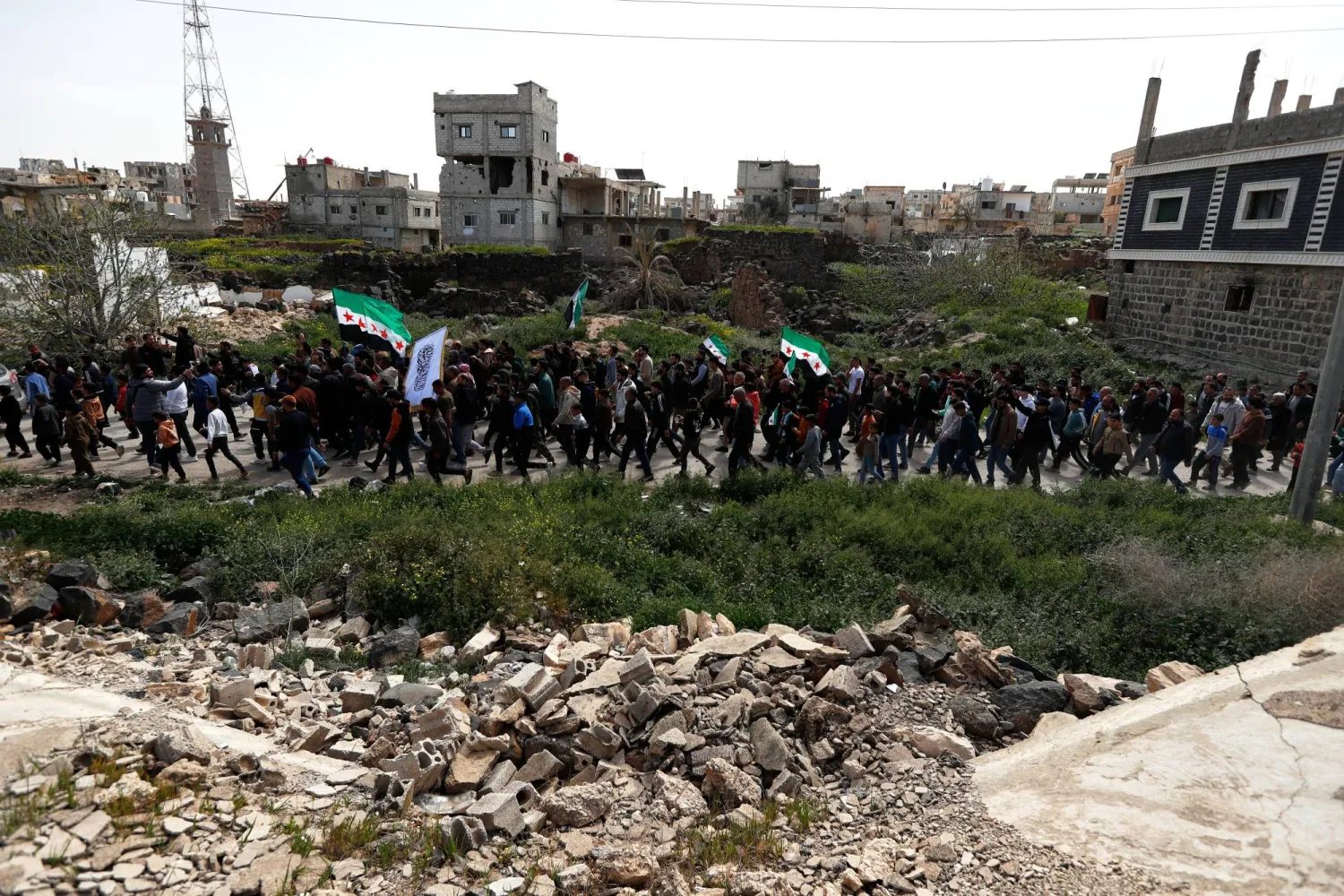
Renewed violence in southern Syria has raised concerns about a broader escalation, as clashes in Suwayda province coincide with Israeli airstrikes and mounting international warnings. On Thursday, March 19, Syrian Internal Security Forces thwarted an infiltration attempt by the “National Guard” militia in the western countryside of Suwayda, according to the Houran Free League (HFL), which cited a local security source. The source said the operation resulted in casualties among the attackers but did not provide specific figures.
The incident reflects rising tensions in the province, where a ceasefire has been in place since July following deadly fighting between Bedouin tribes and local factions. That conflict left hundreds dead and wounded. Despite the agreement, the National Guard, a coalition of about 30 armed groups formed in August and led by the Israeli-backed Hikmat al-Hijri, repeatedly targeted government positions, according to Syrian authorities. These developments fueled fears the truce could collapse and lead to a renewed cycle of violence.
Israeli Strikes Target Military Infrastructure
Following the clashes, Israel launched airstrikes on Friday, March 20 coinciding with the national Eid al-Fitr holiday, targeting Syrian government military sites in the south. Israeli military spokesman Avichai Adraee said the attacks hit a command headquarters and combat equipment inside military camps.
In a statement, the Israeli army said the strikes came “in response to the events that took place yesterday, during which Druze citizens were attacked in the Suwayda region.” The military added that it “will not allow harm to come to the Druze in Syria” and would continue to monitor developments.
Syrian officials condemned the strikes. The Foreign Ministry described the attack as a violation of international law and the UN Charter, calling it an infringement on Syria’s sovereignty and territorial integrity. The ministry urged the UN Security Council to take action to halt what it described as ongoing Israeli aggression.
According to Syrian statements, Israeli operations in the country have included repeated airstrikes, ground incursions and patrols in areas such as Quneitra and Daraa, as well as arrests and the destruction of agricultural land.
UN Calls for Restraint Amid Regional Tensions
International officials warned continued escalation could draw Syria deeper into a widening regional conflict. At a UN Security Council session on March 18, Deputy Special Envoy for Syria Claudio Cordone called on Israel to respect Syria’s sovereignty and territorial integrity. He praised Syrian efforts to prevent its territory from being used in the broader confrontation involving the US, Israel and Iran.
Cordone said Syria’s recovery remains fragile and could be undermined by prolonged instability. He urged renewed international support, stating the need to “refocus on helping Syria continue and accelerate its path towards recovery, reconstruction and stability.”
Russia’s UN envoy, Vasily Nebenzya, also warned of the risk of a wider war. Speaking at the same session, he said the ongoing confrontation risks drawing additional countries into conflict, including Syria, and called for maximum restraint. Nebenzya cautioned against what he described as interference in Syrian internal affairs under the pretext of “protecting minorities” and urged a return to diplomatic engagement.
Regional Condemnation Highlights Growing Concern
Several countries in the region issued strong condemnations of the Israeli strikes, warning of their potential impact on stability. Jordan’s Foreign Ministry described the attacks as a “flagrant violation” of Syrian sovereignty and international law, calling for an immediate halt and urging the international community to act.
Qatar also condemned the strikes, warning that continued actions risk undermining regional stability reflecting disregard for international norms. Egypt echoed those concerns, stating that the attacks violate international law and could further destabilize the region, while calling on the UN Security Council to intervene. Saudi Arabia issued a similar statement, expressing support for Syria’s sovereignty and urging international action in response to the strikes.
Israeli military activity in Syrian airspace has intensified, while forces continue to occupy parts of southern Syria, carrying out raids and detentions, according to reports cited by UN officials. Despite some progress on political and security measures, UN representatives stress the situation remains unstable. As tensions persist in Suwayda and Israeli strikes continue, diplomats warn that without restraint, Syria risks becoming further entangled in a broader regional conflict with far-reaching consequences.