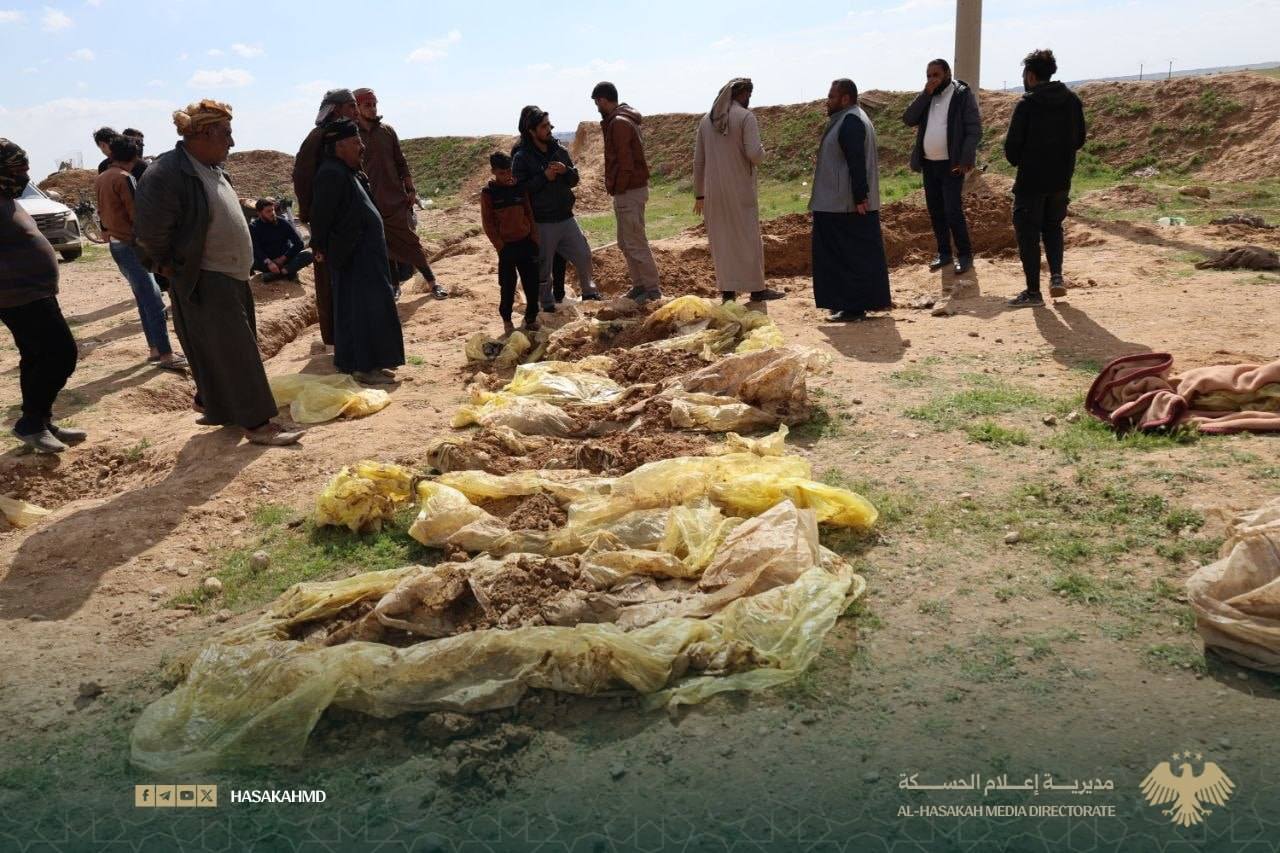
Authorities in northeastern Syria have uncovered a mass grave containing nine bodies near a detention facility formerly operated by the Syrian Democratic Forces (SDF) in the city of Shaddadi, according to local officials and media reports.
The Hasakah Media Directorate said Saturday, March 28, that the remains were found near what is known as the “Chinese Prison” in the southern countryside of Hasakah. The statement noted the victims were believed to have been detained at the facility while the SDF was in control of the region.
Officials said relevant authorities will work to identify the victims and clarify the circumstances surrounding the burial site. No formal conclusions have yet been released regarding the cause of death or responsibility.
Identification Efforts and Local Accounts
The process of identifying the victims remains ongoing, with some preliminary identifications emerging from local sources. Reports cited by regional media indicate that one of the bodies may belong to Awad Hussein al-Khalif, a former Syrian army officer who defected in 2012 and was later detained in 2021.
Local accounts suggest that several victims may be linked to tribes in the region, including members of the Ukaydat and Mahasin communities. Families in the area have begun identifying remains, contributing to growing public concern and calls for accountability. The Chinese Prison has previously drawn scrutiny as one of the most prominent detention centers operated by the SDF, reportedly holding thousands of detainees over the years, including suspected militants.
Broader Pattern of Mass Grave Discoveries
The discovery in Shaddadi follows a series of similar findings across Syria in recent weeks. On March 13, authorities reported a mass grave containing 11 bodies near Tell Gharaba in the Sanamayn area of Daraa province. Earlier in March, Syrian Civil Defense teams recovered the remains of 14 individuals in Adra Industrial City near Damascus after construction workers uncovered skeletal remains during excavation.
According to the Civil Defense, the remains were documented and collected under established protocols before being handed over to relevant authorities. Officials have urged residents not to disturb suspected burial sites, warning that unauthorized interference could compromise investigations and violate legal procedures.
Rising Calls for Transparency and Accountability
The latest discovery has intensified local and tribal demands for a transparent investigation. Community leaders have described the incident as a serious human rights concern and called for authorities to determine responsibility and ensure justice for victims and their families.
The Syrian Interior Ministry has recently taken control of several detention facilities previously managed by the SDF, including Aqtan prison in Raqqa. In a January statement, the ministry said it had begun reviewing detainee records to ensure proper legal procedures.
As investigations continue in Hasakah, the discovery highlights unresolved questions surrounding detention practices during years of conflict and shifting territorial control. Authorities have yet to provide a timeline for completing identification efforts or releasing further findings.